Act Now to Save Maine’s Solar Rebate

May 16th, 2013 by Fred
Brunswick, Maine - Solar Hot Water and Solar Power

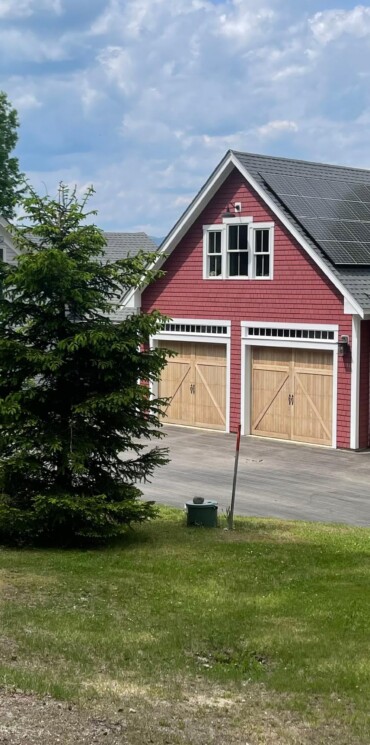
A recent 4.8kw grid tied photovoltaic solar array installed in tandem with a solar hot water system in Brunswick, Maine.

Maine’s solar rebate program was renewed in late 2010 with broad bipartisan support – unfortunately due to a technical error the legislation was invalidated.

Since the transition to the LePage administration, there has been opposition to the system benefit charge (SBC) which was used to fund the solar rebate fund.  This fee amounted to approximately $1 per utility customer per year.

Since the loss of funding, Maine’s solar rebate has continued with pre-2010 SBC funding and other sources of stopgap funding.  However, even stopgap funds are running thin and without new legislation the solar rebate in Maine will disappear completely.

There Still is Time

The Energy, Utilities, and Technology Committee is currently working on a 2013 Energy “Omnibus” Bill which includes several pieces of broadly supported energy legislation designed to help Mainers transition away from expensive heating oil.  The Committee has the ability to add language that would restore the solar rebate within the broader bill.

However, they need to hear from Mainers ASAP talking about how important solar is to them.

Here is the request ReVision is making of all our supporters:

  • Contact members of the Energy, Utilities and Technology Committee and urge them to add the solar rebate to the Omnibus Bill (http://www.maine.gov/legis/house/jt_com/eut.htm) Even if you live outside their district it’s important they hear that Mainers are passionate about solar
  • Contact your legislator and urge him/her to support solar in the Energy Omnibus bill (Find yours at: http://maine.gov/legis/house/townlist.htm).
  • Contact Patrick Woodcock of the Governor’s Energy Office directly: Patrick.C.Woodcock@maine.gov and phone: (207) 624-7405.  The Governor has come out specifically opposed to solar legislation, even though solar energy systems accomplish his stated goal of reducing Mainer’s consumption of oil.
  • OK, a fourth.  Email everyone you think will care about this and share this on Facebook.

Why Support Solar?

Maine’s solar rebate program provides an incentive for home and business owners to invest in solar energy and save money on their utility bills. These investments are helping to grow an industry that has grown 76% year-on-year nationally, and currently employees between 200-300 people in Maine.

ReVision Energy alone has grown from a two person business in 2003 to a company with over 50 employees at three locations just ten years later. Solar provides highly-skilled, good paying local jobs and allows many Mainers like myself to find meaningful employment in our home state.

Finally, money that homeowners save on their energy bills stays in Maine. Roughly $5 billion leaves the state each year to pay for oil, gas, and electricity. Keeping this money in state provides a multiplier effect that benefits Maine businesses and families alike.

Maine is at a crossroads: do we embrace a renewable energy future or doom our children to suffer the consequences of fossil fuel energy dependency? With 33% more sunshine than Germany (the world leader in solar), why doesn’t every Maine town look like this?

Germany the world leader in solar installations

Your voice does make a difference – please act today to help preserve this important incentive: for our energy future, our environment, and for the hundreds of Mainers ready to install solar energy systems.

Many thanks from all of ReVision’s team of 50+ employees
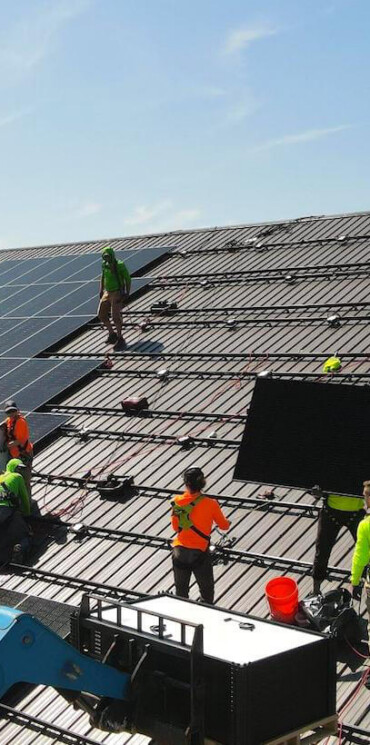
ReVision Energy Team of Solar Installers


Report from Augusta: Solar Policy on the Frontlines

May 10th, 2013 by Fred
Legislative Session - LD 1252 Solar Power Maine
LD1252 – An Act to Improve Maine’s Economy and Energy Security with Solar and Wind Energy, takes testimony on April 24, 2013 in Augusta. Photo courtesy 350 Maine.

The current legislative session is critical to the future of solar in Maine, with at least four bills under consideration that will directly impact solar, as well as general energy efficiency measures and the vision and management structure of the Efficiency Maine trust.

ReVision Energy will be calling on current and future clients, partners, and other supporters of solar in Maine to help get the word out to representatives and senators that solar is a cost-effective, sensible investment for Mainers.

The Process: All of the bills below have gone through a public hearing process (well attended by a variety of advocates of solar with some opposition from utilities), and are expected to go through various work sessions by the Energy, Utilities and Technology Committee. The various measures are likely to be consolidated before being introduced to the legislature.

What You Can Do: At this point, you can tell your state senator and representative(s) (http://www.maine.gov/portal/government/edemocracy/lookup_voter_info)that you’re a supporter of solar. The legislation below is going into committee and likely to change before it goes to vote. When the time comes, you may get a notice from us asking for your direct action to support the most important measures to solar in Maine.

The Bills on the Docket:

LD 1252 – An Act to Improve Maine’s Economy and Energy Security with Solar and Wind Energy

This Bill would restore the funding mechanism for Maine’s solar rebate program, a small system benefit charge (SBC) applied to all electric bills in the State (at an average cost of under $1/household/year). Legislation to continue this program was passed in 2010, but due to a technical error was invalidated.

Since loss of the funding, Efficiency Maine has continued to operate using SBC funds collected prior to December, 2010, and other sources of stopgap funding. However, even emergency funding is running out, and in order to continue offering a solar rebate, Efficiency Maine needs solar rebate funding restored.

ReVision Energy considers restoration of the solar rebate program a ‘must-have.’ The economic impact of the SBC on ratepayers is minimal (significantly less than CMP’s latest proposed rate hike, incidentally), and the state rebate amount is 1/2 to 1/4 of that offered by other New England states. Even so, it is a strong economic incentive that makes more Maine homeowners able to reduce their energy costs and C02 emissions with solar power.

LD 1403 – Resolve, To Require the Public Utilities Commission To Amend Its Rules Regardiing Net Energy Billing

This Bill includes two changes to statute important to the solar industry:

  1. Increases cap for net-metered solar projects from 660W to 1MWAn increase on the cap of net-metered solar projects opens the doors for larger, more utility-scale solar projects in Maine (where the largest is currently 170kW). With the changing economics of solar, municipalities, educational institutions, and even utilities are looking towards solar as a way to reduce the cost of electricity. Numerous studies have found that the benefits of net metering far outweight their costs to the utility grid, especially because peak solar power production typically occurs at the same time as peak grid consumption.
  2. Clarifies that group-purchased solar projects are not ‘Competitive Energy Providers.’This clarification of statute clarifies that 3rd-party owned projects would be eligible for the 30% Federal Income Tax Credit (ITC) for solar projects. The way current state law is written, it unintentionally excludes groups of homeowners or third-party entities from owning solar arrays and selling the power.

LD 1085 – Feed in Tariff

This ambitious bill would introduce a solar Feed in Tariff (FiT) to Maine. Feed in Tariffs are an excellent, market-driven tool for encouraging solar growth that have been extremely effective in Germany, the UK, Spain, and, increasingly, in the United States. NREL highly recommends FiT structures over other forms of subsidies for solar, since the cost is relative to performance and a reflection of the actual savings produced by renewable energy generation.

In short, FiT offers a specific, above-retail rate per kWh benefit for solar generation. Under current net-metering, owners of solar arrays receive a 1:1 credit for solar power they export to the credit. A FiT would allow these homeowners to enjoy a modest income on excess credits, unlike the current system in which you cannot benefit from more electricity than you consume.

LD 1426 – An Act To Improve Maine’s Economy and Lower Energy Costs through Energy Efficiency

This “Energy Efficiency Omnibus Bill” is a bipartisan response to Governor LePage’s energy bill. It seeks to continue RGGI funding for energy efficiency measues and maintain the independence of the Efficiency Maine Trust. It maintains a commitment to “cost-effective energy efficiency savings” but does not seek solely to deliver the lowest cost of energy possible. It maintains more ambitious goals for weatherization, energy efficiency, and greenhouse gas reduction targets than that of the opposing bill. The Natural Resources Council of Maine is one of the major proponents of this legislation, and has arguments detailing their position on their website at: http://www.nrcm.org/news_detail.asp?news=5334.

While solar is not directly referenced in the bill, ReVision Energy stands with partners in the Energy Efficiency field who see efficiency as the most cost-effective way to lower energy costs in our region. As a provider of renewable energy, we fully recognize that solar alone is not a solution to our region’s energy problems. However, by combining conservation, efficiency, and renewable generation together, Maine – and all of New England – can effectively cut the noose of fossil fuel dependency.

What Next?

ReVision Energy will be keeping the pulse on the state house – where a lot is happening this session. In addition to solar policy changes, there are measures to divest the Maine retirement system’s investments in fossil fuels, reject an east-west highway, and put a moratorium on tar sands transport.

We encourage you to get active. Tell your senators and representatives about the issues that are important to you. When legislation directly impacts solar, know that you’ll hear from us when votes are happening, the implications of new law, and analysis about the projected growth of solar in Maine, New Hampshire, and Massachusetts.


Wells Reserve Solar Array Embodies Environmental Stewardship

May 10th, 2013 by Fred

Wells National Estuarine Research Reserve - Wells, Maine

Visitors to Wells Reserve’s Ecology Center at historic Laudholm Farm are now greeted by an example of 21st century technology: a rooftop full of 142 grid-tied solar electric panels that provide most of the facility’s electric needs.

With 2,250 acres of salt marsh, freshwater wetland, beach, dune, forest, and field under management, the Wells National Estuarine Research Reserve protects a vital part of Southern Maine’s ecosystem, as well as its history. The buildings at the Laudholm Farm campus (where the Reserve is headquartered) harken back to the region’s farming history – a tradition that dates back to the first European settlements almost 400 years ago, and Native American settlements before that. Wells Reserve is one of 28 National Estuarine Research Reserves across the country, and focuses its effort on research, education, and environmental stewardship.

Sustainable and ecologically-friendly practices have been core to construction and renovation projects since the Reserve’s inception. Efforts over the years include remodeling and adapting centuries-old buildings to new purposes, and use of sustainably-harvested, locally milled wood and efficient heating systems in the two new buildings (a research center and a 20-bed dormitory). As part of standard practice, the Reserve continuously examines ways to recycle materials and reduce their carbon output.

The addition of the solar electric array inagurates a “New era of energy consumption and generation for Wells Reserve,” according to Reserve Director Paul Dest. “In this multi-year, multi-phase era we will switch to alternative energy sources, reduce our annual carbon emissions, and improve the energy efficiency of our buildings and equipment. There is a monetary as well as an environmental benefit: These improvements will reduce our operating costs, allowing us to concentrate our funding on environmental research and education.”

Solar: Offering Energy Bill and Carbon Savings

It’s hard to separate environmental stewardship from energy in current times, when climate change threatens the world’s oceans with acidification, warming, and rising sea levels. The solar array is expected to produce 42,000 kilowatt-hours of clean, renewable energy each year, offsetting an estimated 54,000 pounds of carbon emissions from fossil fuel energy sources. In addition to the carbon reductions, the array is expected to save the Reserve $6,000 to $7,000 annually.

ReVision Energy’s installers wrapped up installation on the array just after the spring equinox, and to date the system has produced over 5MW of electricity. The Reserve has made data on the system available publicly at: http://www.sunnyportal.com/Templates/PublicPage.aspx?page=189b19e2-3e3b-4864-8e06-e8a223a93890 and plans to add a public kiosk on-site at the Ecology Center for visiting guests to see.

The Reserve is now finishing fundraising for an additional solar array at their Alheim Commons: http://www.wellsreserve.org/support/, and is planning a ribbon cutting event on May 18 during their “Spring Spiff Up” day.

Funding for the Reserve’s solar power system came from the National Oceanographic and Atmospheric Administration, the Mattina R. Proctor Foundation, the Davis Conservation Foundation, and individual donors to Laudholm Trust.


Check in May for UNH Forest Watch

May 2nd, 2013 by Fred

Forest Watch UNH DiaryThanks to supporters of the Animal Refuge League of Greater Portland, who helped us fundraise $500 towards their animal welfare services. Our ‘check in for Charity’ candidate for May is the UNH’s Forest Watch program. Forest Watch conducts basic and applied research on New England forest ecosystems. Data is collected by teachers and students (gr. K-12), from trees in their study plot.

About UNH Forest Watch

The Forest Watch program studies the effects of ground-level ozone on the health of New England’s forests. Research in the 1980s demonstrated that the white pine is a bio-indicator tree: The pine is sensitive to air pollution and ground-level ozone exposure. Over the past two decades, in all but a few drought years, white pine health has declined when ozone levels were high. White pine health has improved when ozone levels dropped.

Forest Watch is a national program, currently with 148 active teachers in 126 schools in all five New England States plus a few schools in New York, Maryland and Pennsylvania. At UNH’s location, students study white pine and sugar maple trees on their test plot and report research back to foresters and scientists.

Currently, UNH Forest Watch is concerned about a recent discovery of pine trees losing needles. Teachers and kids and citizens are asked to register on Picture Post this month to help Forest Watch photograph the pines in the last week of May and the first week of June – the time when they have been losing scads of needles in the last three years. Forest Watch thinks it might be air pollution stress, and is hoping to gather evidence to test this hypothesis.

Forest Watch UNH Student ResearchForest Watch is also studying sugar maples, addressing research that suggests that climate change, especially warming temperatures, over the next century may extirpate most of the sugar maples in the United States. The maple’s response to stresses triggered by or intensified by climate change may illuminate how the maple functions and the physiological consequences of climate change to a dominant species in the northeastern forest.

Forest Watch’s work allows students to experience hands-on, real science, while also gathering important field data important to scientists.

Time to Check in

Your ‘check in’ this month directly supports Forest Watch’s work with teacher and student-led research on trees with important implications for humans. Fill in your name in the form below to earn $1 towards our $500 fundraising goal.


Solar Pays Dividends: Looking at Solar Projects a Year Later

April 30th, 2013 by Fred

paul ledman solar house portland maine
Paul Ledman’s home in downtown Portland is more than 90% powered by his solar panels.

Two years ago we profiled Paul Ledman’s near net-zero apartment building on Portland’s East End. Ledman used a combination of 1) well-insulated building, 2) efficient mini-split heat pump heating, 3) solar hot water, and 4) solar electricity in his building design. The goal was a building that would tread lightly on the earth (and save money in the process).

So, how well did we do? We asked Paul – who is carefully tracking all his data – to share some numbers:

  • From February to February (2012-2013) Paul’s array produced 9,716 kWh and he used 817 kWh from the grid. In other words, over 92% of his home’s electric consumption was provided by solar.
  • That electric consumption includes backup hot water (when solar hot water alone is not enough), electric oven, space heating and regular household ‘plug’ loads for Paul, his wife Colleen, and daughters Leo (20) and Clara (17).
  • As of March 10 Paul was able to shut down his heating system for the winter, and start banking solar credits again!

We asked him what he thinks about life with solar: “Solar has been an absolute no-brainer. Sure, with a bit more sun or fewer teenage showers we might get us to full net zero, but the takeaway is that we’re enjoying a negligible heating bills. Getting a $9.41 electric bill [the minimum CMP administrative charge] in the middle of a gray and snowy January is pretty satisfying! We’re very pleased with how everything’s worked out so far.”

Solar in Exeter, New Hampshire

Paul’s home is an exemplary example of efficiency, but his $9.41 electric bill is not unique! Many of our solar electric customers have this experience on a monthly basis (in cases where the solar electric array is sufficient to meet the total electric needs for the house).

In New Hampshire, we heard from Eliot and Mary DeSilva who report “Our solar PV system has been up and operating for about a year now, and we have been extremely happy with the process and the product. We were a little worried about heavy snows, but the panels made it through this past winter with absolutely no problem. The best part: we’ve had two zero electricity bills so far, and big discounts on all of the others. It feels great to have a good portion of our electric needs generated by the sun!”

desilva-optimized


Firm helping Maine towns catch some rays

April 24th, 2013 by Fred

Portland Press Herald Solar PPA for Municipalities

Gabe Souza/PPH Staff Photographer: Fortunat C. Mueller, co-founder of ReVision Energy, stands with solar panels on the roof of the South Portland Department of Planning and Development on Ocean Street, Monday, April 22, 2013.

The Portland Press Herald reports on our program offering power purchase agreements to municipalities:

A Windham fire station is the latest of several municipal buildings in southern Maine that soon could be powered by solar panels through a collaboration with a renewable energy company.

ReVision Energy, which is based in Maine and New Hampshire, has been working with several towns to install solar panels on public buildings at no upfront cost.

On Tuesday, the Windham Town Council will hear a proposal by the company to install solar panels on the East Windham Fire Station on Falmouth Road — a project expected to generate enough electricity to power both that building and the North Windham Fire Station on Route 302.

Fortunat Mueller, co-owner of ReVision Energy, said solar power is a natural match with municipalities because they tend to stay in the same buildings for long periods of time and, thus, can realize savings.

But, unlike private companies that can recoup about half of the cost of installing solar panels through tax credits, municipalities don’t get any tax incentives because they don’t pay taxes, Mueller said.

“Towns effectively pay double” what private companies pay for the projects, he said, and because of that, they’re resistant to them.

That’s where ReVision comes in.

Since last year, the company has been forming agreements with municipal governments and not-for-profit groups in which ReVision installs, owns and operates solar projects on their buildings and sells the power to them.

Because ReVision is a private company, it gets reimbursed through tax credits. When the credits from the project stop coming in, the company will sell the system to the building’s owner for the remainder of the cost.

Full article available at: http://www.pressherald.com/news/firm-helping-towns-catch-some-rays_2013-04-23.html

Download PDF: 2013-04-23-firm-helping-towns-catch-some-rays


30 Years Later, Solar Hot Water Array Reconditioned and Continuing to Shine

April 22nd, 2013 by Fred

Solar Hot Water Rehab- Shealy

Thirty years ago, Tom Shealy had moved from Massachusetts to Stratham, New Hampshire to set up his own dental practice and enjoy the good life.

The nation was still reeling from the memory of the 1973 OPEC oil embargo and, with emerging solar energy technologies, seemed poised to launch from the fossil fuel age into an era of renewable energy. The Carter administration made renewable energy a priority and homeowners like Shealy were eligible for rebates on solar equipment, such as the technology created by Concord, MA based Acorn Structures.

At the time, Acorn had a passive solar home design using a ‘trickle down’ active solar collector for solar domestic hot water and space heating. Shealy took advantage of the Carter-era programs to invest in an Acorn home, the product of some of the best engineering minds at the time, and a concept that fascinated editors of Popular Science and writers of books on energy efficiency.

How the Acorn Worked

Schematic of Acorn Passive Solar HomeA large amount of roofspace (roughly 480 square feet) would consist of a single-glazed solar hot water collector – basically an aluminum sheet with copper tubes on top, covered with fiberglass insulation to help retain heat. Water would be pumped from a large (2,400 gallon) insulated water tank housed in the basement and up into the collectors, where it would then ‘trickle down’ back into the storage tank. The upper (hottest) water in this storage tank would head into the home’s domestic hot water supply, while water in an inner ‘buffer’ tank would be pumped through the home’s heating system.

While this water-based process was happening, the home would also take advantage of its passive solar orientation. The Acorn homes were built facing-south with large solariums (south-facing rooms with lots of glass) that ducted warm air to a concrete slab below the house. This solar-warmed air would then be blown through an insulated central air shaft, and into the house. Along the way, the air would breeze across a loop from the water-based heating system and whisk heat from the solar-heated water into the home. Due to the unique design of the system, the water only needed to be heated to 70 degrees to contribute to home space heating.

While complex, this combination of active/passive solar combinations was enormously more efficient than relying on #2 heating oil for home heating – and 30 years later, the Shealy household was still using it! However, all good things come to an end, and after nearly 30 years of operation the Acorn home was showing signs of age.

Re-Investing in Solar

Comparison of old and new solar hot water arrays

“We’d been very happy with the Acorn home and our investment in solar,” Tom says, “But we noticed a deterioration in system performance in the last couple years of life. Finally it started leaking, and we knew we needed to do something.”

Tom called us in, and our team of solar engineers worked together to come up with the best way to get the Shealy’s system back into good working order. We discovered that the solar water storage tank and heat exchangers still worked, but that the pumping system and collectors would need to be replaced. We chose Wagner Euro C-20 flat plate solar hot water collectors, which boast an anti-reflex glass with light tranmissivity of 96%. 2.5″ of insulation surround the copper piping in these collectors, which is enclosed in a weatherproof aluminum frame.

The drain-down, ‘trickle’ pumping system was replaced a pressurized, glycol-based heat transfer system that would be more resilient in both freezing and high-heat conditions. We added an external heat exchanger to transfer heat from the pressurized loop to the existing Acorn tank, which continues to operate as it has for decades, pumping hot water up to the taps and blowing warm air into the house.

A Whole Lot Warmer

“The difference was immediately obvious,” Tom says of the installation. “The old collectors had been having trouble getting the tank temperature above 90 degrees the last six years, while the new system is much more efficient.”

Now as he nears retirement, Tom enjoys the peace of mind knowing that the costs of his home are predictable and provided courtesy of the sun. “We’ve enjoyed our solar array for almost 30 years but we also enjoyed seeing how far the technology has come. I hope we see another 30 years of sunshine ahead of us.”


ReVision Energy Launches Pay it Forward Referral Program

April 15th, 2013 by Fred

McDonough Family Solar Referral Program
Thanks to strong supporters such as the McDonough family, ReVision Energy continues to grow by word of mouth. To try and give something back for all the positive buzz, ReVision Energy now offers a $250 donation to the nonprofit of your choice when your friend decides to go solar..

A huge part of our growth over the years has simply been organic – friends telling friends about the benefits of going solar and their experience working with ReVision Energy to get there. We are deeply, deeply grateful for those of you who have appreciated our service so much that you tell your friends about us. In an effort to give something back we are now offering the “Pay it Forward” Referral Program.

The concept is pretty simple: just enter the contact info for a likely solar candidate using our website: http://www.revisionenergy.com/solar-referral-program.php.

ReVision Energy will call or email your friend, and mention that you passed them along. If your friend has ReVision Energy install a solar project, we will make a $250 donation to the nonprofit of your choice (you can pick one of our preferred partners or write in your own). You can also opt for a $200 cash gift instead.

Work for or with a nonprofit that you think has a lot of solar potential? Contact Fred at ReVision who can set up a custom page specifically for your organization so we can be sure that all of the referral activity is sent to the right place.

In the meantime, keep shining!


Solar Calculator