• Skip to primary navigation
  • Skip to main content
  • Skip to primary sidebar
Revision Logo Revision Logo
Solar Calculator Get Started
Get Started Solar Calculator
  • Solutions
    • Homes
    • Commercial
    • Service
  • Our Work
    • Projects
  • About
    • About
    • Our People
    • Social Impact
    • Our Locations
    • Careers
  • For Customers
    • Support & Service
    • Be A Solar Champion
  • News & Events
    • Releases
    • Press
    • Under the Sun Blog
    • Events and Webinars
  • Our Partners
  • Resources

Give us a call

Maine (207) 221-6342
New Hampshire (603) 632-1263
Massachusetts (978) 308-9041
Contact Us

EV Updates

EV Corner: A Tale of Two Fuels

August 2, 2023 by Ale Moreno

This month’s EV Corner column is written by Chuck Hayward, EV Infrastructure Designer & Analyst. 

Earlier this month, we had some friends from out of state stay with us. With 4 adults and 2 kids in car seats, we couldn’t all fit in our EV, the Hyundai Ioniq 5 pictured above. So we ended up driving both our EV and our gas truck. And like Charles Dickens’ A Tale of Two Cities, our experiences of the vehicles were a tale of contrasts.

After we picked our friends up at the airport, our first stop was Fort Williams in Cape Elizabeth. We were at about half charge, so we decided to take advantage of the ReVision-installed chargers there and top off.
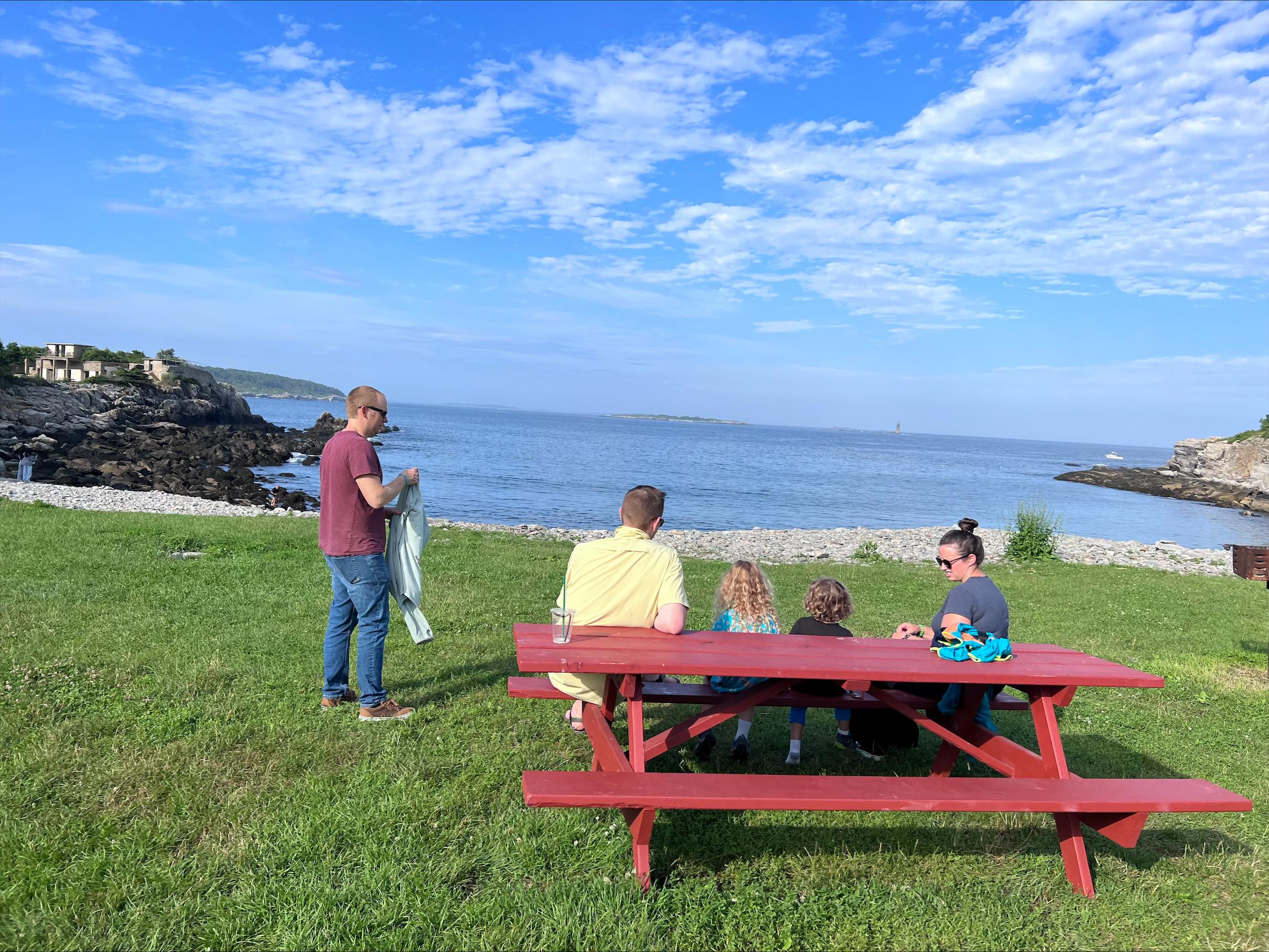
ft williams.jpeg

My favorite joke I learned: Why did the crab cross the road? To get to the other tide.We charged for about 2 hours. During that time, we walked around telling each other bad jokes and exploring the lighthouse. Then we went over to the beach where we skipped rocks and looked for shells. Finally, we made it up to the Children’s Garden. It features a giant stone slide and the kids must have done about 100 rounds on it. The adults got in a couple of runs, too!

Throughout the four-day visit, we plugged in each night when we got home. We spent our evenings making lobster pasta, playing games, and reading bedtime stories to the kids. And each morning, we woke up to a full charge, ready to explore again.

Range Anxiety? Not in our Electric Vehicle. 

With the gas truck on the other hand, we were hoping we wouldn’t have to fuel it while they were here. But the low fuel light finally came on the night before we had to take them back to the airport. Turns out the only range anxiety we felt was in our gas vehicle! So my friend and I left in the truck a few minutes earlier than everybody else in the EV so that we could stop to fill up on the way to the airport. For 5 minutes, my friend sat inside the truck while I filled up. It was next to a noisy roundabout and even though it was 88° outside, he couldn’t run the A/C since it has to be turned off while fueling. With EVs, you can continue to run the A/C while you’re sitting and using a fast charger for 15 or 20 minutes.
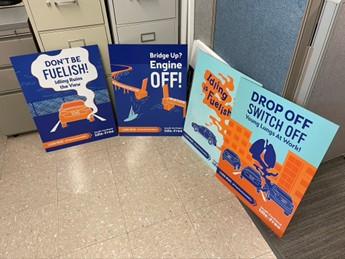
no idling sopo.jpg

You’ll find various anti-idling signs around South Portland. (Image: SoPo Sustainability)A/C use isn’t just an issue when fueling. Being able to use A/C in an EV without idling is a big advantage. When we got to the airport, their flight was delayed by 30 minutes. We pulled into a parking lot to spend the extra time together. Some of us got to comfortably wait in the EV with the A/C on, but we couldn’t do that with the gas truck since idling is noisy and pollutes. It’s actually illegal to idle for more than 5 minutes in the state of Maine.

Our Gas-Powered Vehicle Costs 3x More to Fill.

How about costs? Both the charger at Ft. Williams and our home rate are about $0.25/kWh. Our EV averages 3.4 miles/kWh, meaning it costs us about $0.07/mile to drive. The gas truck averaged only 17.8 mpg, even though it is a smaller, 6-cylinder Nissan Frontier. With gas costing about $3.60/gallon, that means we pay $0.20/mile to drive the truck. That’s almost 3 times as much!

Even though filling up the truck with gas only took five minutes, it was inconvenient and uncomfortable when we were forced to do it. EV charging took longer overall, but it mostly happened passively while we were enjoying other activities. The only time actively spent on EV charging was about 30 seconds to plug and unplug the cable – even less time than it takes to pay at a gas pump.

The EV was also way more comfortable throughout the hot weekend and more fun to drive. After effortlessly merging onto the highway one time with the EV’s instant acceleration, the kids kept asking us to make the car ‘zoom’ again. To borrow from Charles Dickens’ end to A Tale of Two Cities, “An EV is a far, far better thing that I drive than I have ever driven.”

Filed Under: Under the Sun Blog Tagged With: by Chuck Hayward, EV Updates

New Hampshire’s First Dedicated EV Auto Dealership

May 10, 2023 by Ale Moreno

This EV Corner column is written by Jesse Lore, Founder of Green Wave EV in North Hampton, NH.

More people than ever are considering buying their first electric vehicle. A 2022 study from auto club AAA said that “one-quarter of Americans say they would be likely to buy an electric vehicle for their next auto purchase.” But making that purchase can be confusing, time consuming, and frustrating with many traditional auto dealerships having limited electric vehicle inventory, and even less knowledge about what it takes for consumers to make the switch. Add to that the high cost of a new vehicle, with the complexities of new tax incentives, and it can be overwhelming. 

Jesse Lore.JPG

That’s why I started Green Wave Electric Vehicles, a business built on a mission to create a more sustainable society by providing affordable, fun, and fossil-fuel-free transportation options to people in our communities. I have always been passionate about helping to build stronger communities and a better world. I grew up here in New Hampshire, and after graduating from college, I went to work for private non-profits serving people with disabilities in community settings.

There I learned something that most of us take for granted: transportation is key to a quality life in the community. For people who can’t drive, or who need specialized vehicles and services, life can be difficult and boring. It’s hard to get the goods and services you need if you can’t get around independently. It’s really difficult to make and maintain meaningful relationships if you’re stuck at home with no ride. A big part of my work for those organizations was to solve complex transportation problems for people with complex needs. 

Balancing Accessibility and Sustainability

A little more than a decade ago, I switched roles to work for a company that provided vehicles for people with disabilities. I learned the ins and outs of the automotive industry in a specialized field where people were transitioning from regular cars to wheelchair accessible vehicles. As part of my work, I helped build the wheelchair accessible taxi systems in major metros all over the country, including New York City where I sold hundreds of accessible cabs. Through this work, I began to understand the wide variety of ways that people need and use their cars to get to work, to enjoy their communities, and to stay healthy, all while finding a ride that they enjoyed and that fit their budget. 

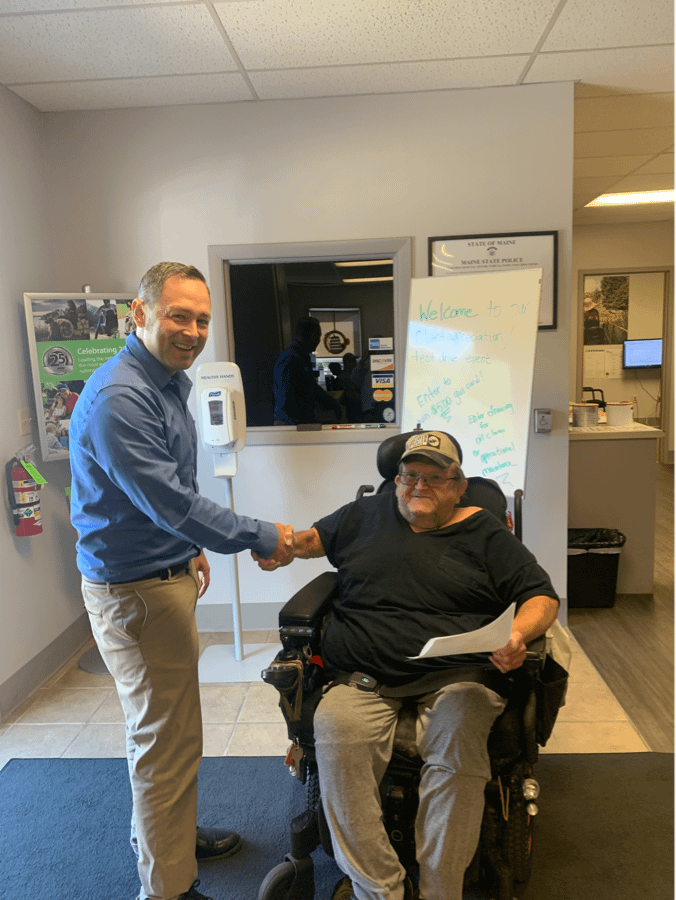
Jesse-shaking-hands-675x900-1.png

I grew with the company, eventually becoming the Vice President in charge of all sales and service for over 90 wheelchair-accessible vehicle dealerships nationwide. That work was fun and meaningful, but I developed a growing awareness that there is a problem with our transportation systems: they are not sustainable. I had started a Corporate Social Responsibility team at my company, and spearheaded efforts to improve our treatment of employees and our charitable impact on our communities. We joined New Hampshire Businesses for Social Responsibility, where I met and worked with leaders of the most sustainable companies in our state. I even went back to school to get my master’s degree in sustainable business practices. These efforts led to my company winning a Sustainability Award in 2022, but the environmental impact of our products — vehicles powered by fossil fuels — remained. So in 2022, I left my job and started Green Wave Electric Vehicles, New Hampshire’s first and only auto dealer focusing on reused EVs and Plug-in Hybrids.

Green Wave Electric Vehicles

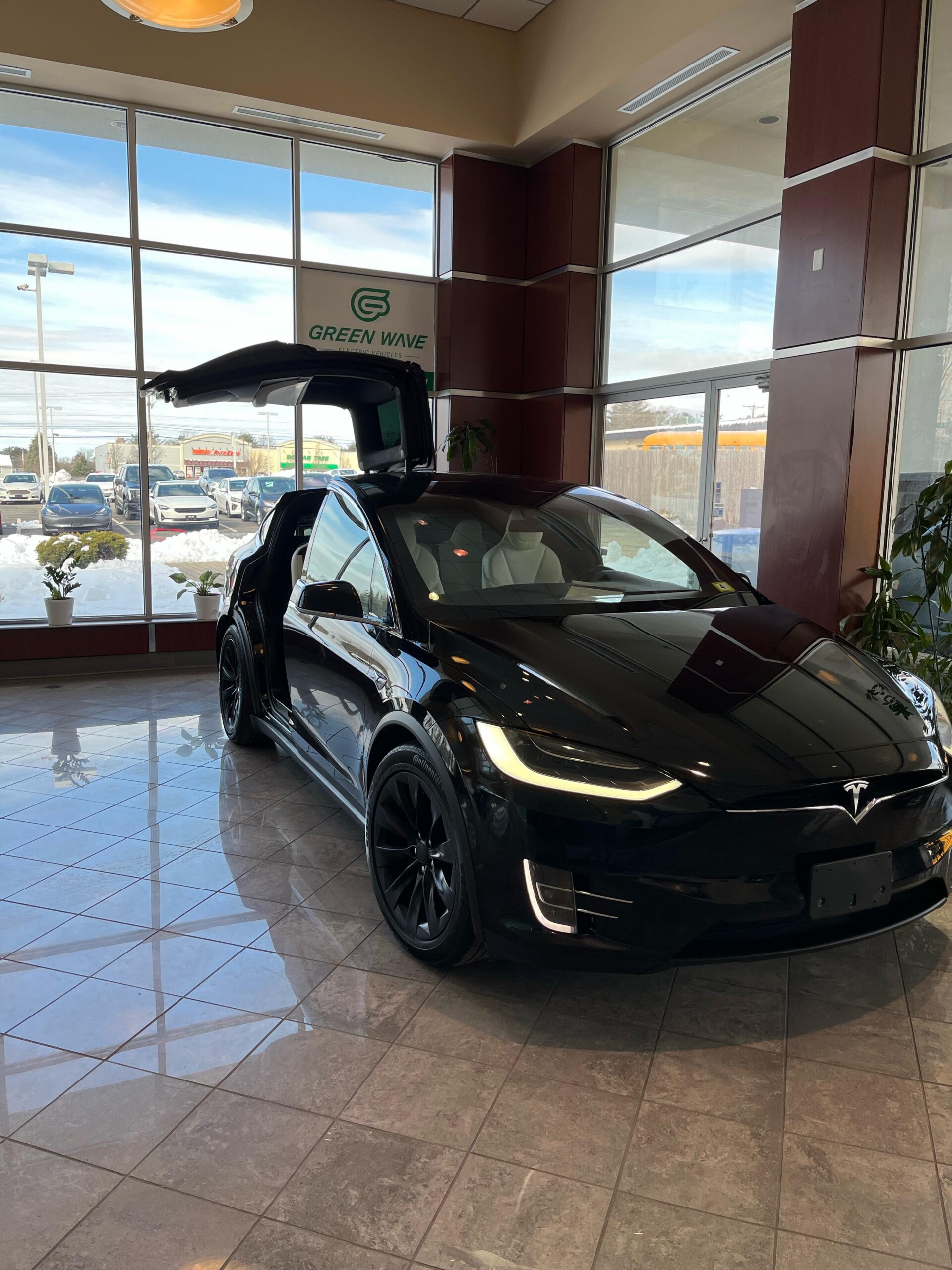
Tesla X pic.jpeg

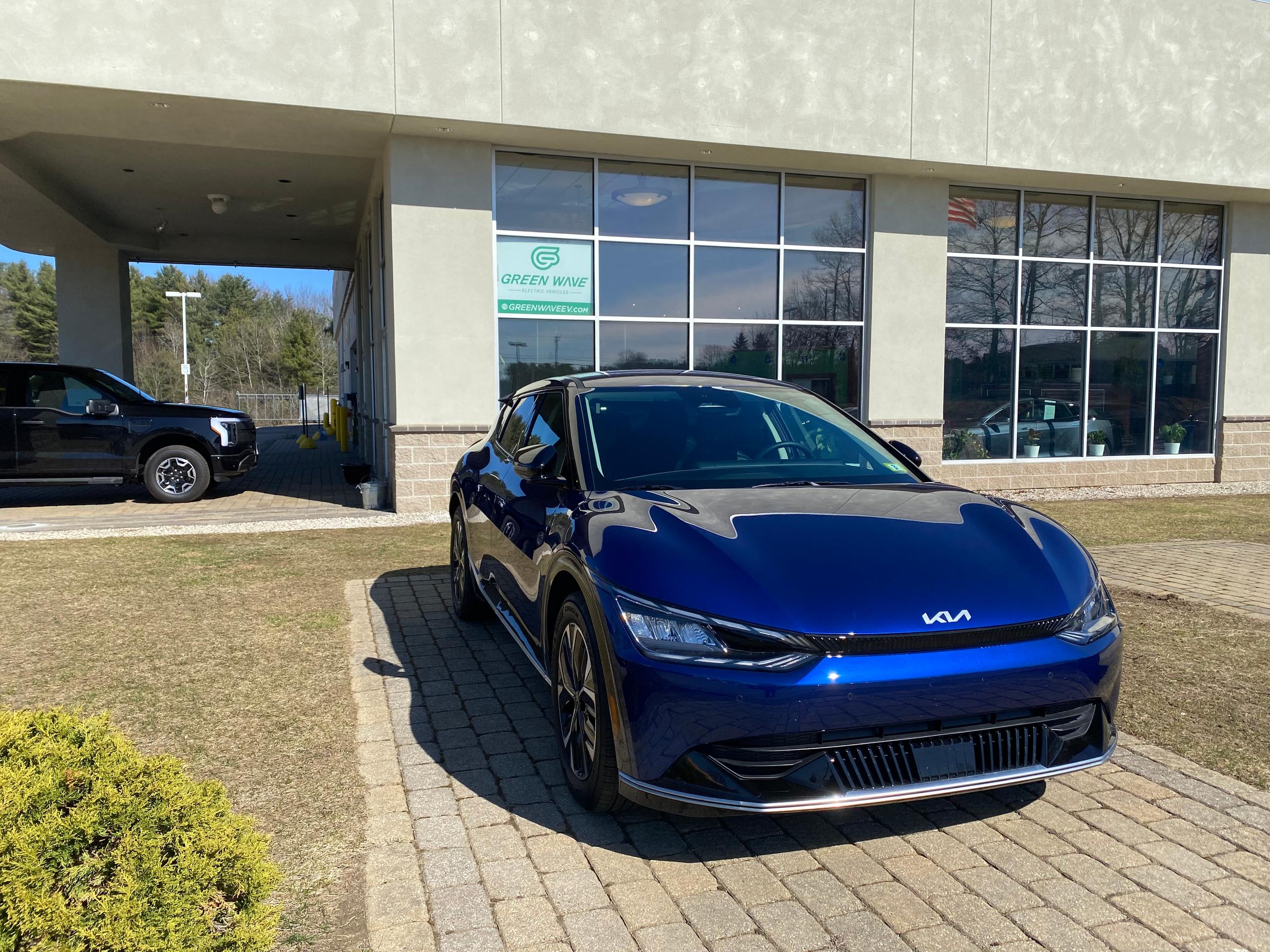
At Green Wave, we give customers a chance to learn about making the switch to an electric vehicle or plug-in hybrid vehicle from knowledgeable professionals who can answer all your questions in a relaxed, low-pressure environment. We know that test driving is an important part of EV buying, so we let customers test drive all makes and models of electric vehicles right here in North Hampton – options ranging from Chevy Bolts and Nissan LEAFs to Ford Mustang Mach Es, Audi e trons, and the Kia EV6. With these cars, customers can save thousands or tens of thousands of dollars off a new vehicle purchase. 

And even though Green Wave is an independently owned and operated small dealership, you can still get everything you would expect from the big guys: Green Wave accepts all trade-ins, and will get you good money for your old gas-powered car; we offer financing options for people with all types of credit histories; and we can even help you with your home charging solution. We not only provide customers with an auto history report for their vehicle, but most models also have a battery health report available from Green Wave partner, Recurrent Automotive. 

EV Incentives

EV6 Pic.jpg

Many people are also becoming aware of the Used Clean Vehicle Tax Credit, which was created by the Inflation Reduction Act of 2022 and gives purchasers $4,000 for choosing to buy a low-cost electric vehicle. Under the law, a vehicle must be priced at $25,000 or less, be at least 2 model years old, and have a battery capacity of at least 7 kilowatt hours, which means that plug-in hybrid vehicles like the Chevy Volt qualify as well as fully electric vehicles like the Chevy Bolt and Nissan LEAF. The staff at Green Wave are fully versed in this law, and can guide purchasers through their options, the income limits, and the reporting requirements to receive the tax credit. 

We believe in guiding and educating our customers. We listen to you, learn about your driving needs and preferences, and provide EV and home charging solutions that will improve your transportation situation and reduce your operating costs while also helping lower your environmental impact. And because we want to help you make the most impact with your purchase, we plant 100 trees in your name to offset any carbon emissions associated with your purchase at no cost to you. Stop by to test drive an EV!

Call Green Wave today to set up an appointment to start your EV journey, or check out their inventory online at www.GreenWaveEV.com. 
 

Filed Under: Under the Sun Blog Tagged With: EV Updates

Range Anxiety Part 2: Equity

March 30, 2023 by Ale Moreno

This month’s EV Corner column is written by Chuck Hayward, EV Infrastructure Designer & Analyst. 

Last month, we explored range anxiety, focusing on how most electric vehicle (EV) drivers who have access to home charging won’t actually experience issues with range. The problem is that not everybody has easy access to charging at home, and without convenient charging, it’s not practical to drive an EV.

Installing chargers is particularly difficult and expensive if you don’t have a garage, rent your home, or live in a multi-unit building with shared parking. While public and workplace chargers can help in these situations, access to public chargers is also not equitable. They tend to be more common in white, affluent neighborhoods. Fortunately, there are some ways to make vehicle electrification more equitable.

EV Ordinances

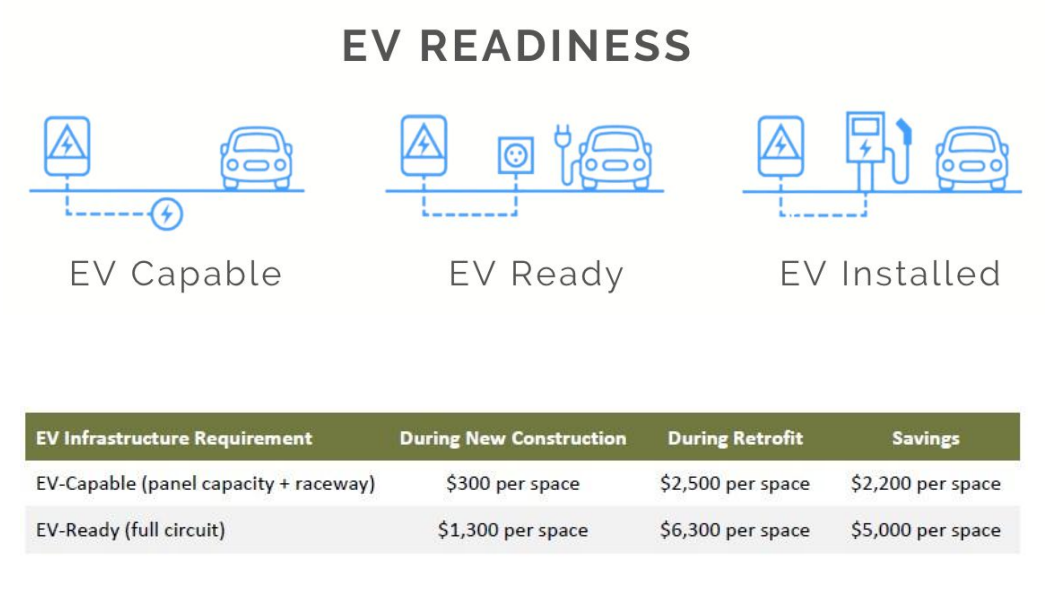
There was a time when apartments with indoor plumbing and electricity were seen as “luxury,” but our building standards have evolved to require these things; this is starting to become true for EV chargers. Although still largely an added amenity for developers or building owners, EV chargers are beginning to be required by some towns and city ordinances, just like there are standards for proper lighting or outlets. Over time, this will make charging available for everybody instead of merely an added amenity for the wealthy. 

EV Charging SoPo.PNG

South Portland’s ordinance has 3 levels of EV “readiness” requirements. Requiring it during construction saves money over retrofitting it later. [Source: southportland.org]

These ordinances don’t require huge investments for developers or property owners; adding EV charging to a home is comparable to adding an outlet for a dryer. Any future resident will be able to plug their own car charger into that outlet.

ReVision recently helped the city of South Portland, ME create their own EV charging infrastructure ordinance. It sets standards for EV charging installation during construction of new buildings and parking lots. The requirements vary based on building size, parking lot size, and type of use. Other towns around New England are also working to develop their own EV-focused ordinances.

More Affordable Charging for Shared Housing

Adding EV charging to a single-family home is usually easy. But multi-family homes like condos and apartment buildings weren’t designed to carry the additional electrical load of multiple EV chargers for all residents, and upgrading electrical systems can be very expensive. Fortunately a technology called load management can be built into EV chargers. It allows chargers to share limited power so that more chargers can be installed without needing a costly service upgrade. Then, more EVs can plug in at the same time and drivers don’t have to coordinate taking turns on just a couple of chargers. The system automatically shares the limited power across all of the chargers. This technology also helps lower utility bills!At our location in South Portland, we’re starting to test out the load management technology of new EverCharge units

new evercharge EV units installed outside ReVision Energy's portland branch

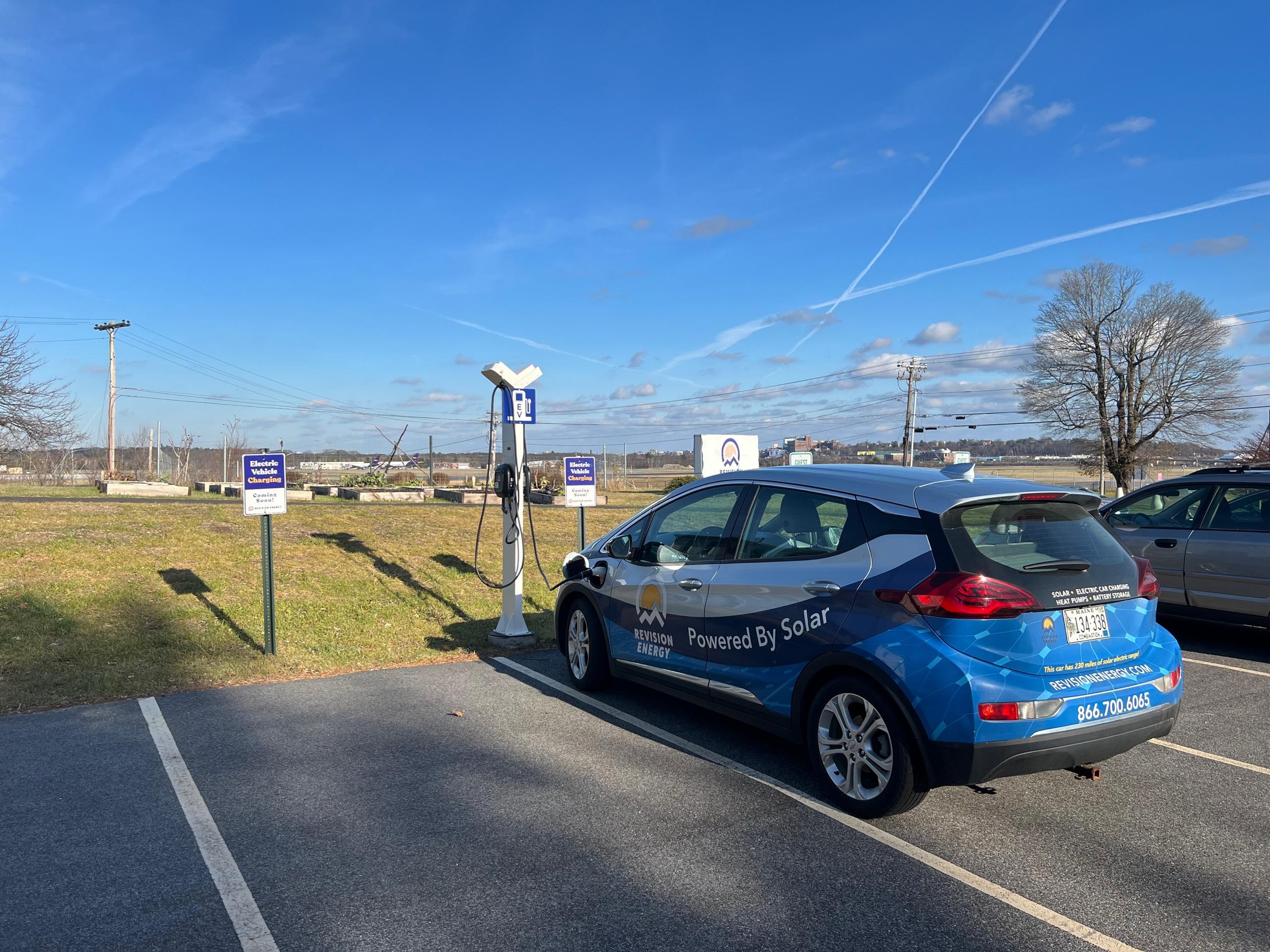
Retrofitting multiple chargers to existing buildings can be expensive and difficult. ReVision is currently replacing and expanding our own EV chargers at our branches with 13 EverCharge units, which allows us to test their load management technology. It will help us provide more cost-effective installations for apartments and condominiums. 

Purchase prices and incentives for EVs

Even with available charging, EVs are still expensive to purchase, but recent changes to government incentives are helping make EVs more equitable. We’ve had tax credits for about a decade that have helped reduce the price of new EV purchases, but with the passage of the Inflation Reduction Act in 2022, the credits have been restructured to help lower-income consumers. Starting in 2024, the federal tax credits of up to $7,500 on new EVs will become transferrable to the dealer and applied at the time of sale. This means the credits will become instantly available to buyers with lower incomes who might not have enough tax liability to take advantage of a credit. Federal tax credits have also been expanded to include used EVs and offer up to $4,000 back when purchasing from a dealer. 

State and local incentives can often be used as well. Many of these incentives are largest for those in the lowest income brackets and phase out for higher income purchasers and for higher sticker-price vehicles. For example, Maine offers up to $2,500 for a used EV and it is only available to people who already qualify for low-income assistance programs like SNAP.

Even with expanded charging and purchase incentives, it will probably still be years before we see EVs become accessible to everybody. Many drivers scrape together a few thousand dollars to buy the cheapest used vehicle they can. And unfortunately there aren’t a lot of used EVs that are old enough to come anywhere near that price. It will be at least another 5 to 10 years before we see a substantial number of truly affordable used EVs available. So, what else can we do in the meantime?

“An advanced city is not one where even the poor use cars, but rather one where even the rich use public transport.” – Enrique Peñalosa


Electric buses (and non-passenger vehicles)

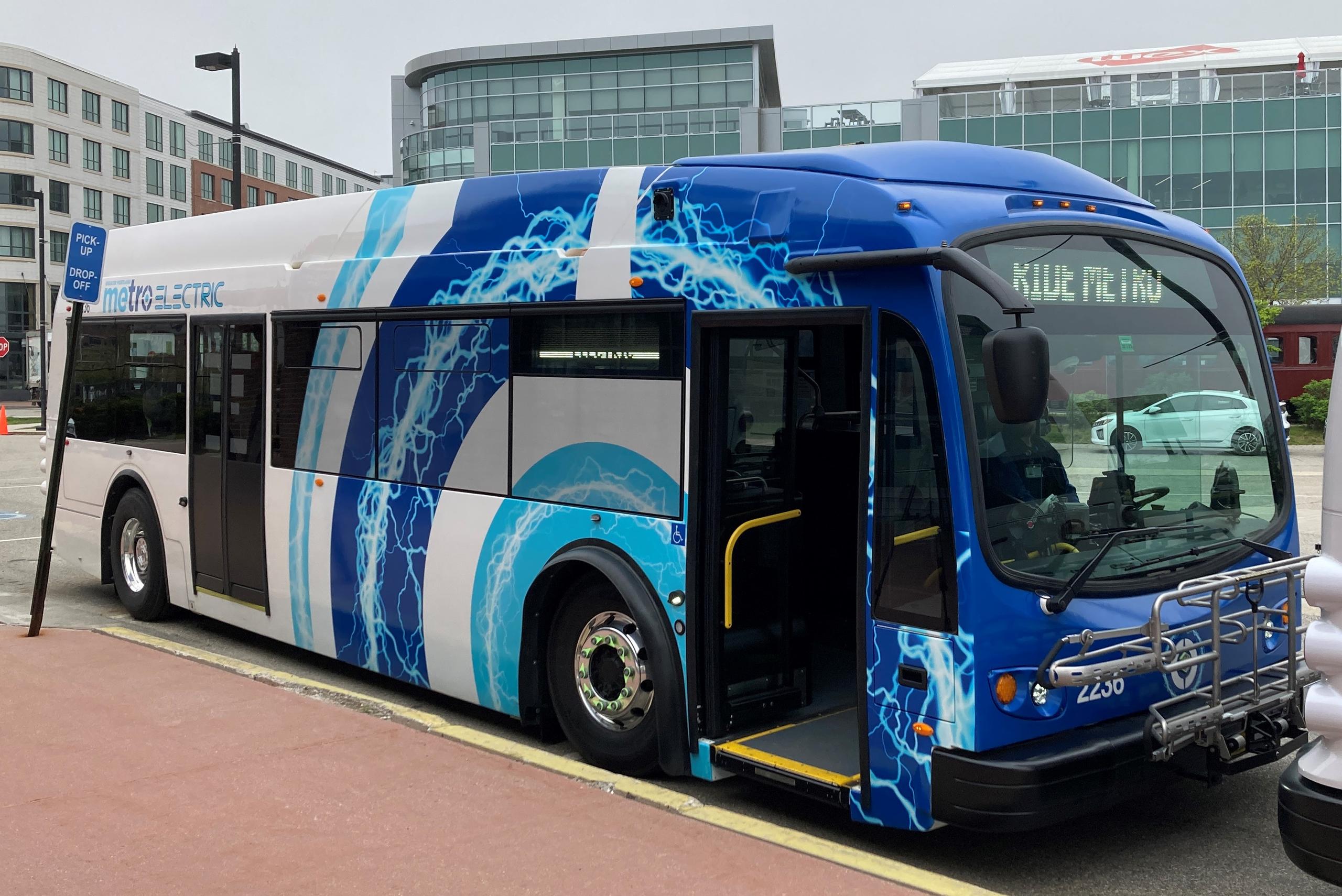
Revision installed EV chargers for electric public busses in portland


ReVision installed chargers for electric buses at the Portland Bus Depot. It’s easy to spot this bright blue electric bus around town, but you’ll have to listen closely to hear it. Electric buses, now available for both schools and public transportation, enable children and adults without personal cars to benefit from vehicle electrification. Electrification is great when you’re driving, but it is just as (or maybe more!) beneficial for passengers and pedestrians who are no longer exposed to the noise and fumes of a diesel bus engine. And it’s not just buses. Companies are also developing electric delivery vans and trash trucks. Even the Unites States Post Office plans to have more than 66,000 electric vehicles in the next 5 years! 

A recent study in California showed that as EV registrations increased in a community, the air pollution and asthma-related emergency room visits in that same community decreased. It has also been documented that asthma is more prevalent in lower income communities – the same communities that often rely on public transportation and diesel buses. One of the Asthma and Allergy Foundation of America’s strategies for combating asthma disparities involves reducing transportation-related emissions. Electrifying public transportation and other large vehicles is a big step in this direction and can have a huge impact on these communities.

Filed Under: Under the Sun Blog Tagged With: by Chuck Hayward, EV Updates

EV Corner: Range Anxiety

March 2, 2023 by Ale Moreno

This month’s EV Corner column is written by Chuck Hayward, EV Infrastructure Designer & Analyst. Next month he will do a deeper dive into the equity issues discussed below.​​​

Lightning charging.jpeg

When we talk about electric vehicles, there’s a lot that can seem confusing or even scary. One of the biggest concerns for people considering EVs is range anxiety.

Range anxiety is the fear that an electric car won’t be able to travel far enough to get you where you’re going, or at least not without having to wait a long time to recharge. This anxiety stems from America’s fascination with the idea of the road trip and because we’re assuming that we’ll “fill up” EVs the same as we do gas engines. We’re struggling to grasp how EVs will actually fit into our daily routines.

Granted, there are some places where public EV chargers aren’t available and we can’t get there in an EV. But there are many state and federal programs that will address this over the next few years. Unless we spend a lot of time in rural areas, the more common concern with range anxiety is that it can take 30 minutes or more to recharge an EV battery, even at a fast charger.

We assume that we’ll be trading our quick five-minute stop at the gas station for a half hour or more of sitting in our car and waiting at a charger. However, we need to consider how EVs fit better for the ways we really use our vehicles. Sitting at a public charger for a half hour to recharge won’t be nearly as common as many people believe. Why? 

If you started every day with a full tank of gas, how often would you need to stop at a gas station?

The answer for most people is only a couple of times per year. It’s rare that we drive so many miles in a single day that we use an entire tank of gas. Most gas vehicles get somewhere around 200-300 miles on a full tank, and the average American only drives 30 to 40 miles per day. So a full tank of gas usually lasts us a week or so.

Driving an EV changes our experience because we essentially have a gas pump anywhere there’s an electrical outlet. Most EV drivers plug in at home and top off their battery every night, starting every day with full range — the equivalent of a full tank of gas. Unless we’re going to drive more than 200 miles that day, we’ll just charge again that night and start the next day with a full charge again. Many EVs come with a charge cord that can be plugged into a standard outlet in the garage and doesn’t require any electrical upgrades. It’s a slow charge, but even that can replenish about 35-40 miles of range in 8 hours overnight for most EVs. Conveniently, that’s the exact amount most of us drive in a day!

You’ll notice I’ve said “most” a lot. That’s because all of this doesn’t apply 100% of the time. Let’s explore some of the challenges:

Cold Temperatures

saddleback ev chargers.jpg

Public EV charging stations at Saddleback Mountain in Maine. Cold weather can reduce an EV’s range considerably – up to 30%! Yes, that sounds scary. But assuming the car has a low-end starting range of 220 miles, that means it will still have 150 miles of range in cold weather. Even if we can’t charge every night, that’s enough to get the average driver through about a week of daily driving.

Waiting To Charge

For a variety of reasons, many people don’t have the luxury of charging their EV at home overnight. That doesn’t necessarily mean we have to sit and wait to charge. With public chargers becoming more and more common, we’re starting to reach the situation where we can charge wherever we park.

We might be able to charge our battery while we’re grocery shopping, visiting the park, sitting in the dentist’s chair, or working — all places in New England where ReVision has installed chargers! Imagine if our car fueled itself while we strolled through the park or got our shopping done, instead of having to go to a gas station!

Charging on long trips

Chargepoint Kennebunk


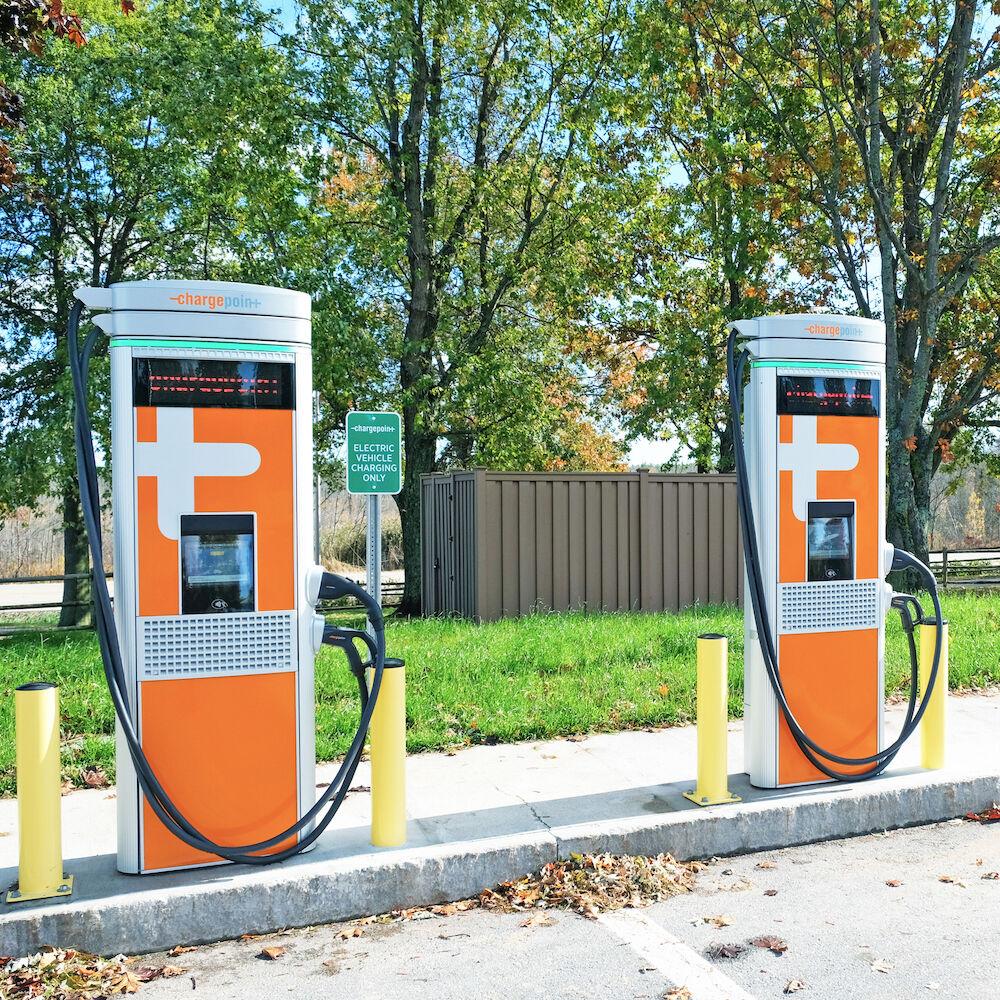
ReVision-installed DC Fast Chargers at the I-95 rest stop in Kennebunk, ME.If we’re taking an occasional long trip, we might have to sit and wait to charge while we’re on the road. But with EVs easily going 150 miles between charges, we’ll probably want to stop for a short bathroom or snack break every few hours anyway. And for those trips where EV charging isn’t realistic, we can always rent or borrow a gas car. Many multi-car households will likely still use a gas car for these kinds of trips for another few years while our charging infrastructure continues to expand. Outside of these rare trips, it’s likely that the range of most EVs will be completely sufficient for our daily driving needs.

So the real question is…

How often do you really drive farther in a day than an EV could take you?

If you need some help, EVNavigation.com is a route planning tool that helps show how far you can get with different EVs. It will even help plan charging stops and account for factors that can affect range like weather conditions or the number of people in the vehicle.

EV charging and equity

SUnsquatch_EV_charger.jpeg

So what if you can’t plug in at home every night? It is not always simple to install a charger or use an existing outlet for those who rent, live in a shared building without dedicated parking, don’t have electricity at the parking lot, or can’t afford to install a charger. Not everybody has easy access to charge at home.

The obvious solution is to make chargers available at work or other public places. But as a recent study pointed out, access to public charging is not equal ­– EV chargers are much more common in white, affluent neighborhoods.

There’s no question that the current benefits of driving electric are not equitable. In next month’s EV Corner, we’ll address some of these problems and explore efforts to help make EVs more equitable, including purchase incentives, charging installations, and electrification of other forms of transportation beyond personal vehicles.

Filed Under: Under the Sun Blog Tagged With: by Chuck Hayward, EV Updates

EV Corner: Doggone Electric Vehicles

February 6, 2023 by Ale Moreno

Dog Mode

Perhaps one of the things I like the most about ReVision Energy, besides its people, is its cultural integration of our four-legged brethren. And to be clear, there is something about EVs and dogs that can’t be ignored.

Let’s start with their ability to communicate clearly about the different charging levels in a way that cuts to the heart of the matter and ends confusion. In a dog’s world, this is how to best understand the different charging levels (courtesy of our EV Team Infrastructure designer Chuck Hayward who likely minored in graphic design and didn’t know it):

(No dogs were hurt in the creation of these slides. As DC Fast Charging speeds increase to 150 kilowatts and above, we will not be subjecting dogs to the fire hose level of psi.)

sophie.png

I also know for a fact that my 14 year-old Welsh Springer Spaniel, Sophie, enjoys my EV (a Model 3) more than any other vehicle she has ever been in. Whether it is 95 degrees or -10, she knows that her needs are wired into the software whenever I have to leave her parked at a location.

Indeed, the car even communicates to concerned neighbors that, though the windows are rolled up, the pup is comfortable. (I do wish that the car had a remote control water/food dish combination, but that will be for newer editions.)

The interior video camera allows me to check on whether she is sleeping or digging out the doughnut I inadvertently left in the front passenger door storage. The heater uses the equivalent of 4 miles of range per hour, which is about how long I’d ever leave her for anyway.

tesla dog cam.png

Allegedly this came about because someone tweeted at Elon Musk that the car should have a dog-specific climate control. Without entering the fiery debate about Mr. Musk, I will say this does illustrate one of the many advantages of EVs, which is their intelligence.

They are only ever one update away from adding features even after purchase. (Ford also copied the Dog Mode in its Mach-e so it is a real thing now).

revision energy EV chargers.jpeg

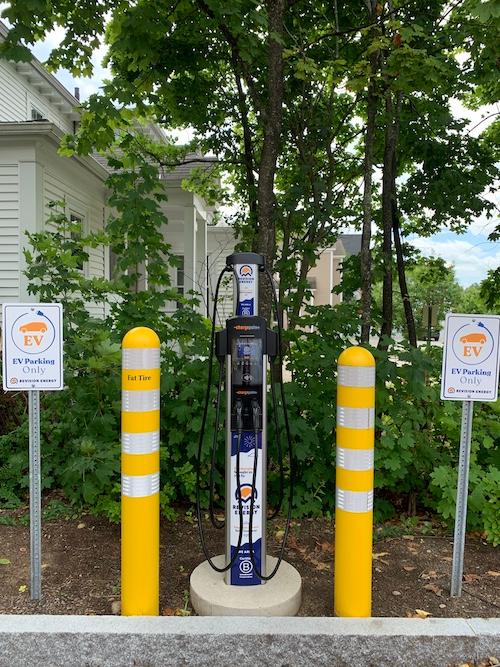
Lastly, a word about dog food. We can learn a lot from eating our own dog food, in the software/consumer-facing meaning of the term. ReVision Energy, through its affiliated ReVision Impact, intends to own and operate charging infrastructure throughout New England. Our first investment was in Concord, NH outside the state house, where we operate two dual pedestal level 2 chargers from ChargePoint.

Interestingly, because of the chargers’ location, they get regular bi-partisan use, (educating policymakers about public charging)! Their touch screen even educates drivers about the savings to be had from installing rooftop solar on their homes. Meanwhile we are learning about driver charging behavior, how to set rates per kWh (which have increased in NH significantly this year), the value of signage, and the economic model for operating these over the long haul.

Soon, ReVision Impact will be owning and operating its first DC Fast Chargers in Belfast and Ellsworth, ME, with more placements on the way.

(Note: At the time of writing, the federal tax credit eligibility cap just increased on EV MSRP and most manufacturers are lowering prices).

Filed Under: Under the Sun Blog Tagged With: by Barry Woods, EV Updates

EV Corner: Ford F-150 Lightning

January 9, 2023 by Ale Moreno

The Ford F-150 Hints at the Future of Fleet Electrification

Like many businesses, ReVision Energy maintains a fleet of vehicles to assist its sales force, service teams, and installers. We now have upwards of 180 vehicles, including seventeen plug-in electric vehicles, and eleven more on order, most of which are Chevy Bolts. Each branch also has charging stations on site for public, fleet, and employee use, with twelve Level 2 charging stations at our South Portland location alone!

Our workplace charging program has also encouraged a large number of ReVision employee-owners to buy electric vehicles (EVs) for their personal use. We continue to learn from our behavior (and it informs our strategic thinking and customer education) as we transition to fully-electric transportation, a task that is thankfully becoming easier. Our goal is to replace everything with plug-in electric vehicles as the products become available.

Eventually our entire fleet will charge using solar electricity, with vehicle batteries offering grid-connected bi-directional charging capacity to feed the building, avoiding demand charges and offering back up generation.
 

Does all this seem far fetched in 2023? Nope. The Ford F-150 Lightning pickup truck is the poster child for the future of fleets at businesses such as ours.  Recently we received our first F-150 Lightning; let’s take a moment to review it, considering the larger context of what this technology means.

The Ford F-150 Lightning

Lightning charging.jpeg

While the F-150 has been the best-selling combustion vehicle in the U.S. for the past 40 years, its newest and all-electric family member is sure to bring even more shine to the lineage. Sporting a battery sized from 98 kWh to 131 kWh and with over eleven outlets for appliances (including one that offers 30A 240V connection!), this vehicle is literally a power station.

Consumers can purchase a Home Integration System that allows for bi-directional charging at 9.6kW. The average residential household uses 20 kWh per day (likely to increase as we electrify everything), which means the truck’s battery is sufficient to power a residential home for 2-5 days before needing a recharge (which can be done with rooftop solar during daylight hours). When driving, the battery provides range of 230-320 miles at an average of 2.3 miles per kWh – not bad considering this is a BIG truck. 

Lightning Frunk 1.jpeg

The front trunk (“frunk”) is large and lockable (the first locking trunk embedded in a pickup design to our knowledge). It is a full-sized pickup with 4 x 8’ payload capable of carrying 2235 lbs and towing capacity of 7700 lbs (capable of 8500Lbs with the upgraded towing package)! Of course, towing dramatically impacts range which, depending on trailer weight, means 50% or more decrease in range. On the plus side, energy savings range from $50-$70 per 300 miles when compared to gas versions like the Raptor. As battery technology continues to improve, so will these numbers.

ReVision uses pickups for many tasks, including project management and deliveries, service calls, and marketing (we have to tow our Tiny Climate Classroom around the region!) Everyone who has driven it loves it. Look for our fully branded Lightning (soon to be joined by others) driving around your neighborhood, and expect to see it at EV events in your community as well.

For more info check out this great summary by Tom Moloughney: 2022 Ford F-150 Lightning: InsideEVs First Drive Review (Charging, Towing, and More!) – YouTube

Filed Under: Under the Sun Blog Tagged With: by Barry Woods, EV Updates

EV Corner: Driving Electric Makes $ense

November 28, 2022 by Ale Moreno

Driving Electric Makes $ense

As more Americans learn about the benefits of driving electric, the choice (and trade-offs) becomes clearer. So much depends on being critically minded and well informed. The fossil fuel industry has had over a hundred years of growth and political entrenchment; its economic and messaging power are, at times, breathtaking. The EPA even has an EV Mythbusting page on its government website. Misinformation includes vehicles running on “dirty” electricity, a lack of charging opportunities, and vehicle safety. 

Each of these myths has a weak foundation, but talking points like these are insidious. The bigger issues facing the clean energy and transportation transition are related to constructing a system whose benefits are accessible to every American, and which consciously places as little burden on the Earth as possible, leading to equity and sustainability. 

EV Accessibility

MicrosoftTeams-image (106).png

Equity can be partially addressed by bringing the cost of EVs down to a point where every American has options to purchase and operate them. Currently most luxury vehicle brands do have comparably priced EV versions. Yet auto manufacturers should be planning on creating vehicles that are affordable across all platforms and pricing options – sedans, hatchbacks, pick-up trucks.  We don’t need electrified Humvees; we need better transportation choices, including smaller scale, longer range passenger vehicles. While the technology, particularly the batteries, is in its infancy, we can see glimmers of the future with GM’s Chevy Bolt and Nissan’s LEAF as two of the more reasonably priced, longest range vehicles out there.

We also see state-based incentives as having a role in closing the current price gap. Efficiency Maine, for example, offers one of the most aggressive state rebates in the US for low income purchasers- $7500(!) These can be stacked with federal incentives to further reduce upfront costs.

The Cost of a Solar Gallon

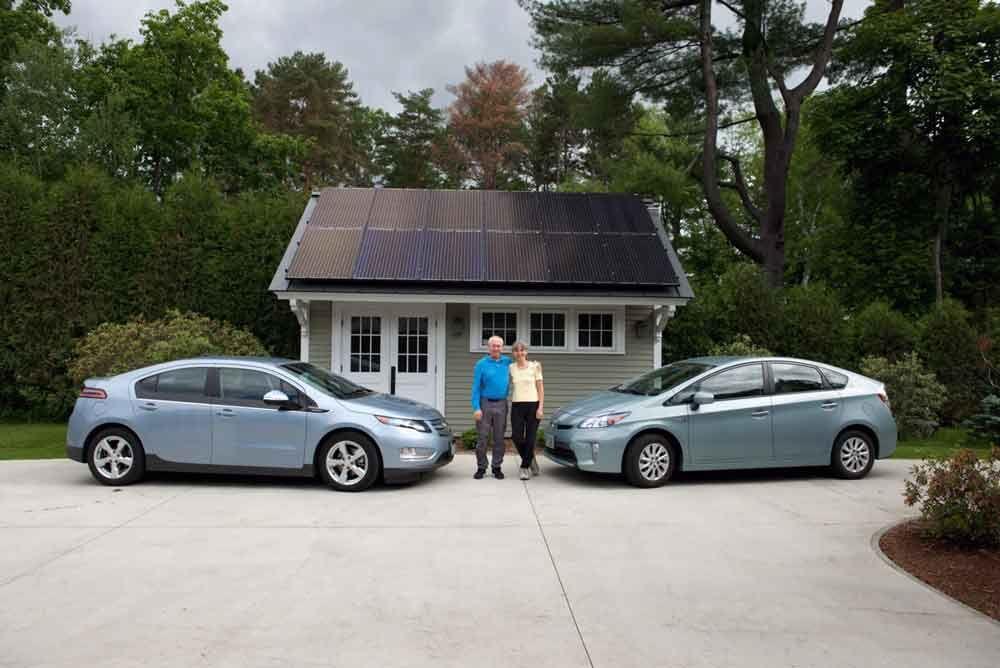
In the US, where gas prices currently hover around $4 a gallon or more, electricity as fuel can dramatically reduce operating costs over the life of the vehicle—and it’s cleaner! ReVision Energy has recently updated our analysis of the value of combining rooftop solar and driving electric to determine the cost per “solar gallon” equivalency.

If you directed your PV array’s electrons to charge your vehicle and compared that energy cost to the cost of a gallon of gas, how cheap is a solar gallon? By our current calculations, we estimate the value of a solar gallon to be $0.84. Yes, that’s less than a dollar per gallon.

Hanover Nh Solar Ev Lewin

Our methodology uses the average fuel efficiency of American cars from 2020 (25.4 mpg) and compares it to the average efficiency of EVs (0.346 kWh/mile). We calculated the cost of a kWh of solar electricity based on about 500 of our recent residential projects, assuming they will be producing clean electricity for 25 years. Standard electricity provides considerable discount as well, $1.85, but clearly residential rooftop solar offers more dramatic savings. The lack of any significant annual maintenance costs only adds to this savings.

Per capita, Americans consumed 356 gallons per year of gasoline in 2020 (down for 414 gallons in 2019, pre-Covid). At $3.80 per gallon, that equates to $1352 per person per year. By comparison, at $0.84 per gallon, it would be $295.48 per person, or a savings of $1056.52 per year. How frequently can you save $1000 a year that benefits the environment and requires no more significant behavior change than learning to charge your cell phone?

Filed Under: Under the Sun Blog Tagged With: by Barry Woods, EV Updates

EV Corner: Maine’s DC Fast Charging Network

October 3, 2022 by Ale Moreno

Maine Leads the Nation in DC Fast Charging Technology

Our EV Corner column is written by Barry Woods, Senior Director of E-Mobility.

As more of us get experience driving electric, we come to realize that one of the few times we actually need public charging is to assist the battery in going longer distances. Tesla’s Supercharger network is perhaps the best current example of a DC Fast Charging (DCFC) network designed to allow drivers to cross the entire country by stopping briefly to charge up and continue on their way. Non-Tesla drivers have had “charging envy” (the opposite of range anxiety) when they passed one of their myriad charging clusters.

DCFC Network Expands

This is changing. Maine has begun a serious effort using Volkswagen funding (and soon federal infrastructure money) to grow out its non-Tesla DCFC network and now has 14 locations functioning or under construction.

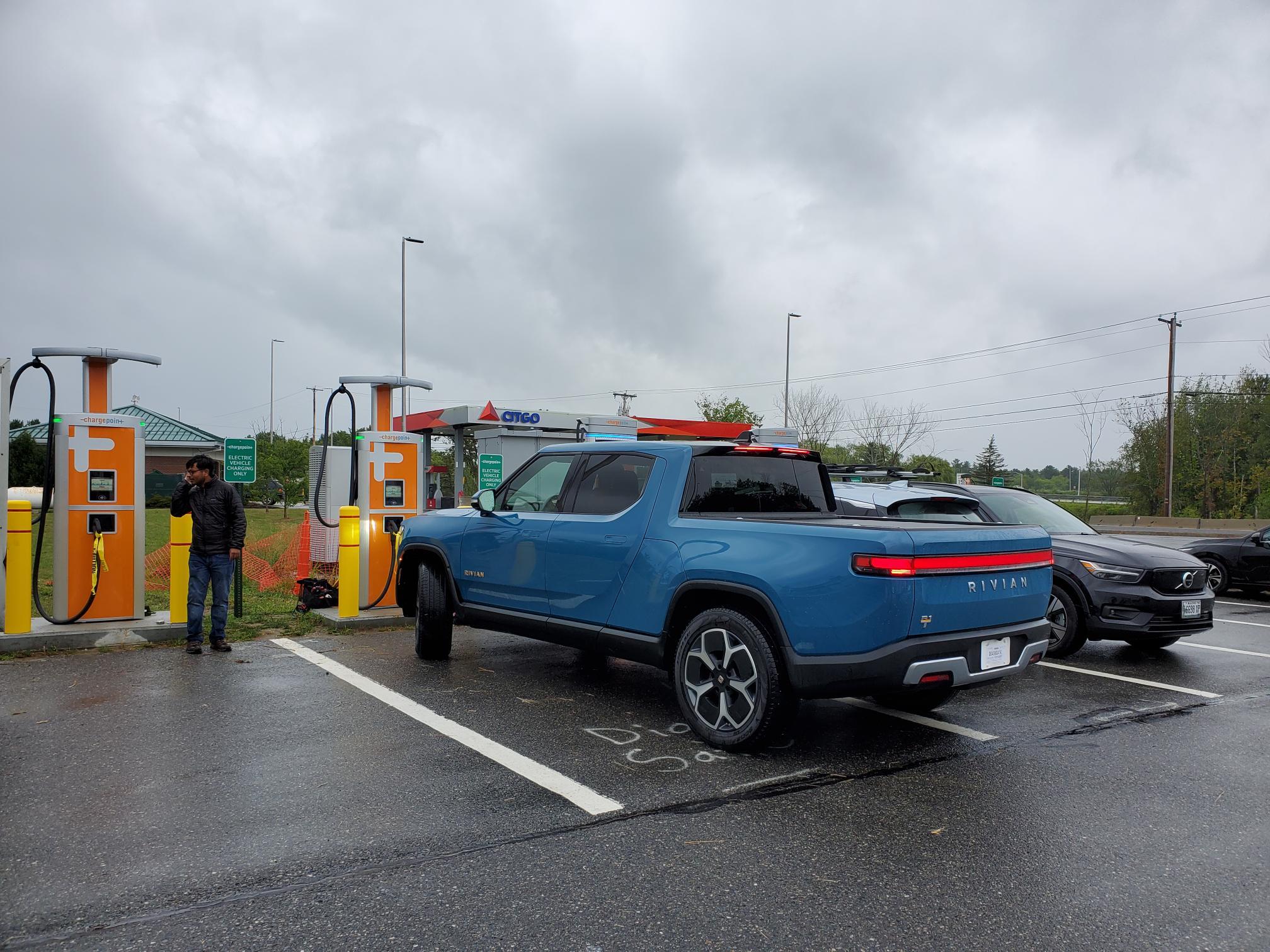
ev-charging-rivian.jpeg

The speed of DCFC technology has been increasing as well as the vehicle batteries’ capacity increases, and Maine has now activated the first public ChargePoint DCFCers capable of 150 kW in the country, courtesy of a partnership between ChargePoint, Efficiency Maine Trust, and ReVision Energy.

ChargePoint owns and operates its new Express Plus 150 kW chargers at Maine Turnpike’s Kennebunk (north and south) and West Gardiner service plazas. These chargers are three times as fast as the older 50 kW versions and many newer model EVs can take advantage of them to compress charging times.

Our project manager Dan Robinson witnessed this firsthand:

“Within minutes of the Gardiner commissioning, we had a brand-new Rivian R1T with temp plates pull in. The owner was very excited to see the additional infrastructure. He was able to charge quickly and continue on his way North. At Kennebunk North plaza, also within minutes of commissioning being completed, the brand-new Proterra/Thomas school bus destined for Old Town ME, pulled in for a charge right out of the build factory in Kennebunk, WC Cressey and Son. We were able to get the driver on the ChargePoint app and charging before they headed off to the next DCFC on their route, Skowhegan Hannaford – part of the Phase 1 build.”

First of its Kind in the Country

ev-bus.jpeg

These are the first public facing 150 kW ChargePoint chargers in the country. ReVision is proud of its team for helping get these in the ground and save time for EV drivers. These projects are part of the State of Maine’s ongoing efforts to grow a fast charging network for non-Tesla vehicles that offers fast and reliable charging for residents and tourists to enjoy the state and help its environment through reduced carbon electrification.

Look for more news on ReVision’s ongoing role with electrifying transportation, including ReVision branded public charging to help further the transition and allow us to spread clean energy throughout New England!

Filed Under: Under the Sun Blog Tagged With: by Barry Woods, EV Updates

Electric Vehicle Updates

January 3, 2022 by Ale Moreno

We’re heading into a New Year and we have a lot going on in the EV world, from new pilot programs to local charging stations. Below, Director of EV Innovation Barry Woods updates us on matters both local and national.

Bipartisan Infrastructure Bill Sends EV Charging Money to States

While many of us were disappointed by the ongoing delays associated with the Build Back Better bill, we do have immediate cause to celebrate. The bipartisan bill passed by both houses and signed into law by President Biden contains many transportation infrastructure provisions, including $15B for EV charging infrastructure.

We see Maine and New Hampshire receiving about $19M each from this fund and Massachusetts getting $63M, with additional funding available through a competitive federal grant process. These represent significant financial boosts designed to assist all states in growing their DC Fast Charger networks as well as fund Level 2 charging programs. For most states these monies will flow through their Departments of Transportation but further details are pending.

Charging infrastructure growth is critical to hastening the transition to plug in vehicles, creating jobs and slowing the impact of climate change. The Build Back Better bill is equally important for the work it would do in leveling the playing field with subsidies on many classes of electric vehicles. Please reach out to your federal delegation to ask that they also support this vital piece of legislation.

Ev Charging Sm
 

In partnership with Flex Charging, ReVision has been awarded funding to help Efficiency Maine Trust pilot the Onboard EV Charging Management program in Maine. By simply using the FlexCharging phone app platform to connect with the existing manufacturer’s vehicle network (like GM’s Onstar, Tesla, Nissan) EV drivers can participate in a study that monitors charging behavior and helps manage charging to minimize carbon emissions and charge off-peak. We are looking for 40 current Maine EV drivers at single family residences with basic chargers who might be interested in joining the pilot.

We are still working out details but there will be a modest financial incentive and an opportunity for you to help move the ball forward in learning more about charging behavior and how phone app technology might be used to harness charging’s significant grid benefits. Please contact us if you’re interested.

Falmouth Police Department Goes Electric

We want to thank the Falmouth (ME) Police Department, and its Chief John Kilbride and Lt. Jeffrey Pardue, for being one of the first police forces in our region to start electrifying its light duty fleet and set itself on the road toward decarbonization. They even hosted a ribbon cutting to celebrate the start of this transition away from fossil fuels. They recently purchased a Ford Mustang Mach-e and added four level 2 chargers to their fleet parking area, incentivizing further expansion of both workplace charging and police vehicle use.

Rather than burning gas while idling, officers can bask in the warmth provided by a lower cost, zero-emission battery system, while saving the department money and eliminating carbon emissions. Falmouth PD estimates it has already saved 3000 gallons per year with other hybrids and used its fuel budget savings to offset the cost of the chargers in conjunction with a charging station subsidy from CMP and electric vehicle rebates from Efficiency Maine Trust.

ReVision partnered with CMP to perform this installation, one of the first of 60 plugs as part of the utility’s first make ready infrastructure pilot program, installing chargers across the state at public and private host sites. This pilot, like many in other New England states, will become a test case for larger utility investment in helping to accelerate public charging infrastructure across their service territories. Just as importantly, Falmouth’s experience with EVs will inform other police departments and strengthen its reputation as a leader in public safety and contributing to a healthy community.

Filed Under: Under the Sun Blog Tagged With: by Jill McLaughlin, EV Updates

Drive Electric! An EV Update

October 4, 2021 by Ale Moreno

As always, there’s a lot going on in the Electric Vehicle world! From electric school buses to another successful National Drive Electric Week, we’re recapping all of your favorite EV info for you below:

Electric School Buses are Already Here!

Electricbus Newscentermaine

The new all-electric school bus on MDI. Photo credit: News Center Maine

Mount Desert Island High School officially has an all-electric school bus in its fleet, the first in Maine. Making national news, the high school – which is solar powered – used money from the Volkswagen settlement fund to purchase the bus. NewsCenterMaine has the full story . Beverly, MA will also soon have electric school buses!

“‘The kids aren’t breathing the diesel exhaust, I’m not breathing the diesel exhaust. I am coughing less than I used to,’ said Van Gorder. ‘We estimate we are going to save about $5,000 a year in fuel, $2000 a year on standard maintenance, no oil changes, no filter changes.'”

Electric Vehicle Charging Grants for South Portland Businesses

Ev Charging Sm

South Portland has announced a Level 2 EV charging grant program for businesses and commercial properties located within its city limits! This is a great opportunity for businesses – check out our webpage on it and see if your business qualifies!

SendavidwatersEV
New Chargers in Maine and New Hampshire

In the last two months we’ve installed a variety of Level 2 Chargers across Maine and New Hampshire. For CMP’s Make Ready pilot program, we’ve installed chargers at Wells Library, Falmouth Police Department, Oxford Casino, and the Town of Lisbon.

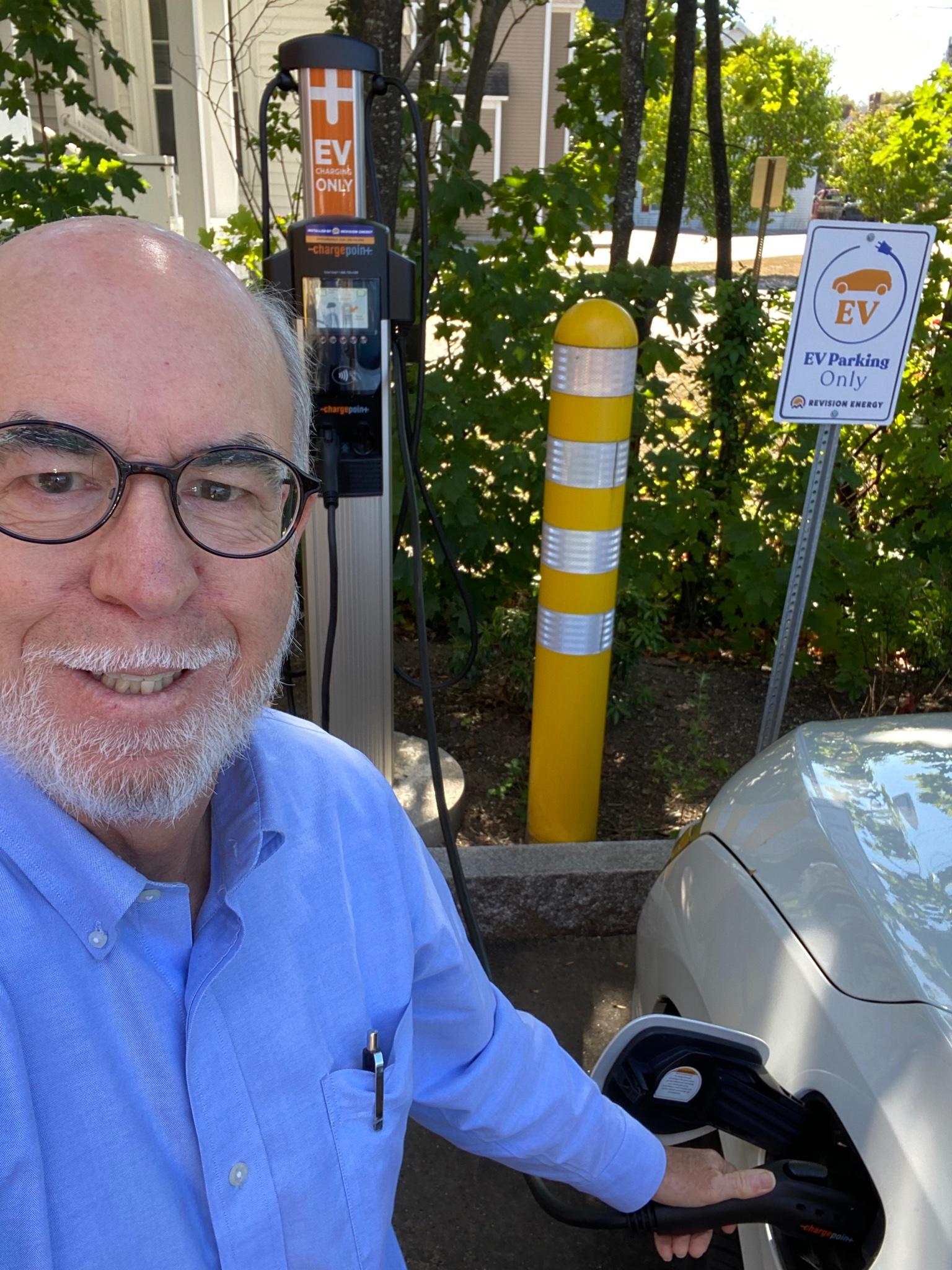
In New Hampshire our new chargers in the Green Street Community Center Lot in Concord have been a huge hit. Here’s Senator David Waters charging his car before going into work at the state Capitol:

National Drive Electric Week 2021

img-9964.jpg

Andover’s Ride & Drive gets festive with pumpkins, apples, and Sunsquatch.

National Drive Electric Week (“NDEW”) took place from September 26 – October 3 this year, with events held at over 200 locations across the United States and Canada. We attended events in Beverly and Andover, MA, Exeter, NH, and South Portland and South Paris, ME. These events give consumers first hand exposure to the benefits of driving electric as well as allowing them to talk with actual drivers about their real-world experiences. They are fun and educational, and they convince people the future is electric. NDEW was created by Plug In America, the Sierra Club, and the Electric Auto Association, with the support of national sponsors like Nissan, Wells Fargo, and ClipperCreek EVSE and local sponsors like Revision Energy, CMP, and an array of volunteer organizers.

EVs Ndew

Yankee Ford’s Mustang Mach-E at the South Portland Ride & Drive event.

This was our sixth National Drive Electric Week (“NDEW”) event in South Portland since 2013 and 8th overall in the Portland area. This year had 8 vehicles in the ride and drive rotation, 6 from private owners and two from dealers – Berlin City Toyota (Rav4 PHEV) and Yankee Ford’s Mustang Mach-E. Josh Baston, ReVision’s EV Charging Project Manager, volunteered his Tesla Model 3 and allowed folks to drive it! He loves sharing his car! Chuck Hayward, ReVision’s new EV charging designer, toured the event to learn more about driving and charging. We had Mayor Misha Pride speak about South Portland’s One Climate Future efforts, Mollie Siegel from Efficiency Maine Trust talk about their incentives for cars and charging, and Keith Carson, Evening Meteorologist for Channel 6 spoke about his Kia Niro ownership experiences. We had over 200 people attend and gave out at least 100 ride and drives among all the cars!

Look for Drive Electric Earth Day in April for the next big ride and drive opportunity. Go to www.driveelectricweek.org to learn more.

ReVision Energy’s Director of EV Innovation Barry Woods speaks at the South Portland event.

Granite Outdoor Alliance Q+A with Barry Woods

A huge thanks to our partners at Granite Outdoor Alliance (GOA) for inviting our Director of EV Innovation Barry Woods to participate on their recent panel “Who’s In Charge? EV’s Future in NH.” You can watch that recording here to learn about New Hampshire incentives, local charging stations, and more.

Filed Under: Under the Sun Blog Tagged With: by Jill McLaughlin, EV Updates

South Portland Grant Program for EV Charging

August 12, 2021 by Ale Moreno

Electric Vehicle Charging Grants for South Portland Businesses

Ev Charging Sm

South Portland has announced a Level 2 EV charging grant program for businesses and commercial properties located within its city limits. Grant applications are competitive, and will be reviewed and awarded quarterly for the foreseeable future. This subsidy can also be stacked with the Federal Alt Fuel infrastructure tax credit covering 30% of hardware and install costs – yielding remarkable project savings!

This grant program gives local businesses the opportunity to enjoy the financial and communal benefits of offering EV charging to their customers. There are many factors to consider, and ReVision Energy can help you analyze the suitability and costs of adding level 2 charging stations to your property or business.

Below we have provided program details, our recommended project overview, and a breakdown of total estimated cost.

Level 2 Electric Vehicle Charging Grant Overview

Who Can Apply:

Anyone who owns a for-profit business in South Portland, ME

How To Apply:

Eligible businesses contact ReVision Energy to start application process call 207-221-6342. ReVision will conduct a site visit and provide a quote, outlining your business EV charging plan. Using that information, you will fill out this form and submit it to the City of South Portland.

Funding Awarded by the Grant:

This program will fund up to 6 Level 2 charger plugs at eligible businesses or workplaces.
The city will provide $5000 per plug OR 50% of the allowable project costs, whichever is less.

Allowable project costs include:

Equipment, materials, construction, design, permitting, and installation of chargers
Electrical system upgrade or new service
Related equipment (pedestal bases, bollards, signage, shipping)

Additional Requirements:

Awardees must provide two ports each with a minimum of 40A per port and use the universal connector (J1772).
Chargers must be made publicly accessible.
Each port must have one dedicated parking space with proper signage.
Awardees must make a 5 year commitment to operate.

What Will it Cost?

Four EV Charging ports in Oxford, Maine.  Using ReVision’s lengthy experience installing hundreds of EV chargers, we will recommend to most applicants that they install four ports and a new 200A service. This will provide the best cost savings per port, and requires four dedicated parking spaces. The charging technology could be basic chargers or smart charging; installation costs are virtually the same for either choice and we can advise on technology choices based on the applicant’s location and needs.

We provide rough estimates below to give you an idea of the typical costs of these projects prior, breaking it down into hardware and installation costs. We then show you the much lower project cost after adding funding from the grant and from the Federal Tax credit, showing both basic charging and smart charging projects.

Estimated Project Cost Breakdown

Level 2 Hardware costs using pedestal mounting (Note: wall mounting is cheaper but depends on the location)

Two (2) pedestals with 4 ports total
Basic charging ($5,500)
Smart charging (11,500-$18,000) (Note: Smart Charging requires additional network/warranty costs but they are not covered by the award)
Installation, including utility new service

Utility new 200A service ($2,000)
Typical install for two pedestals ($20,000)

Project Cost with Grant

 Basic Charger Project*Smart Charger Project**

Estimated cost for charger hardware & installation (4 plugs)

$27,500

$40,000

Federal Tax Credit (30%)

– $8,250

– $12,000

South Portland Grant

– $13,750

– $20,000

Cost to host $5,500 $8,000

*Note: Does not include operating costs. Host site pays for electricity usage when selecting basic charger, which will vary depending on usage. **Note: Does not include operating costs. Smart charger project estimate costs excludes ineligible expenses of network services and extended warranty. Those costs vary depending on smart charger technology chosen.

Get Started!

ReVision will work with applicants to tailor these estimates to their business’s needs, and to factor in installation variables that can add/detract from these estimates. Such variables include the distance between parking and electrical, asphalt/concrete work, the type of mounting required, and the utility work needed.

If you are a South Portland business interested in applying for the Level 2 EV Charging Grant Program, contact our EV department to get your application process started, give us a call at 207-221-6342. In the meantime, check out one of our featured Portland EV charging station projects.

Filed Under: Under the Sun Blog Tagged With: by Jill McLaughlin, EV Updates

EV Charging Update

July 13, 2021 by Ale Moreno

Keep an eye on our EV incentives page for more updates and follow @barrytwoods on twitter for more EV-specific info happening in the Northeast and nationally. Remember to check www.drivelectricweek.org for electric vehicle ride and drive events coming to your community between Sept 25 and Oct 3 as part of National Drive Electric Week. If you want to test drive these vehicles and get the straight scoop from owners, go to one of these events!

Maine:

Mills Gardiner

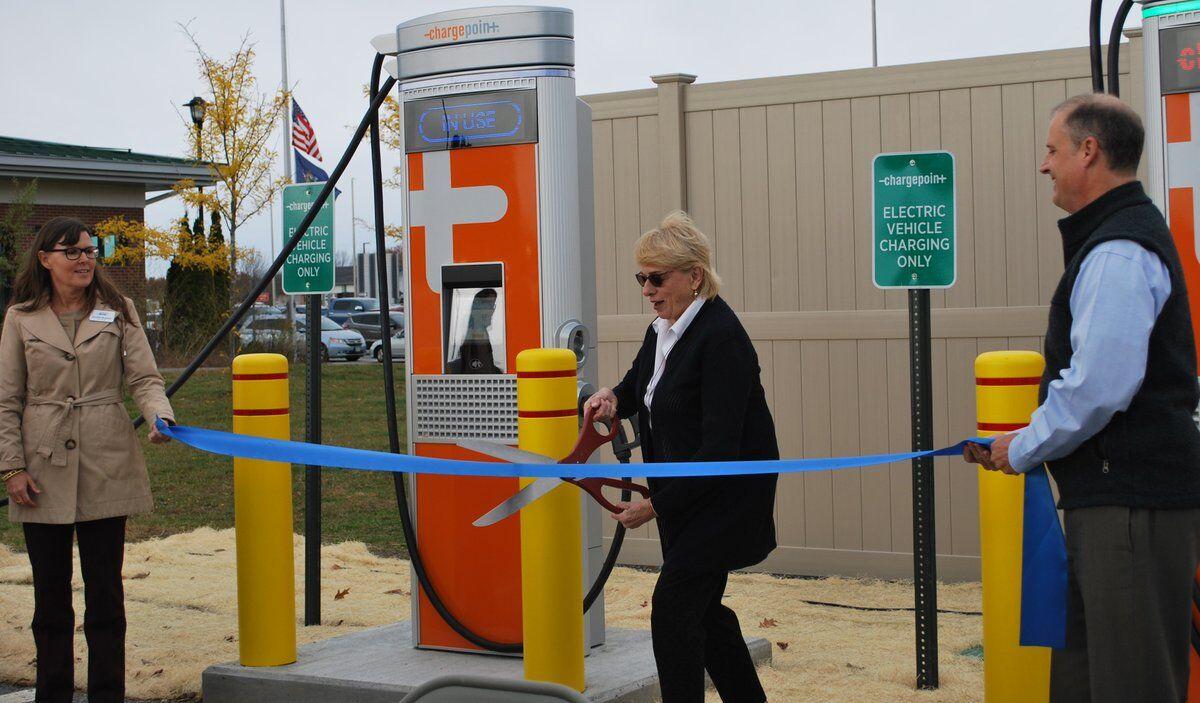
A 2019 ribbon cutting launched Phase 1 of the Efficiency Maine project.

Maine is keeping us busy these days. We just won awards from Efficiency Maine for installing, owning, and operating DC Fast Chargers (DCFC) at two sites critical to the state’s ongoing electrification efforts. Hannaford Brothers has generously allowed us to build out these charging clusters at their Ellsworth and Belfast locations using ChargePoint hardware. It will be our first real opportunity to find out what it takes to own and maintain DCFC’ers for a growing electric driver population here in Maine (as well as help our great tourism industry). We’ll also be involved in a number of other installations as part of their latest round of Volkswagen-funded projects to grow the fast charging network. These should be operational in the first half of 2022. Thank you, Efficiency Maine!

Chargepoint Kennebunk

ChargePoint chargers at the Kennebunk Rest Stop

We are also finalizing fourteen Level-Two charging projects (each with four or more charging ports) as part of CMP’s first “make ready” program. These projects cover a wide geography and host site demographic, including Saddleback Ski Area, Bates College, Oxford Casino, Holiday Inn (Wells) , the towns of Belfast, Lisbon, Kittery, Wells, Old Orchard Beach, Falmouth Police Department, and Southern Maine Health Care (Biddeford). CMP has developed a robust EV team internally and is streamlining the process to allow easier and more economical development of charging resources in their service territory. We expect Versant to initiate similar make ready funding efforts in the near future as well. Utility efforts and investment are critical to the long term success of transitioning to electricity and away from fossil fuels.

Maine’s cities and towns are getting ready:

We completed Level-Two smart charging projects with the City of Augusta and are working with Fairfield and Cape Elizabeth to place charging resources for additional public use, including charging at Fairfield’s Police Department (whose Police Chief now drives a Hyundai Kona for work!) and soon at Cape Elizabeth’s Fort Williams and Portland Headlight park!

Proterra

Proterra Battery-Powered Bus, coming to Portland Metro later this year.

Lastly both Portland and South Portland are beginning to expand their metro area charging resources and meet their joint climate action plan. Check out their city websites for more details. We’ve already added smart charging at Payson Park, Portland Jetport, City Hall and soon the High Street public lot.

Besides light duty work, we expect to perform the installation of fast charging infrastructure for Portland Metro’s new all-electric Proterra 40′ transit buses due for arrival late 2021. This will involve three terminals, Portland, Biddeford and Saco, so longer, clean bus runs will be a reality for the first time. The world of medium and heavy duty is starting to go electric in a big way, with school buses and public and private fleets getting more and more options to choose from.

New Hampshire:

While a bit quieter than other states, we are optimistic that New Hampshire will soon release plans for placement of an initial fast charging network. This is Volkswagen-funded and will address resident and tourist-based charging needs along major travel corridors.

We worked with Liberty Utility to place Level-Two ChargePoint units that they will own and operate at the Tuscan Village commercial/retail development in Salem. Liberty is also planning on placing DCFC’ers at this location in the near future. We are now completing our install of Level-Two chargers on Green Street in Concord. We will be owning and operating those units while providing critical usage data to the state.

Massachusetts:

Utility and state-based funding remain the central play in MA these days. Both Eversource and National Grid have nearly completed their first phase of Level-Two and DC Fast Charging funding, and will be going back to the DPU for a grander scale second phase. We have a number of Level-Two and DCFC’er projects in the pipeline with towns and private entities through these programs. We completed a retrofit at Hanover Mercedes Benz as they (and many other dealers) begin to invest in charging infrastructure for their upcoming newest line of plug in electrics. MA continues to hasten its transition to driving electric, with a goal of 300,000 plug-ins by 2025.

Filed Under: Under the Sun Blog Tagged With: by Jill McLaughlin, EV Updates

  • « Go to Previous Page
  • Page 1
  • Page 2
  • Page 3
  • Go to Next Page »

sidebar

sidebar-alt

Subscribe to newsletter

Which newsletters would you like to receive?

Consent Enjoy the Sun(Required)
Consent(Required)
To provide the requested information, we need to store and process your personal data. By submitting this form, you agree to allow ReVision Energy to store and process your personal data for this purpose. Please see our privacy policy for more information.

  • Merch Store

Sitemap

  • Solutions
    • Homes
    • Commercial
    • Service
  • Our Work
    • Projects
  • About
    • Our People
    • Social Impact
    • Our Locations
    • Careers
  • For Customers
    • Support & Service
    • Be A Solar Champion
  • News & Events
    • Releases
    • Press
    • Under the Sun Blog
    • Events and Webinars
  • Our Partners
  • Resources

Follow Us

General Contact

Contact one of our branches for sales and non-service inquiries, or email us at hello@revisionenergy.com

Service

Need support for your existing system? Contact our Service Team:
Reach us at (207) 747-0076 or open a Support Ticket.

South Portland, ME

(207) 221-6342

Map & Directions 

Montville, ME

(207) 589-4171

Map & Directions 

Brentwood, NH

(603) 679-1777

Map & Directions 

Enfield, NH

(603) 632-1263

Map & Directions 

North Andover, MA

(978) 308-9041

Map & Directions 

Westfield, MA

(413) 884-1000

Map & Directions 

Copyright © 2026 ReVision Energy. All rights reserved.

Privacy Policy | Terms