• Skip to primary navigation
  • Skip to main content
  • Skip to primary sidebar
Revision Logo Revision Logo
Solar Calculator Get Started
Get Started Solar Calculator
  • Solutions
    • Homes
    • Commercial
    • Service
  • Our Work
    • Projects
  • About
    • About
    • Our People
    • Social Impact
    • Our Locations
    • Careers
  • For Customers
    • Support & Service
    • Be A Solar Champion
  • News & Events
    • Releases
    • Press
    • Under the Sun Blog
    • Events and Webinars
  • Our Partners
  • Resources

Give us a call

Maine (207) 221-6342
New Hampshire (603) 632-1263
Massachusetts (978) 308-9041
Contact Us

EV Updates

Best Practices for Efficient EV Fleet Charging

July 9, 2024 by Ale Moreno

Electric Vehicles (EVs) and vehicle fleets are the perfect pairing; with lower maintenance and operating costs, direct control over the fuel source, and added environmental benefits, EVs offer fleet managers more control over their vehicles. However, operators can only capitalize on the benefits of electrifying a fleet with reliable charging infrastructure. 

One of fleet managers’ primary responsibilities is ensuring their vehicles are ready for deployment. For electric fleets, this readiness relies on the availability of well-maintained charging stations. Although these stations are easier to maintain than traditional gas pumps, their upkeep is still vital for sustaining operational efficiency. 

At ReVision Energy, we install and service charging stations for various applications. Our entire residential sales fleet is electric, with twelve Level 2 chargers constantly in use throughout the day at our headquarters. Josh Baston, ReVision’s EV Infrastructure Operations Manager, shares some lessons we’ve learned about EV charging service in our fifteen years of installing charging stations. Here are six key takeaways fleet managers should consider for keeping their charging stations running smoothly: 
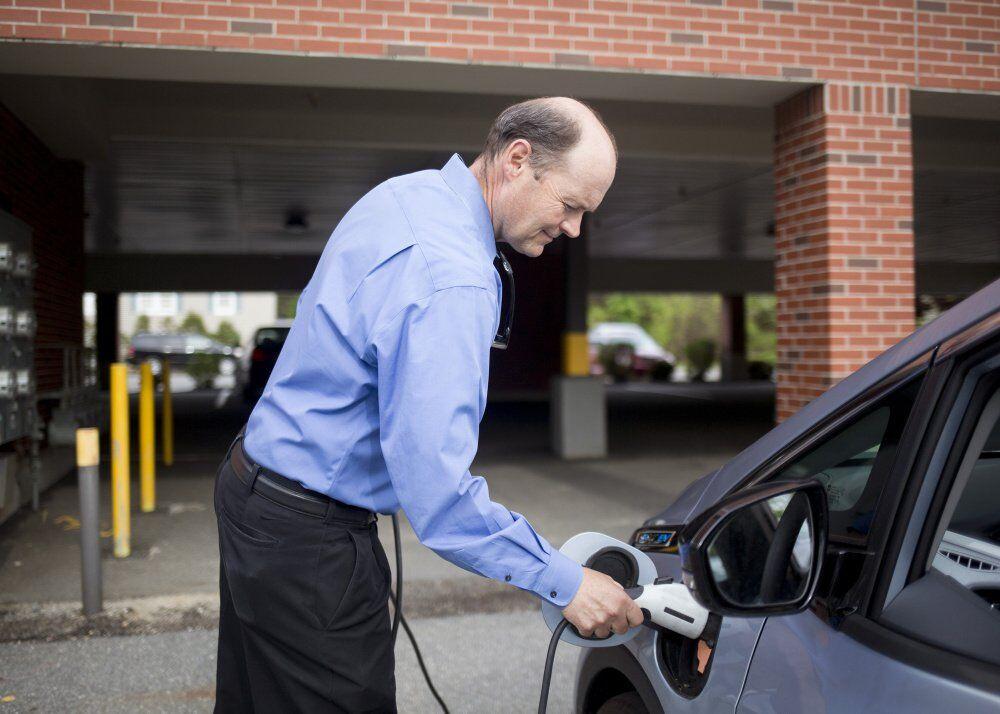
Barry Woods Plugs In An Electric Car In Portland, Maine. Photo Courtesy Portland Press Herald.

User Education 

Josh emphasizes that educating vehicle users is critical to minimizing servicing needs. “It boils down to making it easy for the fleet users to do the right thing.”  Proper handling of the chargers is essential. Here’s how we do it at ReVision: 

  1. Easily accessible instructions:

    One of the easiest ways to ensure people are informed is to place user instructions on the chargers themselves. This placement will help guide and remind users of best practices when handling the chargers. These instructions should include elements like step-by-step charging instructions (how to plug the vehicle in), troubleshooting tips (what to do if the charger doesn’t start and indicators of a successful connection), and maintenance reminders (keeping the area clean and conducting regular visual checks). Instructions should include specifics unique to your fleet as well. At ReVision, we use RFID cards to activate and collect charging data. When first implemented, we had some issues with users not understanding how to activate the chargers with the RFID cards. Clear and accessible instructions solved this problem.

  2. Cable management:Proper cable management is another way to minimize misuse. Many installers, ReVision included, offer a retractable cable system that automatically coils the cable back into the charger, ensuring the connector isn’t left on the ground, where most of the damage occurs.
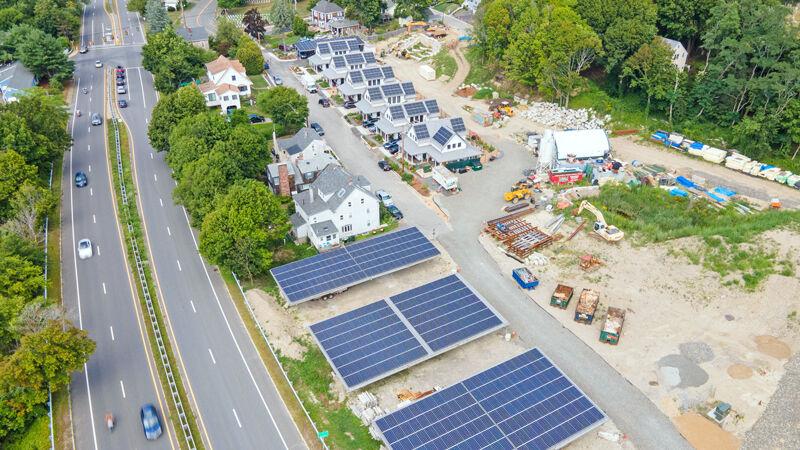
Hillside Center

Preventative Measures

Adopting proactive preventative measures is crucial in managing an efficient charging station network. By staying prepared, fleet managers can safeguard against unexpected issues and maintain high service reliability. Here are some tips: 

  1. Power-sharing chargers:

    To address electrical capacity concerns, fleet managers should consider chargers that share power rather than requiring additional capacity. This approach allows for the expansion of charging infrastructure without significant and potentially costly electrical upgrades. Power-sharing chargers can communicate with each other in a closed network, reducing their power output to stay below an established threshold. These chargers enable operators to set power limits for an entire group of chargers.

  2. Contingency plan:Having a backup plan in case of an outage will ensure fleets are still prepared to operate in unexpected situations. This plan could be as simple as knowing the location of the closest non-network or public fast charging stations.

  3. EV charging service provider:Maintain direct communication with your charger provider to know who will service your chargers, especially since many providers outsource their servicing. If a maintenance contract is established, it should specify response and repair times, as well as uptime requirements.

  4. Spare chargers:Keep a spare charger on hand to minimize the charger outage time. This strategy will also reduce maintenance costs, allowing immediate replacement without waiting for repairs. If a broken charger is under warranty, the replacement charger sent by the provider will act as the new spare.

Effective management and maintenance of EV charging stations are fundamental to harnessing the full potential of electric vehicle fleets. Through user education and preventative measures, fleet managers can increase the lifespan and reliability of their charging infrastructure. 

Interested in learning more about fleet electrification? Register for an upcoming Zoom webinar on August 20th at 12:00pm EST. 

Want to get in touch with our EV team to electrify your fleet? Fill out the form on our commercial EV charging page or send us an email hello@revisionenergy.com and we’ll reach out.
Share this page with friends

Filed Under: Under the Sun Blog Tagged With: by Ben Joslin, EV Updates

Your Employees Want Workplace EV Charging

February 29, 2024 by Ale Moreno

If you’re a business owner, chances are you have employees who currently own or are considering buying an all-battery electric car or a plug-in hybrid. If not now, they certainly will in the future. You have also likely noticed a shift in consumer sentiment towards choosing businesses that employ environmentally sustainable business practices. Workplace electric vehicle (EV) charging is one of many ways to promote sustainability in your organization and accommodate employees who are already driving electric. Still not convinced? We’ve got some data to prove it.  

Convenience and Productivity 

Introducing charging stations at the workplace gives employees who drive EVs the dual benefit of convenience and productivity. What may be considered an amenity now will eventually be a necessity, as more employees need to charge their vehicles during work hours. Providing charging on-site means they won’t need to seek out charging stations elsewhere.   

Attracting and Retaining Talent  

As competition in the job market has increased, it’s harder for businesses to distinguish themselves as desirable employers. Providing charging stations is a way to differentiate your business; it’s a notable perk for prospective employees. A 2022 survey by Deloitte reveals that the climate crisis is a top concern for Gen Zs and millennials, and that two out of five turned down a job because it didn’t align with their personal values. On top of that, younger workers who were satisfied with their employers’ environmental impact were more likely to stay with the company for more than five years. Providing charging stations shows a company’s commitment to sustainability and addresses the growing demand for EV charging stations, appealing to a diverse workforce. 

This growing environmental awareness is apparent in the rising adoption rate of EVs in New England. The ISO-NE 2023 Transportation Electrification Forecast predicts that the number of EVs on the road will be 32 times greater in ten years (a 14% increase from 2022’s prediction). With an increase in both the adoption rate of EVs and a preference for environmentally conscious employers, workplace charging is becoming a more powerful recruitment and retention tool. 

Financial Incentives

cropped landscape EV charger.png

Attracting and maintaining a talented workforce and reducing turnover rates have clear financial benefits for business owners and their employees. Businesses generally have lower energy prices and can extend these cost benefits to employees, offering them a more affordable charging solution at work than at home. Workplace charging can also be added to a benefits package.  

One of ReVision’s Solar Designers, Erik Mitchell, drives an EV and uses ReVision’s charging stations frequently: “One of the big benefits is I don’t have to rely fully on charging at home. Being able to charge while I am at the office is convenient and helpful.”  

Reducing employee turnover leads to big cost savings. On average, 3.8% of employees leave their jobs each month. (This means that for a company of 500 employees, 19 people are leaving every month!) The average cost-per-hire in 2023 was $4,700. The graph below shows the cost savings an organization with 500 employees could expect with a reduction in monthly employee turnover. By reducing employee turnover by half a percent, this 500-person business could save $141,000 in one year! 

Employee Turnover Graph.png

Because of the environmental advantages that EVs offer, many lawmakers are working to increase the number of EVs around the country to help meet climate goals. Currently, the Federal government offers a tax credit for up to 30% of the installation costs of charging stations. New England states offer a wide variety of additional financial incentives, including more tax credits, grants, and rebates. These incentives help alleviate the upfront costs associated with the installation of EV charging stations, making it a more realistic investment for companies. Check out our breakdown of the different incentives offered by each state here. 

Supporting Corporate Sustainability 

Installing EV chargers helps businesses lower their carbon emissions, enabling them to achieve their broader corporate social responsibility (CSR) goals. These emissions reductions earn points for sustainable building certifications like the LEED, STARS, and Green Globes certifications, which are tangible demonstrations of a firm’s dedication to combating climate change. Workplace charging can also improve a company’s environmental impact area of their B Corp score, another demonstration of a commitment to CSR. Highlighting these efforts in annual reports and marketing initiatives can bolster a company’s brand image and reputation.

Trying to figure out where to begin? ReVision Energy’s EV team has years of experience navigating the various options and incentives for workplace charging, and we can help you with any of these steps: 

SUnsquatch EV charger.jpeg
1. Measure your employees’ interest.

Surveying your workforce can be an excellent way to gauge if your current employees would be interested in workplace charging. 

2. Evaluate your building’s capability to support EV charging.

Talk to an electrician to get information about your building’s current electrical capacity. 

3. Explore funding opportunities.

Government grants, partnerships with EV charging providers, or allocations from corporate sustainability budgets can be promising avenues for securing the necessary resources. 

4. Research your options.

Figure out which EV charging station (Level 1, Level 2, or DCFC) makes the most sense for your business. According to the U.S. Department of Energy, Level 2 chargers are the most common charging stations, allowing for multiple EVs to be charged throughout the day. 

5. Reach out to us for help.

The shift towards electric vehicles is accelerating, and businesses need to anticipate and prepare for this transition. Get in touch with ReVision’s EV team to see how you can get started and access the benefits of workplace charging.  

Filed Under: Under the Sun Blog Tagged With: by Ben Joslin, EV Updates

Thriving in the Cold: Navigating Cold Weather with Electric Vehicles

February 13, 2024 by Ale Moreno

This blog post was written by EV Infrastructure Designer & Analyst Chuck Hayward.

You’ve probably heard the claims that electric vehicles (EVs) don’t work in the snow, can’t charge when it’s cold, or will leave you stranded and freezing in a snowstorm. Guess what? It’s not true. Many people point to the country of Norway as the leading example of widespread EV use in cold climates or this Nissan EV that recently drove 18,000 miles from pole to pole. Between our fleet of ReVision EVs and our employee-owners’ personal EVs, we have plenty of winter experience with different makes and models right here in New England.

Better Stability and Traction 

EV batteries can be heavy, but the weight is lower in the car and more evenly distributed than combustion vehicles. As a result, EVs generally get better traction and stability when driving on snow and ice. For example, I have an EV and a small gas truck, both weighing just over 4,000 lbs. The EV is far more stable and slides less since the weight is distributed more evenly across all four wheels. In gas vehicles, more weight is up front from the engine, and you don’t get as much traction on the rear wheels. It’s especially bad in trucks, which is why many truck drivers carry bags of sand in the bed all winter to improve traction. 

Range Loss Can Be Mitigated 

Chuck_EVpiece.png

I was able to pick up dinner in the middle of a snowstorm in my EV with no problems.Batteries, like people, don’t like to be too cold. Cold weather slows down the chemical reactions in batteries, and their output drops. This occurrence causes EVs to lose range in the cold, meaning they can’t drive as far on a full charge as they can in warm weather. 

However, the most significant winter range loss factor is heating the vehicle’s interior. In combustion vehicles, most energy released in combustion is wasted as heat. In cold weather, that heat is redirected to the interior. EVs don’t have excess waste heat, so they have to use some energy from the battery to keep passengers comfortable inside. Thankfully, modern EVs are implementing more efficient heaters that cause less range loss. Many now offer heat pumps, the same super-efficient technology that ReVision installs to heat homes! 

There are also many strategies drivers can use to minimize range loss, such as using heated seats instead of cabin heaters whenever possible. Cabin preconditioning is another strategy where you run the heat to warm up the car while it’s still plugged in to pull energy from the charger instead of the battery. It’s as simple as the remote start feature of combustion vehicles but without the emissions and noise of idling in the driveway for 10 minutes. 

Many studies (like this one) have tried to quantify winter range loss. From my experience, behavior makes a huge difference. My car has a heat pump, which takes a lot of energy to raise the temperature but only a little to maintain a temperature. When first bringing the cabin temperature up to a comfortable level, it consumes power 5x as fast as it does while maintaining that temperature later on. When I do short drives where the power is mostly directed to raising the temperature, I’ve seen my efficiency drop as much as 40% below summer levels. But on long drives where most of the time is spent maintaining that comfortable temperature, my overall efficiency only drops about 10-15% below summer levels. Either way, the reduced range is still far more than I usually need in a day before I recharge at night. 

DC Fast Charging Might Be Impacted 

Chuck_EVpiece2.png

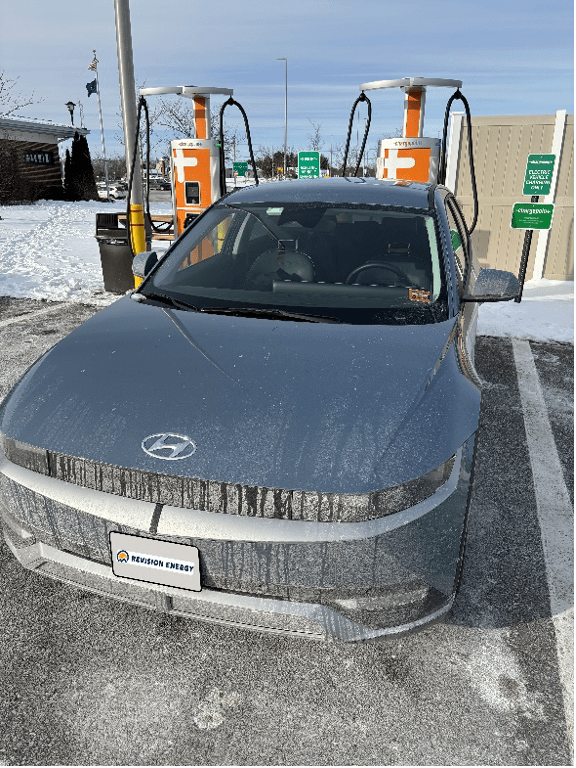
Cold weather charging at a ReVision-installed DC Fast ChargerCold batteries also take longer to charge. You’ve probably heard about this from the recent cold snap in Chicago. If you can plug in at home overnight to keep your car charged, you really don’t have to worry about charging it in the cold. Cold is mainly an issue with DC fast charging. And even then, many EVs now offer battery preconditioning that allows them to charge almost as fast as they would in the summer. 

For battery preconditioning, you only need to set a fast charger as your destination in the navigation system. The car will automatically warm the battery so it is at the right temperature when you arrive, and charging speeds will be similar to what you’ll see in warm weather. The battery can take 20-30 minutes to warm up on really cold days. Admittedly, you can’t always program a charge stop that far ahead of time, so some vehicles are starting to add manual preconditioning buttons.

Safe Heat for Days 

Some people claim that if you get caught in a snowstorm, you’ll drain the battery, run out of heat, and freeze. This claim is perhaps the biggest whopper of all the winter EV claims. If you’re caught in a storm and not moving, EVs don’t use that much energy, and the batteries can last for a while. You can view many tests online to see just how long different vehicles will last. In the best cases, some last for multiple days. Our friend, Steve from Plug and Play EVs, did one of the most realistic tests and kept an older, less-efficient Bolt at a balmy 75° for 7 hours using only 20% of his battery. Of course, how long it will last all depends on how much charge you start with, just like it would depend on how full your tank was with a gas car.  

Chuck_EVpiece3.png

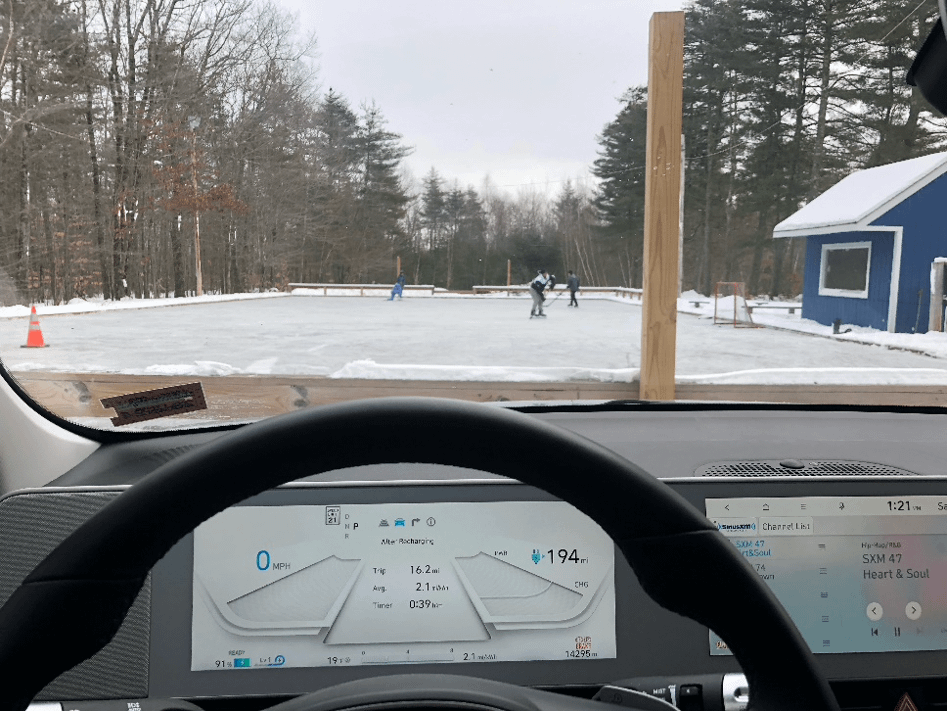
Watching the ice skating from our warm EVThe other advantage is that the exhaust of gas cars is toxic and can be dangerous in snowstorms. There are tragic examples of people dying from carbon monoxide poisoning while idling their cars to stay warm in snowstorms. Snow builds up enough to block the exhaust pipe, redirecting the toxic exhaust into the cabin. There is no poisonous exhaust with EVs, so you can keep warm and safe inside for a long time. 

We went ice skating recently. No joke, the guy working there told us the warming hut was open but smelled like it might have a propane leak inside from the heater. Even though it was 19° outside, we stayed toasty warm and safe in the EV while enjoying some hot cocoa from our thermos. 

Filed Under: Under the Sun Blog Tagged With: by Chuck Hayward, EV Updates

EV Charging Case Study: DC Fast Chargers at Mobil

November 20, 2023 by Ale Moreno

Electric Vehicle charging is spreading across New England, making it easier to drive electric and reduce our dependency on fossil fuels. Through a combination of federal grants and state efficiency programs, ReVision Energy has been selected as the designated installer for many of these charge ports, and we’d like to highlight some of them in this column. 

DC Fast Chargers at Mobil: Lewiston


In 2023, ReVision Energy completed the installation of one of the first fast chargers in the Lewiston-Auburn area. Mobil station owner Nino Touse recognized the need to fill charging gaps along the I-95 stretch and, with the help of an Efficiency Maine Volkswagen subsidy, took the initiative. 

lewiston ribbon cutting_small.jpg

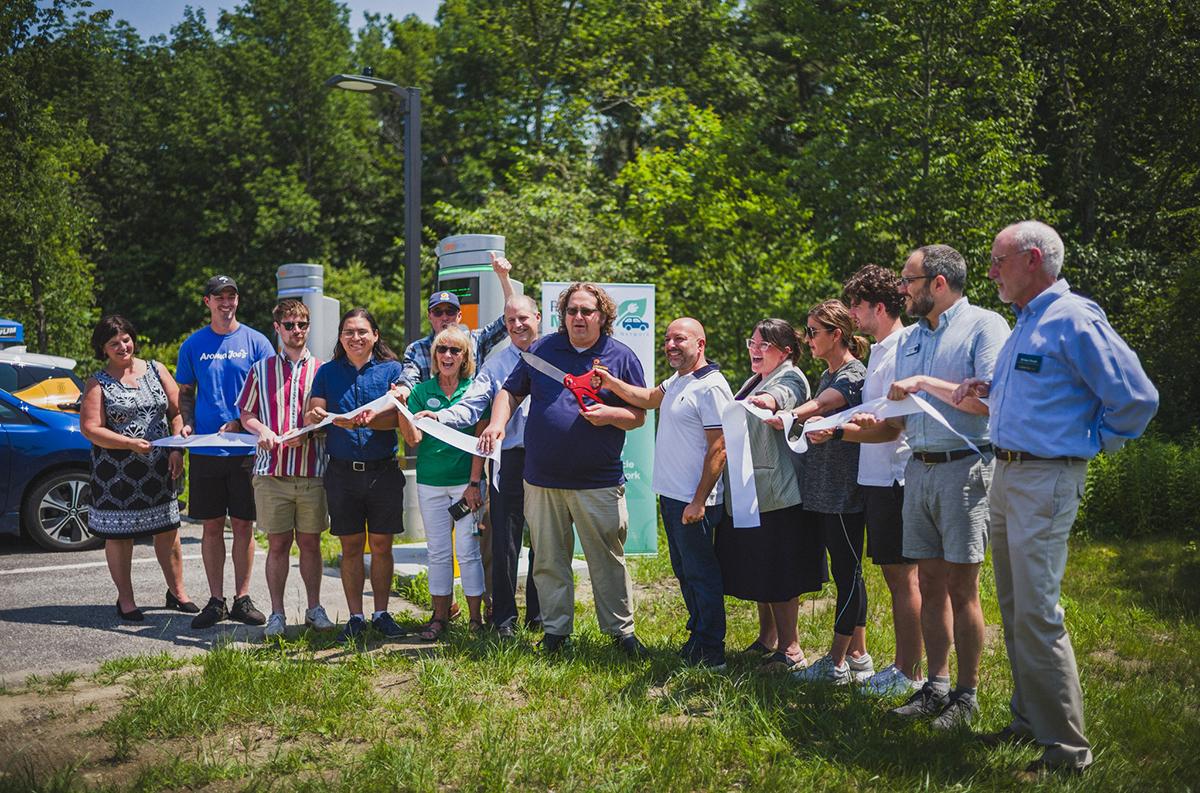
ReVision installed two 50 kW DC fast chargers (DCFCs), ChargePoint CTE 250 models, providing turnkey installation service. These public chargers serve both local and visiting drivers, contributing significantly to the EV infrastructure in the region. The installation was marked by a memorable ribbon-cutting ceremony organized by the Mayor of Lewiston’s office and the Chamber of Commerce. 


Filed Under: Under the Sun Blog Tagged With: by Ben Joslin, EV Updates

EV Charging Case Study: Workplace Chargers at Hannaford’s Headquarters

November 20, 2023 by Ale Moreno

Electric Vehicle charging is spreading across New England, making it easier to drive electric and reduce our dependency on fossil fuels. Through a combination of federal grants and state efficiency programs, ReVision Energy has been selected as the designated installer for many of these charge ports, and we’d like to highlight some of them in this column. 

Hannaford’s Workplace Charging: Scarborough

In 2017, ReVision Energy teamed up with Enphase to install four Level 2, 32A chargers at Hannaford’s Scarborough, ME headquarters. This was one of the first workplace charging stations in state! The reliable charging units from Enphase have been operational since their installation, serving both employees and customers at Hannaford’s headquarters.  

This was only the beginning of Hannaford’s EV charging journey. Hannaford extended their commitment to clean energy by facilitating the placement of Maine’s first five DC Fast Chargers at their retail locations along I-95, from York through Augusta. They have also expanded EV charging in their store parking areas, installing more than 163 plugs at 31 stores (and growing) throughout the Northeast. 

In addition to EV charging, Hannaford has made huge steps towards greater sustainability in recent years, and has set a goal of being 100% powered by renewable energy in 2024.   

Hannaford’s workplace and public EV charging highlight the potential for businesses to easily mesh their sustainability goals with customer and employee needs. 

For more information about how EV charging could benefit your business, check out our most recent post on the advantages of workplace EV charging.

Filed Under: Under the Sun Blog Tagged With: by Ben Joslin, EV Updates

EV Charging Case Study: Inn By the Sea

November 20, 2023 by Ale Moreno

Electric Vehicle charging is spreading across New England, making it easier to drive electric and reduce our dependency on fossil fuels. Through a combination of federal grants and state efficiency programs, ReVision Energy has been selected as the designated installer for many of these charge ports, and we’d like to highlight some of them in this column. 

Maine Hospitality: Inn by the Sea, Cape Elizabeth

inn by the sea charging EV.jpg

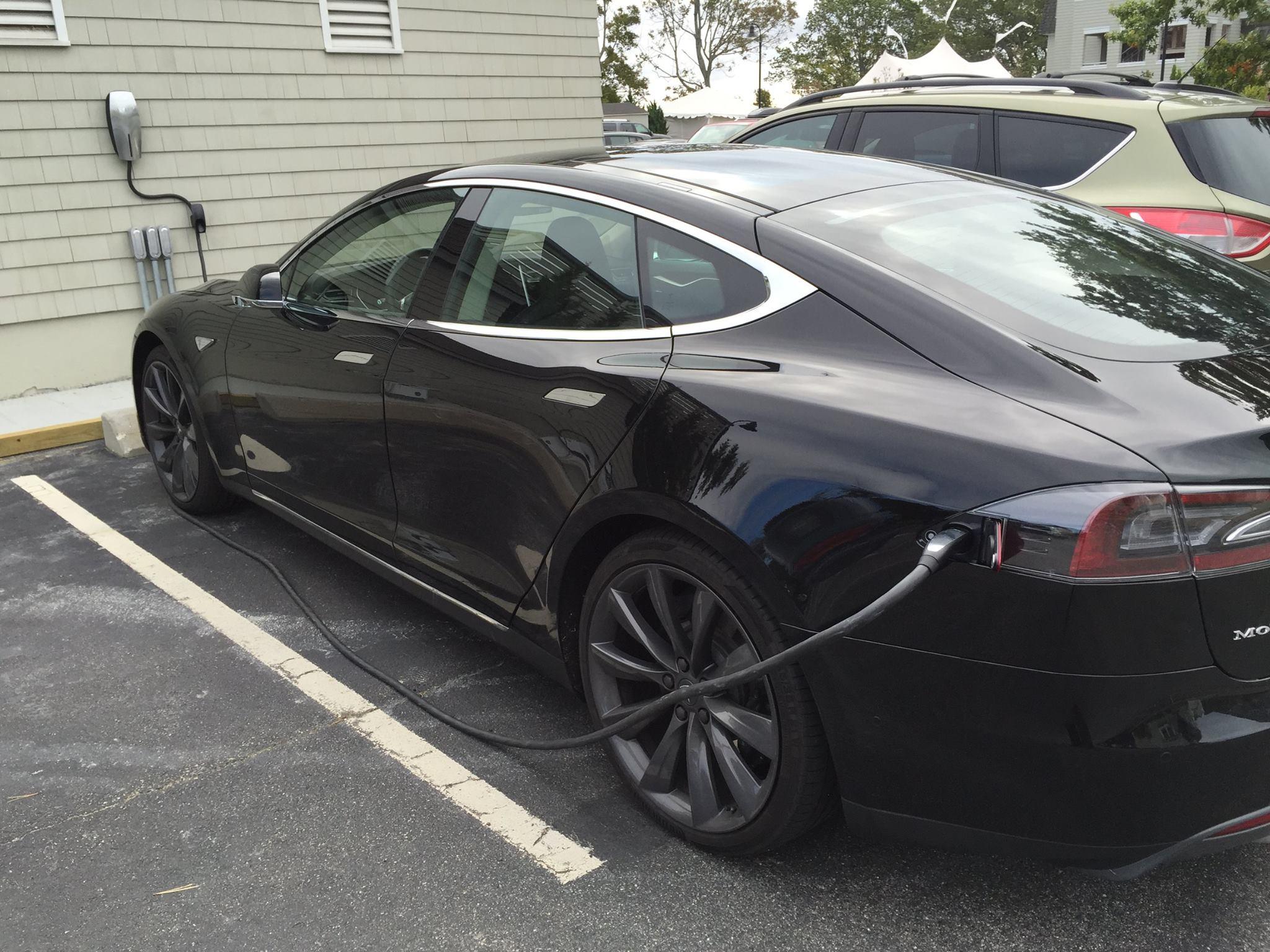
In 2021, ReVision Energy partnered with Inn by the Sea in Cape Elizabeth, ME to upgrade its charging resources for guests, installing four additional 32A Level 2 chargers. These commercial-grade Enphase basic non-networked chargers expanded the inn’s offering to a total of five charging ports with dedicated parking. All chargers, including a Tesla Level 2, are connected to a dedicated 200A subpanel. 

Inn by the Sea recognizes the hospitality industry’s potential for attracting new guests by offering charging as an amenity. The Inn has become an early adopter of this trend, boosting its appeal to out-of-state guests who require overnight charging for their electric vehicles. This additional service not only accommodates guests’ charging needs but also encourages patronage of the inn’s facilities, such as the restaurant. 

dogs inn by the sea.jpg

Inn by the Sea is also committed to helping the community more broadly. The Inn has partnered with Animal Refuge League of Greater Portland to host an “adopt a dog” program at the front desk, allowing guests to bond with a “dog of the week.” This program has helped over 160 dogs find loving homes. Where else can you charge your car, adopt a dog, and get a luxury hospitality experience?? 

Comments from PlugShare: 

“Stayed at Inn by the Sea and took advantage of the free charging stations. Appreciate having this option available. Great example to others. Hope this is a trend.” 

“The front desk said it was okay to charge even though we weren’t staying at the inn. Had a nice walk to Kettle Cove and back.” 

Filed Under: Under the Sun Blog Tagged With: by Ben Joslin, EV Updates

EV Charging Case Study: ReVision Energy Headquarters

November 20, 2023 by Ale Moreno

Electric Vehicle charging is spreading across New England, making it easier to drive electric and reduce our dependency on fossil fuels. Through a combination of federal grants and state efficiency programs, ReVision Energy has been selected as the designated installer for many of these charge ports, and we’d like to highlight some of them in this column. 

Solar-Powered EV Charging: ReVision Energy Headquarters, South Portland

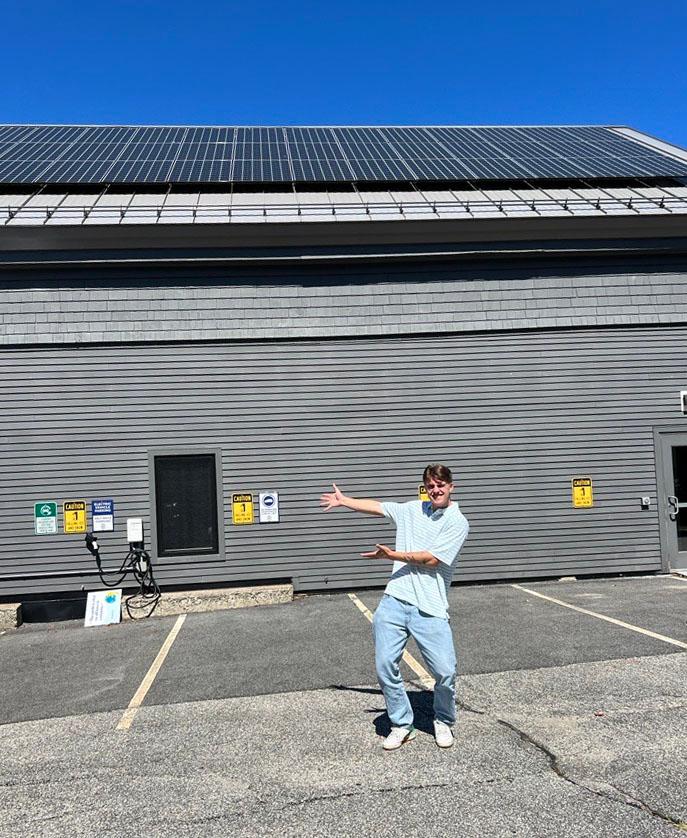
In 2023, ReVision Energy overhauled the EV charging system at our South Portland headquarters so that we could test technology we hope to eventually bring to our customers. We are currently using twelve Level 2 32A Evercharge networked units capable of load management features. These chargers are partially powered by our rooftop solar array.  

ben joslin_edits.jpg

This switch aimed to streamline and expand our charging capabilities without having to increase the size of our electrical service. Evercharge’s technology stands out by allowing power sharing based on existing electrical loads. This enables more ports to leverage limited power by distributing it according to the number of vehicles and their respective charging needs over time.  

In addition to improving reliability, the new networked chargers are easy to repair, and provide hosts with valuable insights into charger usage, electricity consumption, and fleet management. This will ultimately allow us to install large multi-port projects elsewhere, serving both the public and workplace charging needs. 

Check out a recent post on the advantages of workplace EV charging here.

Comments from PlugShare: 

“Great company. Many chargers here.” 

“The wall mounted chargers are active and ready to go!” 

Filed Under: Under the Sun Blog Tagged With: by Ben Joslin, EV Updates

EV Corner: Electric Yard Tools

November 6, 2023 by Ale Moreno

Above, Solar Champion Dana Ward uses his electric lawn mower (charged by his home’s solar array) in his front yard.

Cleaner, Quieter, Cheaper: Electric Yard and Lawn Care Tools

This month’s column is written by Chuck Hayward, EV Infrastructure Designer & Analyst. 

The beautiful fall foliage is sadly just about done throughout New England which means there are leaves everywhere. While leaving leaves on the ground provides many benefits for insects, other wildlife, and your lawn, you may still want to remove them from your driveway or use them as mulch for your garden beds. But why are we talking about this in the EV Corner?

leaf blower.jpg

Electric leaf blowers are more than capable of clearing leaves, pine needles, and pinecones. Well, electric vehicles can obviously do a lot to reduce emissions, but the impact of switching your yard tools to electric versions is arguably even bigger. Many yard tools are two-stroke engines, which are particularly terrible for emissions. In one test by Edmunds, just 30 minutes of using a two-stroke leaf blower created the same emissions as would be created by driving a 2011 F150 Raptor almost 4,000 miles! Think about that. If you spend 30 minutes per week using a two-stroke leaf blower, you’d create the same emissions you would by spending your week driving from Maine to San Diego and then up the entire California coast in a 12-year-old high-performance pick-up truck.

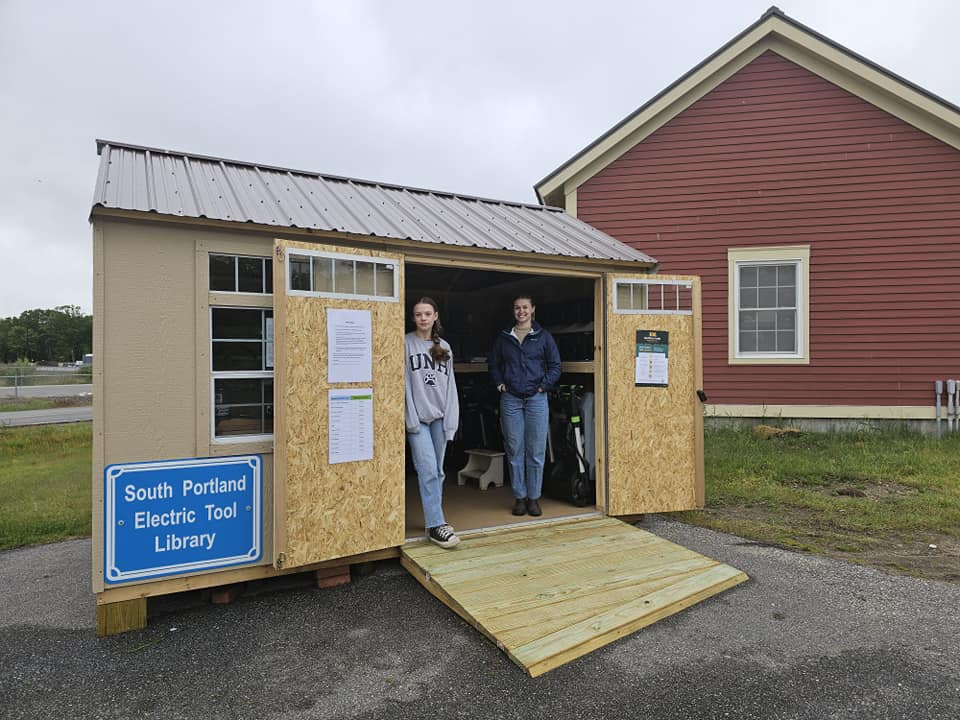
While switching that truck to an electric version would start at about $50,000, high-quality battery-powered leaf blowers start around $100. And depending on where you live, you might even be able to borrow one or get purchase rebates. For example, both Portland and South Portland, Maine have electric tool libraries. And in Cape Elizabeth, co-founder Phil Coupe’s teenage sons even started their own solar-powered electric lawn care business. 

SoPoGear Library.jpg

Credit: City of South Portland South Portland residents can borrow yard tools for one week just by using their normal library card. In 5 months, the library has provided over 230 rentals of mowers, leaf blowers, and string trimmers. South Portland also had a rebate program for residents to purchase their own electric lawn tools; this program was so popular that all the funding was awarded in less than a year. That program helped residents purchase 134 mowers, 35 leaf blowers, and 37 string trimmers – all of them 100% electric and zero emissions. (Thanks to Susan Parmalee and Cashel Stewart from South Portland’s Sustainability Office for the usage information.)

Emissions reduction isn’t the only benefit that electric tools offer.

Options


Pretty much any tool that runs on gas now has an equally capable electric version. Chainsaws, snowblowers, log-splitters, pressure washers, and even commercial mowers and backpack blowers. Many brands offer a full line of tools designed to all use the same batteries, reducing the overall cost; the same battery that powers your mower all summer can be swapped to power your snowblower in the winter.

Just some of the options you can get with the same Greenworks battery.

And when the work is done, you can use those same batteries for the electric mini-bike! Credit: Greenworks

Torque

Gas tools often bog down and stall when the work gets hard. But due to the way electric motors work, electric tools actually get more torque at low RPMs – precisely when they need it most. So that tall grass that slows down mowers and causes gas engines to stall would instead cause an electric mower’s torque to increase.

Noise

Electric tools are often much quieter than their gas counterparts, sometimes almost silent. That means happier neighbors, and less risk of damaging the operator’s hearing.

Gas and maintenance

charging tractor.jpg

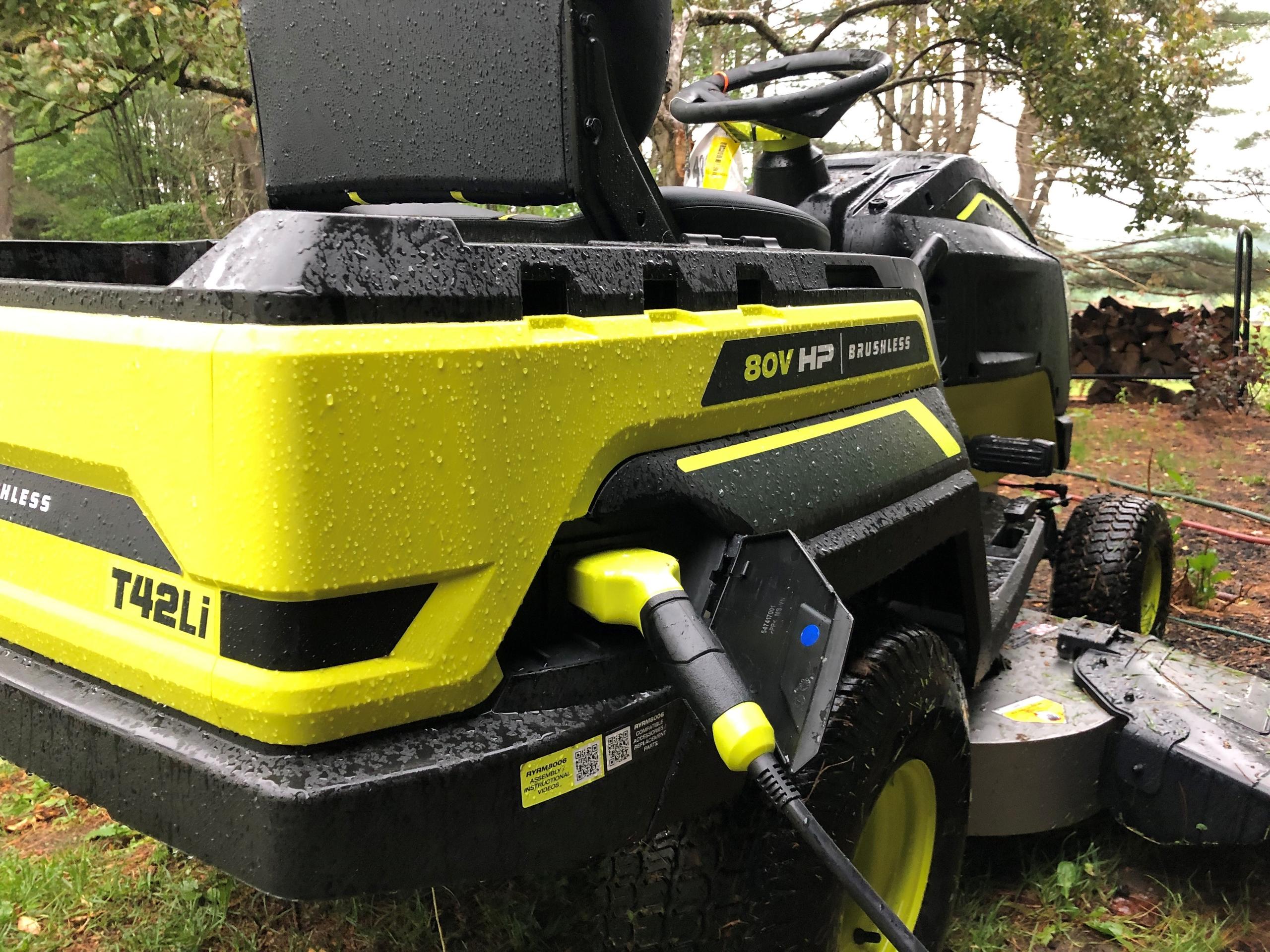
This Ryobi riding mower will cut up to 2 acres and charges from a regular outlet in 2-3 hours. Electric tools require almost no maintenance other than charging the batteries. That means no more oil changes and no more tune-ups, which can save hundreds of dollars a year. It also means no more gas spills to clean up, no trips to the gas station when you run out in the middle of cutting the lawn, no more smells in your car when you transport a can of gas in the back, and no draining the gas in the off-season.

Overall, electric lawn tools provide many of the same benefits as electric vehicles. And just like EVs, they are generally easier and more enjoyable to operate than the gas-powered alternatives.


Filed Under: Under the Sun Blog Tagged With: by Chuck Hayward, EV Updates

EV Charging Case Study: Portland

October 10, 2023 by Ale Moreno

Electric Vehicle charging is spreading across New England, making it easier to drive electric and reduce our dependency on fossil fuels. Through a combination of federal grants and state efficiency programs, ReVision Energy has been selected as the designated installer for many of these charge ports, and we’d like to highlight some of them in this column. 

City of Portland: City Hall, Jetport, Payson Park, High Street

In 2020, ReVision Energy, in collaboration with the City of Portland, installed a public charging station at City Hall. The charging station is a ChargePoint CT-4000 series networked pedestal charger with a single 32A port and operates on a fee-for-service basis.

The charger’s location at 389 Congress Street in front of the City Hall was carefully selected for its prominence. This location has become one of the most used public chargers in Portland’s growing charging network.

In addition to the City Hall project, ReVision has also installed chargers at the Portland Jetport, High Street, and Payson Park. Each project was specifically designed to cater to different charging behaviors, and the success of these installations highlights the increasing acceptance and adoption of electric vehicles in Portland.

It also shows the city’s commitment to promoting clean transportation and reducing carbon emissions as part of its One Climate Future program, which it created jointly with the City of South Portland.

City of Portland PlugShare Comments:

“Easy to access…Good charging stop during our visit.”

“Great place to grab a charge – and park in downtown Portland. No additional parking fee beyond the Chargepoint charging cost.”

Filed Under: Under the Sun Blog Tagged With: by Ben Joslin, EV Updates

EV Charging Case Study: I-95 Maine Turnpike

October 10, 2023 by Ale Moreno

Electric Vehicle charging is spreading across New England, making it easier to drive electric and reduce our dependency on fossil fuels. Through a combination of federal grants and state efficiency programs, ReVision Energy has been selected as the designated installer for many of these charge ports, and we’d like to highlight some of them in this column.

DC Fast Charging on I-95 Maine Turnpike

In 2019, ReVision Energy and ChargePoint won a bid from Efficiency Maine to install DC Fast Chargers (DCFC) and Level 2 Chargers at seven sites statewide, including the Kennebunk North, Kennebunk South, and West Gardiner service plazas on the Maine Turnpike.

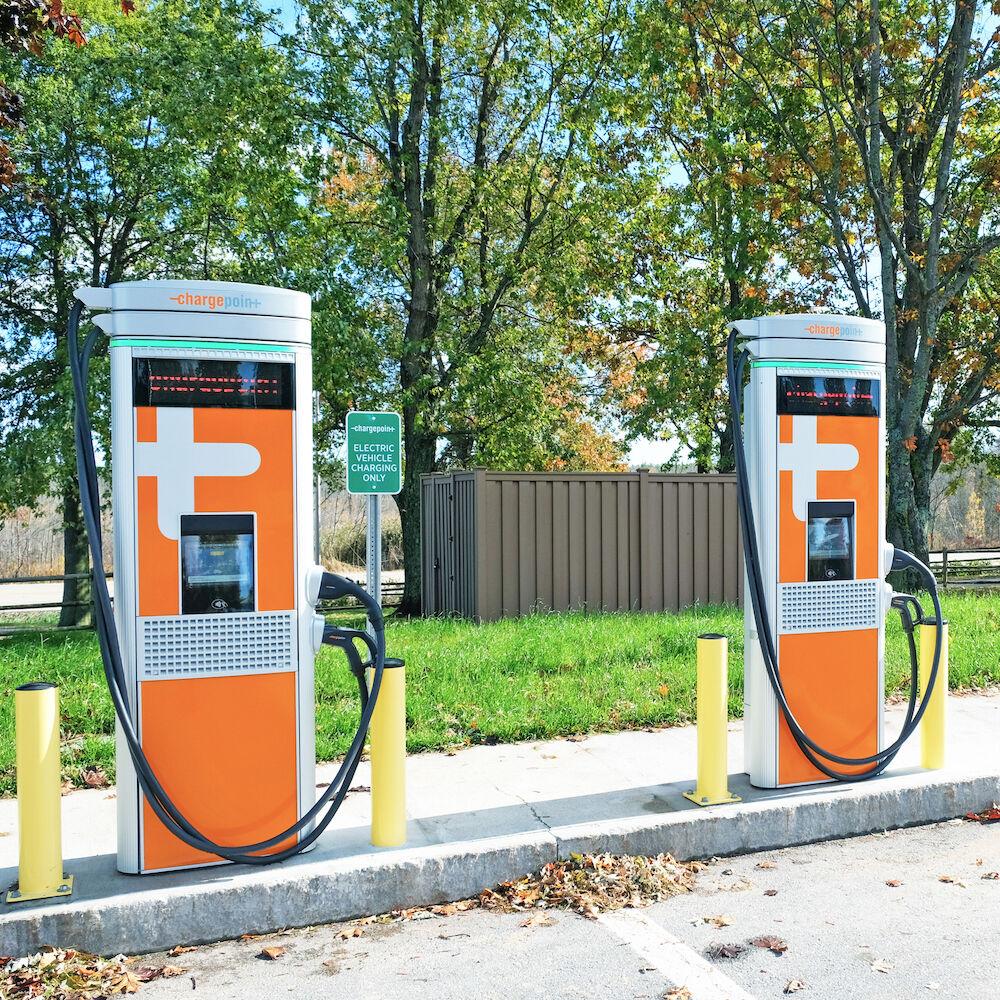
ReVision initially installed two 50 kW CPE-250 DC Fast Chargers at both Kennebunk service plazas. These DC Fast Chargers can add 200 to 250 miles of range per hour. This infrastructure was Maine’s first significant investment in long-distance EV travel corridors. In 2022, the project expanded, adding two ChargePoint Express Plus 150 kW DCFC units at each Kennebunk location. These units are the first public application of ChargePoint’s fastest charging technology in the United States.

Chargepoint Kennebunk

These chargers make driving through Maine in an EV exponentially easier, allowing drivers to charge their cars while visiting the service plazas. The chargers are three times as fast as the older 50 kW versions and many newer model EVs can take advantage of them to compress charging times.

The success of this two-phase project proves the effectiveness of partnerships in expanding EV infrastructure and emphasizes the potential for public and commercial EV charging facilities.

Maine Turnpike Comments from PlugShare:

“Tons of open spaces and they all appear to be working. This is one of my favorite charging spots. It’s clean, well lit, and just outside the large rest stop on the Maine turnpike.”

“Clean service area, fast charging, in our VW ID.4.”

Filed Under: Under the Sun Blog Tagged With: by Ben Joslin, EV Updates

EV Charging Case Study: Kittery

October 3, 2023 by Ale Moreno

Electric Vehicle charging is spreading across New England, making it easier to drive electric and reduce our dependency on fossil fuels. Through a combination of federal grants and state efficiency programs, ReVision Energy has been selected as the designated installer for many of these charge ports, and we’d like to highlight some of them in this column. 

Town of Kittery: Public, Workplace, and Fleet Chargers Installation

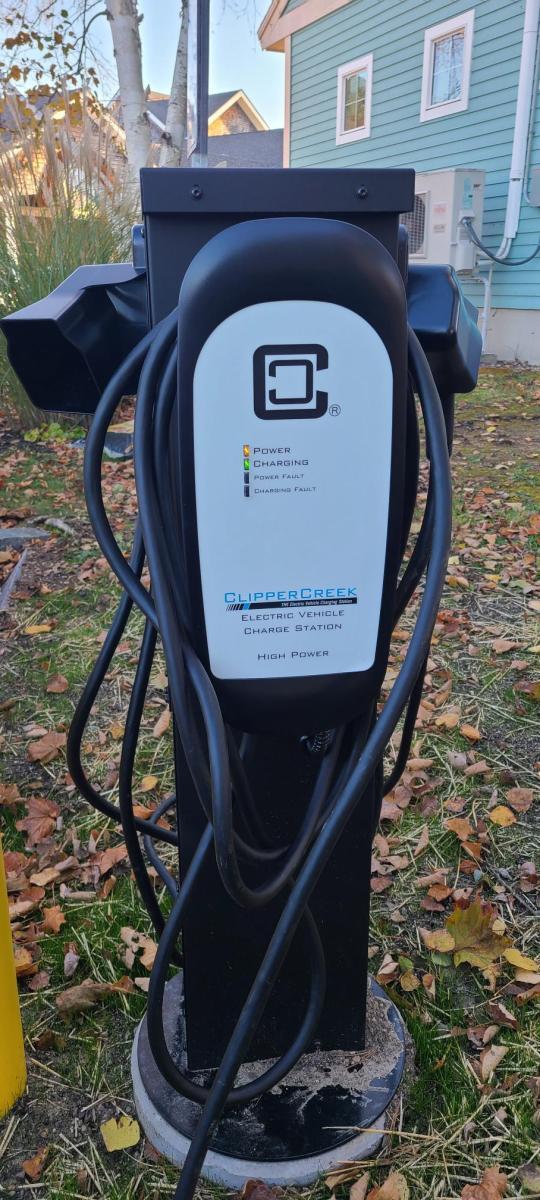
clipper kittery.jpg


In 2021, ReVision Energy and Central Maine Power (CMP) embarked on a unique pilot program together: a 60-port level 2 make-ready utility pilot. This initiative aimed to demonstrate the value of a utility-based Level 2 infrastructure project to the Public Utilities Commission (PUC). As part of this pilot, ReVision Energy installed four 32A Level 2 chargers at Kittery’s Town Hall, utilizing Enphase HCS-40R units.

These chargers were installed across two pedestals, each featuring two basic chargers. The installation serves the public, the town’s employees, and the town’s fleet, enhancing accessibility to electric vehicle charging for a broad range of users.

This utility pilot project, which covered 14 sites across the state from Kittery to Saddleback Ski Area, leveraged the utility subsidy and ReVision Energy’s construction expertise. ReVision was CMP’s sole source installer for this project.

The Kittery project is in line with the Regional Sustainability and Resilience Program’s aims, a collective effort established in 2019 by various towns including Kittery. The program focuses on improving community resilience through coordinated climate action and sustainability efforts. The success of the Kittery EV charging project proves that regional cooperation is effective and creates a potential model for utility-backed EV charging ventures.

Town of Kittery PlugShare Comments:

“Was great and easy to use! Quick walk to the outlets. 2 open spots when I got there.”

“Outstanding 2 units for the public on the right. Just north (across from) the police station entrance.”

“Thank you, town of Kittery!”

Filed Under: Under the Sun Blog Tagged With: by Ben Joslin, EV Updates

ReVision’s 20th Anniversary Celebration Powered by All-Electric Trucks

September 12, 2023 by Ale Moreno

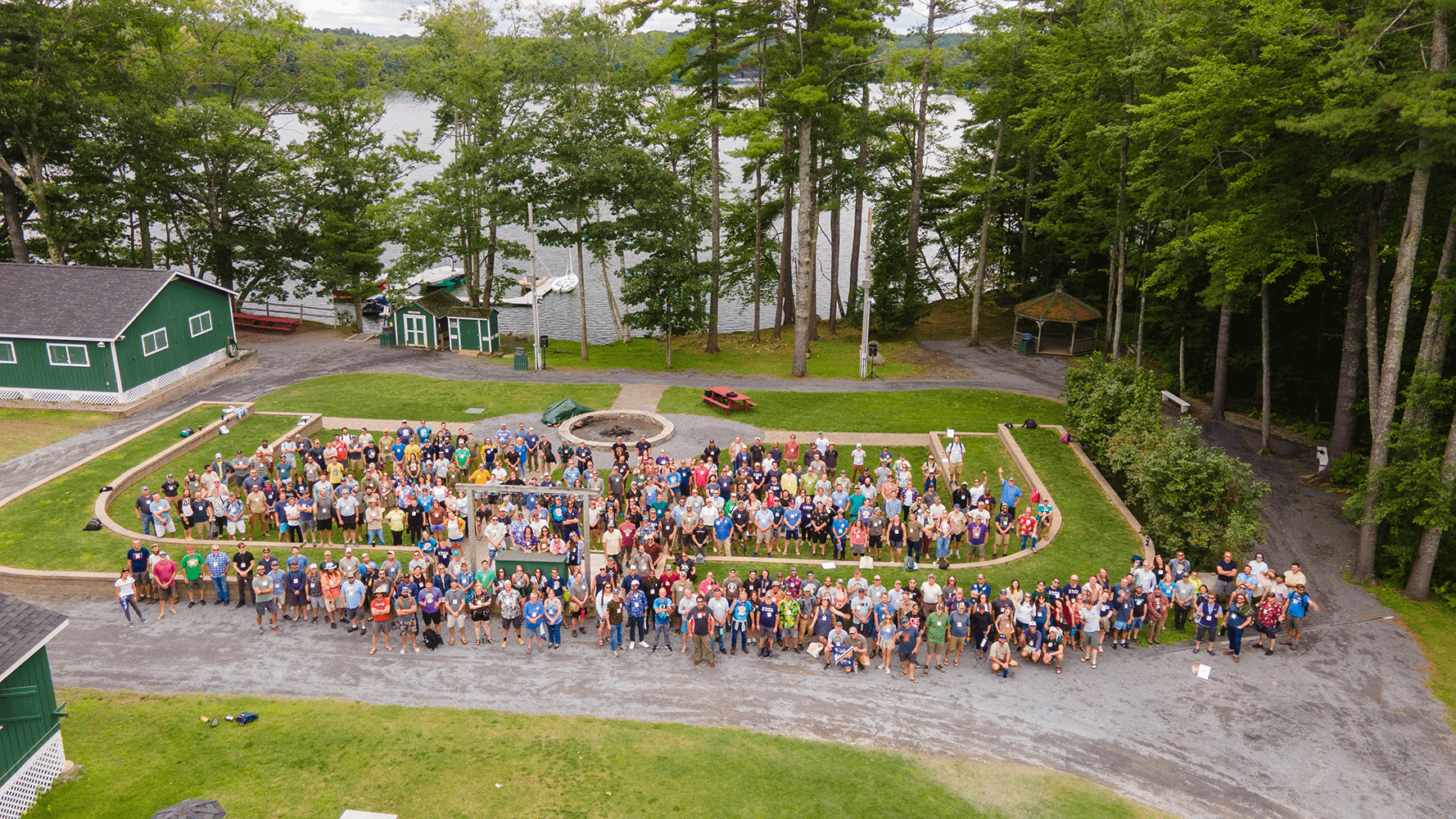
Last month ReVision Energy gathered all 400+ employee-owners at Camp Modin in Belgrade, Maine, for our annual meeting. However, this year wasn’t just a regular annual meeting – because ReVision was founded in 2003, we’re celebrating 20 years of installing clean solar energy!

We celebrated two decades of growing our business and spreading our solar powered mission to communities all over Maine, Massachusetts, and New Hampshire. Every employee-owner at ReVision turned on their “out-of-office” email notifications and came together to appreciate how far we’ve come and look forward to many more years of fighting the climate crisis together. 

company photo 2023 modin.png

After a day of awards, camp fun, and the graduation of our latest cohort of ReVision Energy Electrical Apprentices, we gathered on the main lawn. We enjoyed local food trucks (including solar-powered, fellow Maine B Corp Luke’s Lobster) and live music, culminating in a sunset concert by The Mallet Brothers. 

revision lightnings mallet brothers.png

The stage and sound system for the entire day was powered completely by our fleet of all-electric Ford F-150 Lightning trucks. We had charged them at our solar-powered offices ahead of time, meaning this entire event was put on, essentially, by the sun. How else would we celebrate 20 years of local solar energy?!

Stage lights, portable stage hydraulics, a fog machine, amps, the sound board, and more all fed off the 120v power outlets coming from the “frunk” (front-trunk) of six Lightnings. The trucks’ batteries ran the sound check and over 5 hours of music by three different bands. This took about 20 miles of range off each truck’s battery (which has a full range of 330 miles). 

EV powered revision energy celebration.jpeg

“The trucks only lost about 15-25 miles of range depending on what they were powering,” explained Chuck Hayward, our EV analyst. “The one powering the speakers lost the most. From a 90% charge, I drove 100 miles, powered the sound boards throughout the evening, and still had 45% of the battery left when I got back to the office.” 

The best part? The truck batteries also powered coffee makers in the morning when our co-owners-turned-campers woke up. 

Enjoy some more photos from our celebration:

  • revision_energy_20th_anniversary_celebration.jpeg
  • concert_at_revision_energy_anniversary_event.jpg
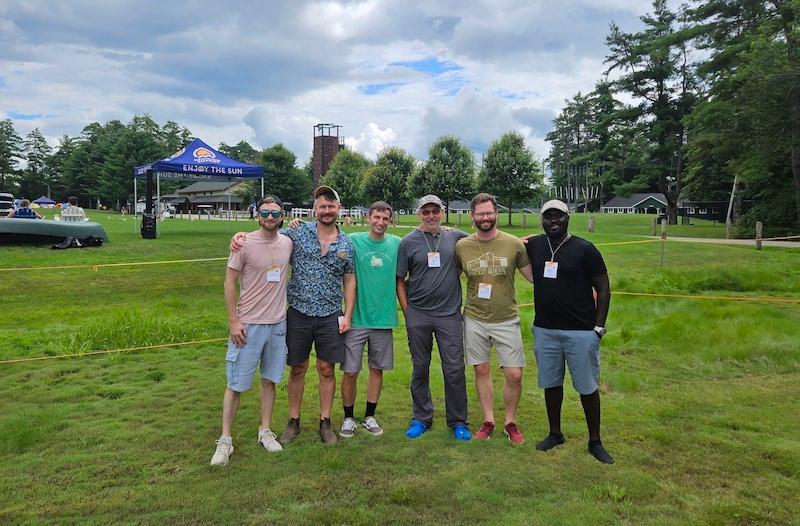
  • Procurement_team_1_Nate_Legere.jpg
  • campfire_at_revision_energy_co-owner_event.jpeg
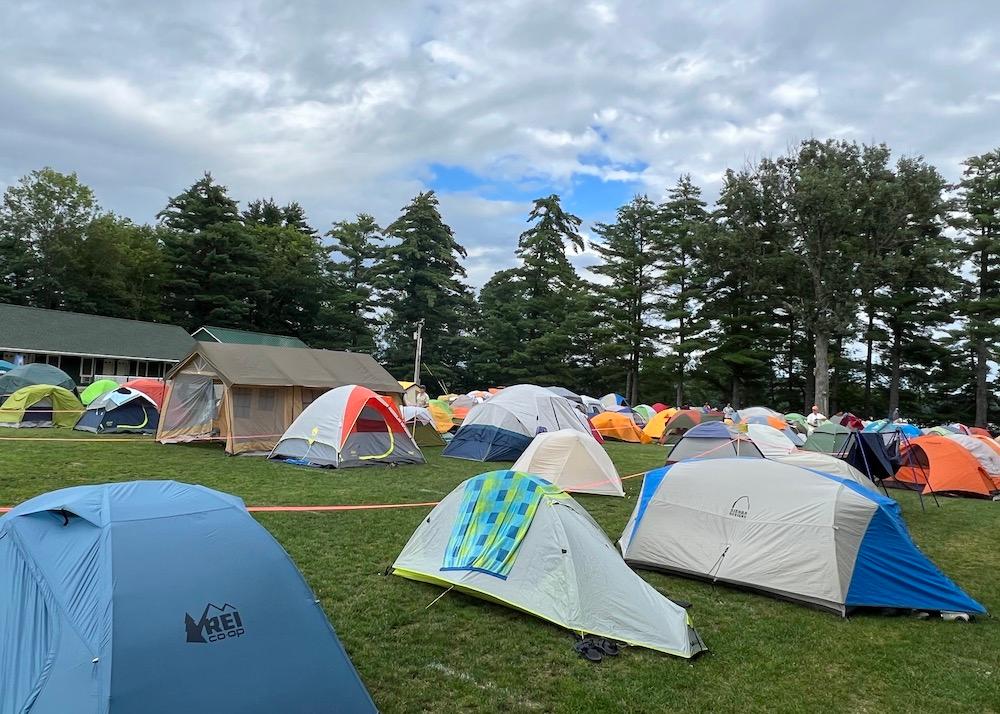
  • tents_at_revision_company_wide_event.jpg
  • group_photo_company_meeting_cute_night.jpg

Filed Under: Under the Sun Blog Tagged With: by Jill McLaughlin, EV Updates

  • Page 1
  • Page 2
  • Page 3
  • Go to Next Page »

sidebar

sidebar-alt

Subscribe to newsletter

Which newsletters would you like to receive?

Consent Enjoy the Sun(Required)
Consent(Required)
To provide the requested information, we need to store and process your personal data. By submitting this form, you agree to allow ReVision Energy to store and process your personal data for this purpose. Please see our privacy policy for more information.

  • Merch Store

Sitemap

  • Solutions
    • Homes
    • Commercial
    • Service
  • Our Work
    • Projects
  • About
    • Our People
    • Social Impact
    • Our Locations
    • Careers
  • For Customers
    • Support & Service
    • Be A Solar Champion
  • News & Events
    • Releases
    • Press
    • Under the Sun Blog
    • Events and Webinars
  • Our Partners
  • Resources

Follow Us

General Contact

Contact one of our branches for sales and non-service inquiries, or email us at hello@revisionenergy.com

Service

Need support for your existing system? Contact our Service Team:
Reach us at (207) 747-0076 or open a Support Ticket.

South Portland, ME

(207) 221-6342

Map & Directions 

Montville, ME

(207) 589-4171

Map & Directions 

Brentwood, NH

(603) 679-1777

Map & Directions 

Enfield, NH

(603) 632-1263

Map & Directions 

North Andover, MA

(978) 308-9041

Map & Directions 

Westfield, MA

(413) 884-1000

Map & Directions 

Copyright © 2026 ReVision Energy. All rights reserved.

Privacy Policy | Terms