• Skip to primary navigation
  • Skip to main content
  • Skip to primary sidebar
Revision Logo Revision Logo
Solar Calculator Get Started
Get Started Solar Calculator
  • Solutions
    • Homes
    • Commercial
    • Service
  • Our Work
    • Projects
  • About
    • About
    • Our People
    • Social Impact
    • Our Locations
    • Careers
  • For Customers
    • Support & Service
    • Be A Solar Champion
  • News & Events
    • Releases
    • Press
    • Under the Sun Blog
    • Events and Webinars
  • Our Partners
  • Resources

Give us a call

Maine (207) 221-6342
New Hampshire (603) 632-1263
Massachusetts (978) 308-9041
Contact Us

by Jill McLaughlin

ReVision Energy Ranked #1 Solar Installer in New England

August 7, 2026 by Ben Joslin

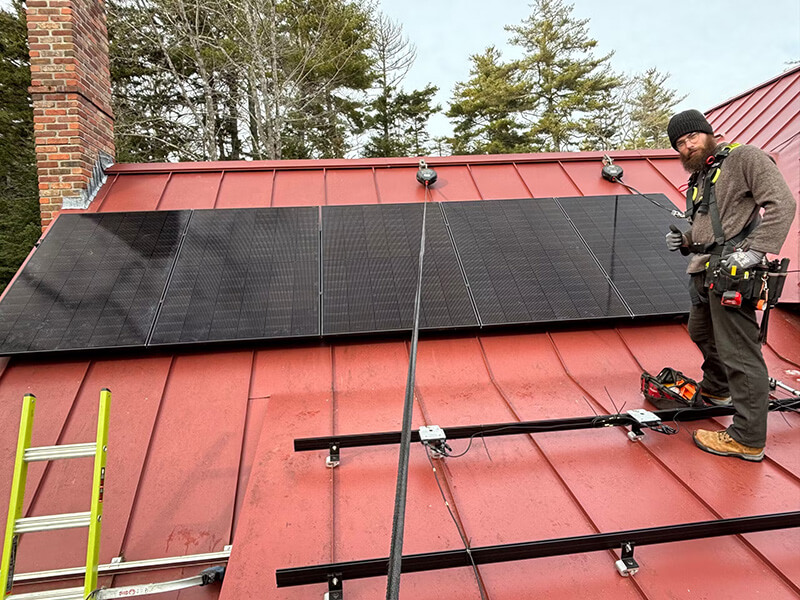
Solar Power World has released its annual ranking of the top solar companies in the U.S. and we’re honored to have been recognized as the No. 1 Solar Installer in New England and No. 5 in the entire country!

The full “Top Solar Contractors” list includes all installers, developers, and subcontractors. On that list, we’re ranked No. 88, an improvement from our No. 92 position in 2025.

But as a local, employee-owned solar company, we’re less concerned with national rankings – we care more about showing up for our neighbors right here in New England. And for yet another year, we were ranked the No. 1 Solar Installer in both Maine and New Hampshire. In Massachusetts, our newest territory, we are the No. 4 installer. Thank you to our Solar Champions across our three states for helping us achieve these rankings!

“These rankings reflect the trust our customers place in us and the dedication of our employee-owners who are committed to building a more resilient, affordable, and equitable energy future,” said Janice DiPietro, ReVision Energy President. “For more than two decades, ReVision Energy has demonstrated that mission-driven companies can deliver exceptional business performance while accelerating the transition to clean energy.”

More Than Just Solar Panels

We were also named the #1 Solar + Storage installer in New England and #13 nationally. Those rankings count battery backup installed alongside solar, and our increased ranking is a sign that more of our customers are choosing to strengthen their homes with battery storage.

Solar led new generating capacity in the United States for the fifth year running in 2025, and solar and storage together made up 79% of everything added to the grid. The country installed 43 gigawatts of solar over the year.
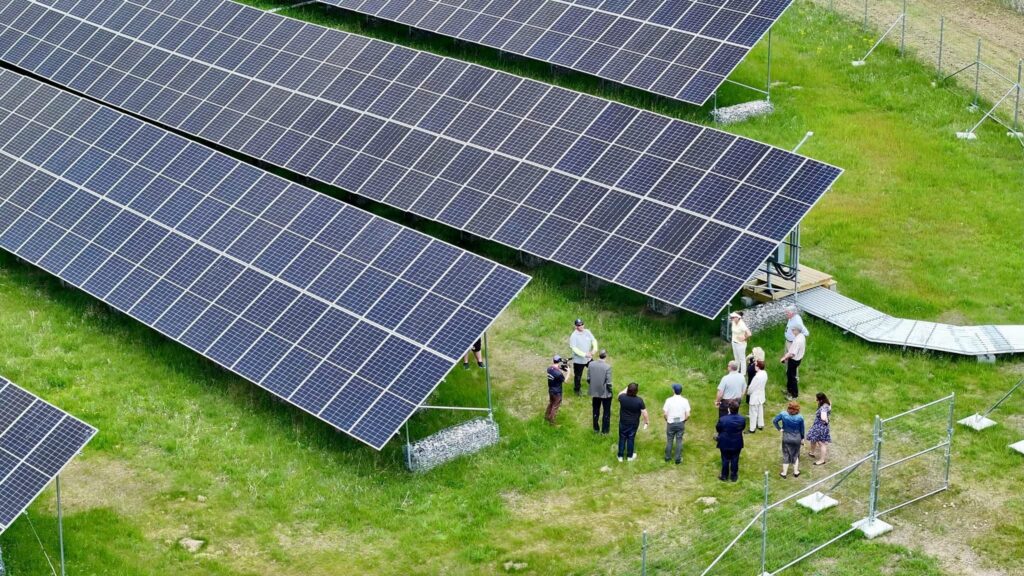
Get Started with the #1 Solar Installer

Filed Under: Under the Sun Blog Tagged With: by Jill McLaughlin, Solar Industry News

How Westbrook Schools Are Taking Control of Energy Costs with Solar

June 16, 2026 by Mauricio Pence

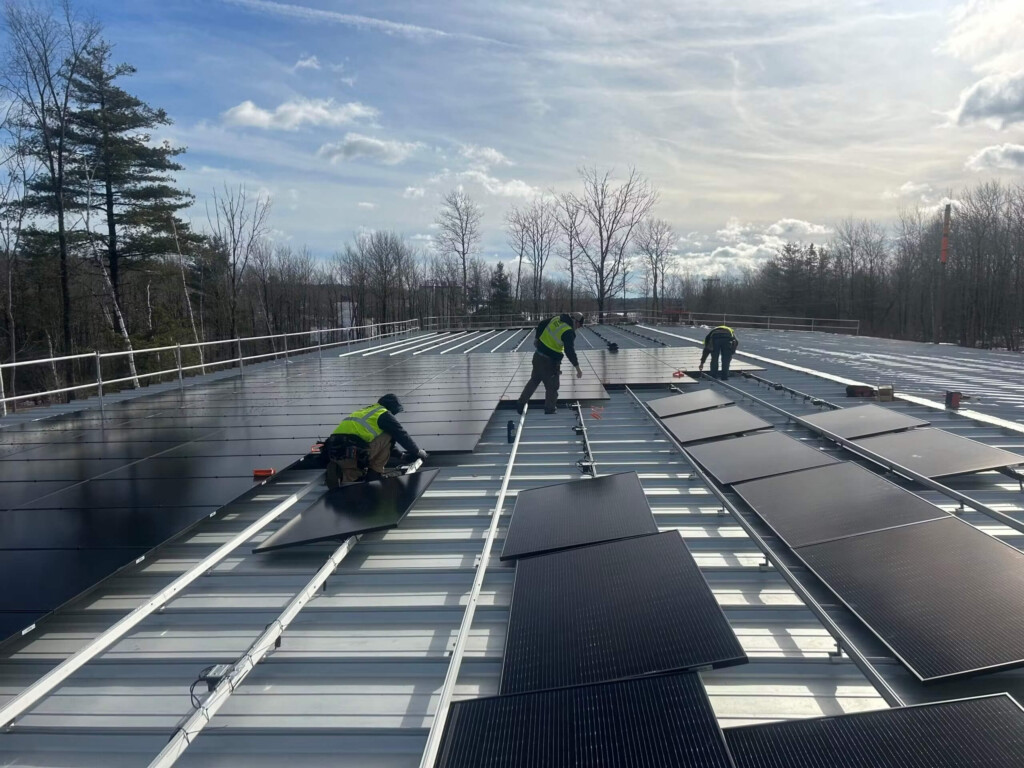
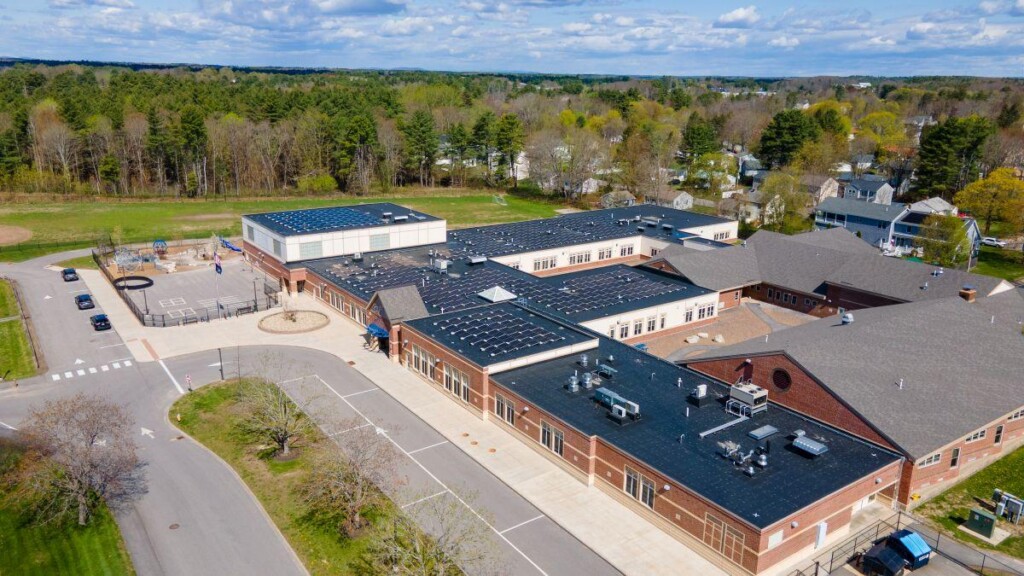
At a time when energy markets remain volatile, the Westbrook Public School Department is taking a proactive approach by investing in on-site solar energy as a predictable, controllable solution that stabilizes costs and protects taxpayer dollars.

Developed in partnership with ReVision Energy, the district is making significant progress on a four-project solar initiative designed to strengthen economic stewardship, reduce long-term energy costs, and build financial resilience across the district.

Net Energy Billing credits from these combined systems will save Westbrook taxpayers approximately $266,000 in year one. 

“We are all on the ‘let’s save money’ team. Solar is something we can control. While we can’t dictate future energy prices, we can take action today to reduce what we’ll pay tomorrow.”— Dr. Peter Lancia, Superintendent

A Smart Response to Uncertain Energy Prices

The district’s solar rollout spans four rooftop projects:

  • Congin School (completed March 2026): producing ~201,535 kilowatt-hours (kWh) annually
  • Saccarappa Elementary School (completed May 2026): producing ~305,345 kWh annually
  • Westbrook Middle School (under construction, completing soon)
  • Westbrook High School & Regional Vocational School (construction beginning June 2026)

Together, these systems make up:

  • 1.1+ megawatts of installed solar capacity
  • Over 1.3 million kWh of clean electricity annually
  • Approximately $266,000 in year-one savings through Net Energy Billing credits

More than Savings – An Investment in Students

While the financial case is compelling, the impact goes much deeper. By reducing long-term energy costs, Westbrook can redirect funding into classrooms, programs, and student opportunities. At the same time, the district is hugely reducing its carbon footprint. Collectively, these systems will offset a substantial share of the district’s electricity use while reducing carbon emissions – equivalent to taking hundreds of cars off the road.

Westbrook Public Schools’ solar investment reflects the district’s commitment to responsible stewardship and student success. The initiative also demonstrates thoughtful financial decision-making combined with environmental responsibility to prepare students for the future while strengthening the community and reducing environmental impacts.

“This is about more than installing panels. It’s about creating the conditions for long-term success: one where we actively manage what we can control, reduce fixed costs, and make smart investments that benefit our schools and our community for decades.”— Dr. Mazjanis, Assistant Superintendent of Finance

A Model for Schools Across Maine

Westbrook’s leadership offers a clear takeaway: solar is one of the most effective tools available to schools looking to stabilize budgets and plan for the future. With large, unobstructed roof space and predictable daytime energy use, schools are uniquely positioned to benefit from solar. And with an experienced, employee-owned partner like ReVision Energy, districts can move forward with confidence.

As Counselor Michael Shaughnessy said in a recent city council meeting, “solar takes advantage of the fact that an unobstructed roof is a natural resource.”   

Ready to stabilize energy costs and explore solar for your school district? Send us an email: hello@revisionenergy.com 

Filed Under: Under the Sun Blog Tagged With: by Jill McLaughlin

Plug-In Solar: Accessibility or Just a Band-Aid?

February 6, 2026 by Mauricio Pence

Updates April 2026: Plug-in solar has now been approved in Maine, and will likely be approved in New Hampshire soon. However – systems are not available yet for purchase which meet the requirements. In Maine, we expect there to be products in the next 6-12 months that meet the solar standards required by the bill. We’ll continue to update this post as our regions approve legislation. 

Plug-in solar, also called balcony solar, has taken off in Germany, where an estimated 4 million systems have been installed. Now, policymakers across the US are working on regulations to make this type of solar permissible. Last year, Utah passed plug-in solar legislation with bipartisan support. Lawmakers in Maine, New Hampshire, and Massachusetts have all introduced legislation for consideration in 2026.

Is plug-in solar the golden solution to solar affordability? Or is a 3-panel balcony system too small to actually make a difference? The answer, as usual, is somewhere in the middle. While plug-in solar increases accessibility and provides a low-cost gateway to the world of renewable energy, there are some safety and scalability concerns.

Our hope? That in addition to providing opportunities for DIY small scale solar, discussions around plug-in solar will highlight the real way to lower energy costs: by fixing our broken permitting and interconnection systems, by building equitable community solar for renters, and by lowering barriers to larger-scale solar that is proven to make a dent in energy bills and the climate crisis.

What Is Plug-In Solar?

A typical plug-in solar system consists of 1-4 small solar panels placed on a patio or balcony – often simply zip-tied into place – and plugged into a standard outlet. In Germany the systems retail at $300 – $1200, with some of the pricier systems including battery storage. Energy produced by the system is fed back through the existing branch circuits in your home and goes directly to your home appliances, offsetting energy bills. Exact numbers depend on the usual factors – orientation, angle, appliance efficiency, utility rate – but plug-in solar is estimated to offset an average of 5% of a home’s electric load, saving people a few hundred dollars every year.
Much like our Member-Owned Community Solar projects in Maine, plug-in solar could make solar production possible for renters and condo-owners. However, unlike Member-Owned Community Solar (where residents can offset close to 100% of their electric bill with clean solar energy), plug-in solar is only able to produce a small amount of energy.

Safety & Quality Concerns: Should Solar Really Be a DIY Project?

As an employee-owned company, ReVision takes particular pride in the quality of our solar installations, and the safety of our co-owners and customers. We prioritize safety and longevity over speed, ensuring our customers understand the systems, their monitoring, and the 25-year warranty. Poor-quality installs and intimidating sales tactics have already damaged the solar industry reputation (that’s why we made our Guide to Avoiding Shady Practices last year), so we need to create a safe, viable pathway for quality plug-in solar installations. This may mean requiring a licensed electrician to oversee the installation or obtaining a permit through your town code office (as is required for other home improvements).

Where do New England states stand?

Although plug-in solar systems can technically be purchased online right now, it is only currently permitted in the state of Utah, which legalized small portable solar systems in 2025 with unanimous, bipartisan support. With plug-in solar hype sweeping the nation, there are now at least 21 other states examining the permitting in 2026, including all three of the states in which ReVision operates:

Maine (LD 1730)

  • Maine legislators have passed LD 1730, the active bill that formally legalizes plug‑in solar and small plug‑in batteries. Governor Mills signed the bill on April 6. 
  • The bill exempts plug‑in systems from the interconnection process, defining a maximum system size, and creating a utility notification requirement so utilities can track aggregate installed capacity.
  • ReVision Energy provided written testimony in support of LD 1730, emphasizing the fact that plug-in solar will increase accessibility to a broad group of Mainers.
  • Despite the law passing, federal safety standards still need to be developed, so plug-in solar is not yet available in Maine. 

“Solar—as it always has been—is a solution for rising electricity prices. Enabling smaller solar systems introduces affordability and thus increases market access, enabling more Mainers to take agency over their electricity bills—especially those that need the most relief.” —Lindsay Bourgoine, ReVision Energy Director of Policy & Government Affairs

New Hampshire (SB 540)

  • SB 540 has both Democratic and Republican sponsors, which gives it strong potential. The bill exempts plug‑in systems from interconnection and net metering, sets safety standards, and allows export in some cases
  • This “behind‑the‑meter only” structure keeps administrative burdens low while still letting people offset some of their own usage.
  • Like Maine’s bill, it requires homeowners notify the utility, specifically sharing wattage and number of devices
  • It requires the DOE to establish a website with relevant information on plug-in solar for consumers on devices, meter compatibility, bill impacts, safety standards, and considerations.

“There is a surprisingly simple ‘live free’ solution available to every Granite Stater to lower their electricity bills and become more energy independent — if state rules will let them. It’s called plug-in solar and a new bipartisan bill in Concord would make it law . . . It’s a quintessentially New Hampshire solution, free of bureaucratic red tape.”
—Dan Weeks and George Hansel, op-ed, New Hampshire Union Leader

Massachusetts (Energy Affordability Package)

  • MA typically moves legislation through large, omnibus bills.
  • Plug‑in solar language is currently in Section 37 of H4744 of this year’s Energy Affordability package. The House and Senate will work together on one final package, likely including plug-in solar, later this year.
  • As currently written, it does exempt plug-in solar from interconnection requirements and net metering. 

Shining a Light on Interconnection Issues

Plug-in solar is highlighting a fact we’ve been trying to communicate for years: the costs and timelines for utility interconnection are too long, and the risks to the grid from small, behind-the-meter solar are exceptionally small. In the U.S. the “soft costs” associated with solar – permitting, interconnection applications, negotiations with the utility – are incredibly burdensome and resource-intensive, making the overall cost of a solar installation higher than it needs to be. 

Our hope with plug-in solar is that it will reveal how simple and straightforward the process can be for small-scale solar – whether that’s a 3-panel balcony array at an apartment, or a 12-panel rooftop array on a single-family home.

Podcast Recommendation: “Volts” interview with Saul Griffith

“This balcony solar is a good thing, but I see it more as flying the flag than the thing that’s substantial. It’s a hack. America should tear the band-aid off and do proper energy market reform and proper permit reform and proper workforce training for deploying solar.” —Saul Griffith

Our takeaway:

We’re excited about the possibility of plug-in solar because it makes renewable energy more accessible and launches the right discussions about solar regulation. ReVision Energy’s mission is to create a just and equitable electric future, and both of these outcomes – permitting plug-in solar and re-examining interconnection issues – would allow many more New Englanders to reduce their fossil fuel dependence.

Plug-in solar identifies the right problems (permitting and interconnection cost and complexity, and equitable access for renters/apartment dwellers) but doesn’t provide the full scope of a solution. If we can get the cost of full-scale, professionally designed and installed solar down to $1 per watt (as they’ve done in Australia), solar adoption would soar – without anyone having to zip tie a panel to their railing.

Further Reading/Watching/Listening

Volts Podcast: What’s the Deal with Balcony Solar?

PBS NewsHour: Small, Plug-In Solar

The Guardian “Power Surge: law changes” 

Bloomberg “The Push for US Balcony Solar Comes to California“

Filed Under: Under the Sun Blog Tagged With: by Jill McLaughlin

Battery Storage Keeps the Lights on During 27 Power Outages

February 5, 2026 by Mauricio Pence

The two most abundant forms of power on earth are solar and wind, and they’re getting cheaper and cheaper.” —Ed Begley, Jr.

Sending a Hollywood star a referral bonus may be a first for ReVision Energy, but we do have to thank actor Ed Begley, Jr. for inspiring one particular Solar Champion. Bar Harbor resident Peter Ossana read a People Magazine article years ago about Begley’s off-grid home in California, complete with solar and a self-converted electric vehicle, and was immediately intrigued.

“He was trying hard not to use any fossil fuels,” Peter says. “That idea enchanted me.”

Taking the First Step Towards Solar

Peter wasn’t focused on optimizing the roofline for a solar array when he built his home two decades ago on Mount Desert Island. But even with less-than-perfect orientation, rooftop solar just makes sense.

“It’s cheaper and more efficient than it’s ever been,” says Peter. “Everywhere you look now, you see people putting in solar.”

Mainers Need Backup Power

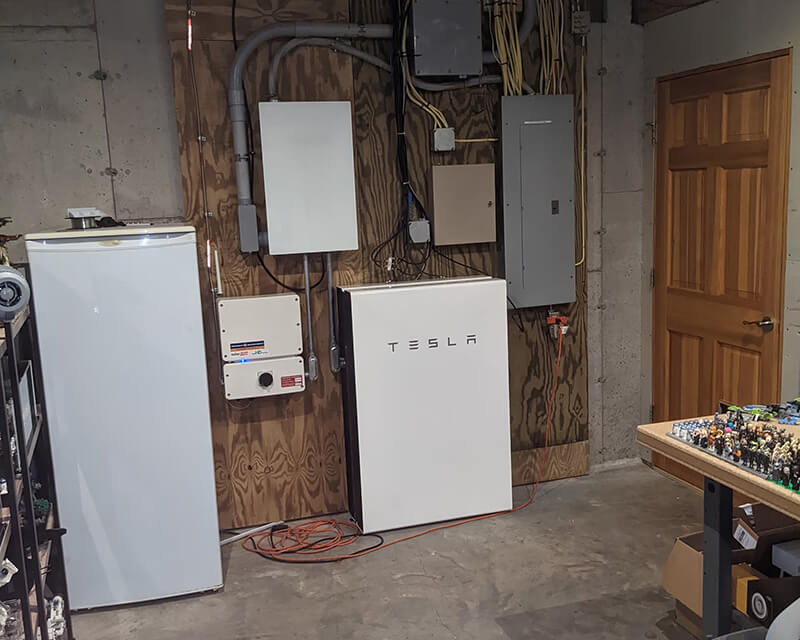
Living on a well pump system, backup power was always on Peter’s mind, but he wanted to avoid fossil fuels. After chatting with ReVision’s system designers, it became clear that investing in battery storage would give him value and energy independence.

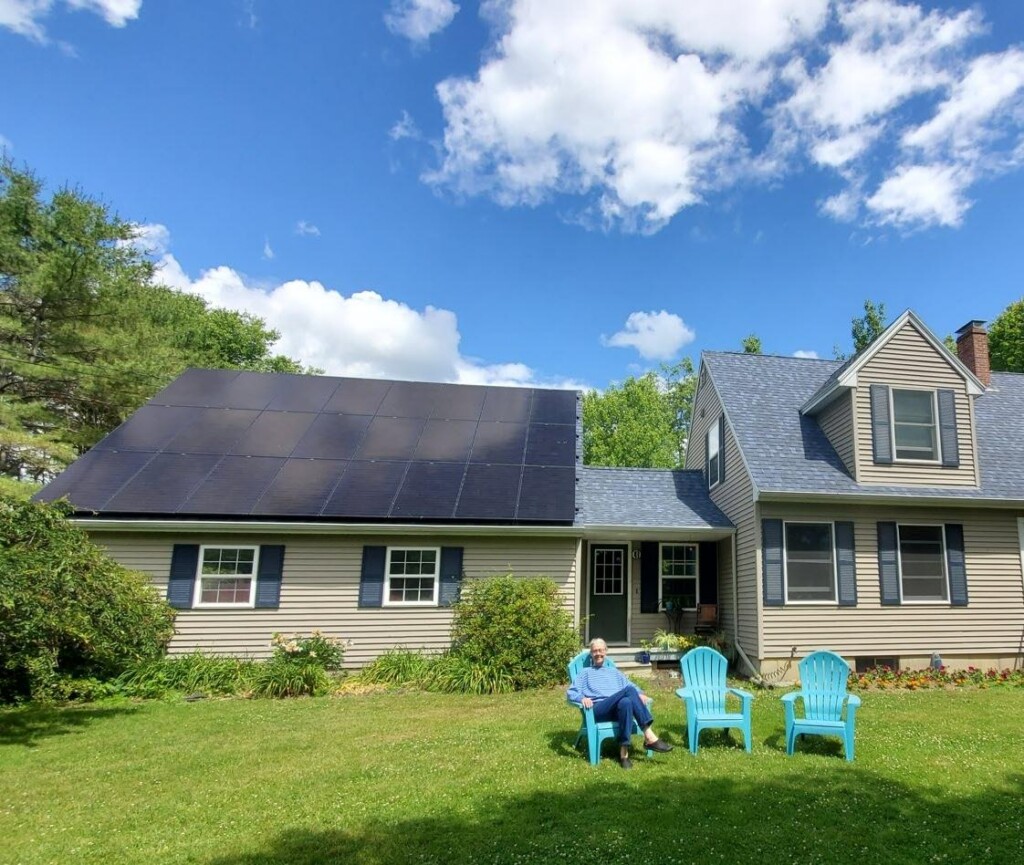
“Rather than spending six or eight thousand dollars on a propane generator, I realized I should be thinking about solar panels and batteries.” In 2021, Peter installed 13 solar panels on the back of his garage along with two Tesla Powerwalls. Since then, his batteries have carried him through 27 power outages.

“Only one outage drained the batteries completely,” he says. “Most outages are under 12 hours, which is no big deal for the batteries to handle.”

“It has been a wonderful experience. I feel more secure. I have adequate power and my well pump works, even if the neighborhood has lost power. The system is so seamless. I wouldn’t even know the power is out except that I hear my neighbor’s generator turn on. I’ve been thrilled by it,” he says. “Truly thrilled.”

Powering An All-Electric Lifestyle

Ed Begley Jr. retrofitted his own gas-powered cars into electric in the 1970s. Fortunately for Peter, it is now possible to simply buy an EV, which he did in 2023.

“I don’t even own a gasoline-powered vehicle anymore,” he says. “I drive a Toyota bZ; I had a 2023 model and just traded it for a 2026 with the new battery preconditioning system.” With his EV in the driveway, he wanted to maximize the amount of solar powering his transportation. Just a couple years after his initial installation, he reconnected with ReVision and added an additional 11 panels to his array.

“There are some good public chargers around Bar Harbor, but charging at home is always the most efficient. Now I feel even better knowing more of that charging comes from my own solar array.”

Looking Ahead: Heating & Cooling with the Sun

If he was designing a home now, Peter says, he would absolutely incorporate heat pumps and make it fully net-zero. As is, his 18-year-old post-and-beam home is highly insulated, and relies primarily on wood for heating.

“I eventually do plan on getting heat pumps. As global warming continues, the cooling aspect is really going to drive that decision.”

Energy Independence

Peter thinks that solar with battery backup is a no-brainer for people living in Maine.

“It gives you a degree of independence from the grid. You don’t need a generator. It bridges you through nasty weather. Even without the tax credits, the value is clear. Energy independence, thinking about how you use energy, the health of the planet . . . all those things add up to a really good deal.”
He doesn’t just recommend solar – he recommends going solar with ReVision Energy. “ReVision was fantastic. For both projects I was kept in the loop the whole way. They put in a ton of work communicating with the utility and were so persistent. I can’t say anything other than positive things about ReVision Energy.”

Interested in solar and/or battery storage for your home? Send us an email.

Filed Under: Under the Sun Blog Tagged With: by Jill McLaughlin, OLD Solar Champion Stories

Top Tips for Efficient Heat Pump Use in Winter

January 7, 2026 by Mauricio Pence

Maximize comfort, save energy, and get the most from your heat pumps in cold New England weather.

More New Englanders are switching from dirty, fossil-fuel heating systems (like gas boilers or oil furnaces) to super-efficient air source heat pumps. If you pair  your heat pumps with solar energy, you’re locking in a really low rate for heating and cooling. But even if you haven’t gone solar yet*, you’ll want to get the most out of your heat pumps this winter.

We spoke with master plumber and HVAC specialist Dave Ragsdale, who has over 15 years of experience designing and building these systems, to share the best tips for efficiency and comfort.*Schedule a free site visit to see how much your home can save with solar energy!

*Schedule a free site visit to see how much your home can save with solar energy!

Tips for Heat Pumps in Winter

1. Treat the Remote Like a Comfort Meter

Unlike traditional thermostats, heat pump units are mounted high on the wall, so the temperature setting is more of a comfort guide than an exact reading.

“I had a classic New Englander’s mental block – I hated the idea of setting my thermostat over 70. But at 72 my heat pump is working smoothly and the room is comfortably and reliably around 66 degrees.”— Jill, ReVision co-owner and heat pump owner

2. Set It and Forget It 

Heat pumps work best when maintaining a steady temperature, not when constantly turned off and on. If you’re leaving for the day or overnight, keep them at the set temperature.

Dave’s rule of thumb:

  • Up to 3 days away: Leave the heat pump at your normal setting.
  • More than 3 days: Switch to “away mode” at 60°F (or as low as 50°F in some cases).

“Since every house is unique, there’s no universal setback law. But generally, leave the heat pump at the desired temperature for absences up to three days. Longer than that, use the ‘away mode’ setback of 60 degrees. Each house loses heat at a specific and unique rate, so we recommend experimenting with setback. The longer you are gone, the better setback works.” —Dave Ragsdale

3. Prepare for Extreme Cold

Heat pumps operate down to -22°F, but below that, they may struggle or shut down. When a cold snap is predicted:

Have an alternative heat source ready (propane, oil, space heaters, or wood).

Expect outer rooms without heat pumps to feel cooler than normal.

4. Extra Efficiency Tips

Use auto fan speed settings for best performance.

Clean dust filters regularly.

Schedule annual maintenance with our in-house service team.

4. Pair Your Heat Pump with Solar Energy

To truly maximize your savings and efficiency, power your heat pump with the sun. This can result in a locked-in electric rate down to 9 cents per kilowatt-hour – the equivalent of paying $0.95/gallon of heating oil.

Book your free solar or heat pump site visit today and find out how much you can save!

Book a Free Site Visit for Solar and/or Heat Pumps

Filed Under: Under the Sun Blog Tagged With: by Jill McLaughlin

Solar for Small Businesses: More Savings in 2026

December 1, 2025 by Mauricio Pence

In the face of rising electric rates, going solar is a smart move for small businesses.

Across New England, small businesses are struggling with increased utility costs. With electricity rates climbing, 2026 is the perfect time for local organizations to take control of their energy future by switching to clean solar energy. We spoke with Commercial Sales Consultant Guy Marshall to explore how small businesses can leverage solar to control operating costs, lock in predictable electric rates, and make a meaningful climate impact.

Before joining the team at ReVision Energy, Guy ran his own small business, so he understands the various demands. In budgeting, when you generate a dollar of additional revenue it usually generates twenty cents of profit – but a dollar of cost cutting is a dollar of profit. When budgeting for the next year, many business owners will add an extra 5-10% for electricity rate increases; this means to make the same profit this year they’ll need to cut elsewhere, or increase prices.

“It was pretty nice to see the $1,000 electric bill go to $17 or $18,” says Alvin Chase, owner of Eastern Tire & Auto Service, in Rockland, ME. “I think it’s a critical time for us all to see what small steps each one of us can make, and one of the easiest things you can do is make a solar investment.”

“As a small business,” Guy says, “one of the ways to control costs is to get control of your electric bills. By fixing the cost of electricity, business owners can control a large part of their budget during a time of economic uncertainty and tariffs.”

Take Skillins Greenhouse, a family-owned business, for example. In 2025 they partnered with ReVision to install a 140-panel array on their Cumberland location. They have a 5 year ROI. Two Midcoast boat builders – RE Blood Boatworks in Newcastle and Artisan Boatworks in Rockport – have ROIs of 5 years as well. With this type of payback period, these local businesses will be harvesting 20+ years of free electricity. As Guy points out, there are very few other investments a business can make with such a strong ROI.

“For us the ROI was incredible,” says Alvin of Eastern Tire, “we covered the expense in just under three years. Today we pay only the monthly delivery fee for electricity. As you can imagine, I have made many financial decisions in my 37 years here. Without hesitation, constructing our own power supply was among the wisest and most profitable.”

Throwback Brewery, a craft brewery in North Hampton, New Hampshire, installed a 49 kW rooftop system in 2016 and have been reaping the benefits for almost a decade.

“Benefits such as the federal tax credit, renewable energy credits, and bonus depreciation made this project well worth the investment,” said founders Nicole Carrier and Annette Lee. “So even if you might not be like us (a small business striving to be as environment conscious as possible), you might just crunch the numbers and decide solar could be for you, too!”

Businesses can still claim the 30% Federal Tax Credit – even next year.
Contrary to popular belief, the 30% Federal Solar Tax Credit for businesses and nonprofits isn’t disappearing – it’s just more complicated.

“The rumor is that everything’s gone,” Guy explains, “but that’s just not true.” Starting in 2026, companies that are foreign-owned, foreign-influenced, or under foreign control will face new compliance requirements. These rules are also expected to extend to the source of project funding. With over two decades of experience in the solar industry, ReVision has the expertise, manufacturer relationships, and knowledge base that will help business owners take advantage of the tax credits under these new rules.

The budget bill passed in July also reinstated 100% bonus depreciation for commercial solar projects, which has been extremely beneficial for local businesses.

“This improves your cash flow,” explains Guy. “In the year the array is completed, you can take both the tax credit (if entitled) and 100% bonus depreciation. It means the money you paid for the array comes back to you faster. If, for example, you paid $100,000 for the array with the 30% tax credit and depreciation expense, you get approximately 50-55% back in year one.”
Show Your Values

On a micro-level, going solar is a concrete climate action. In a time when environmental policy is largely being revoked at a federal level, it can feel difficult to actually make a difference.
“Instead of getting mad at political parties, seize your own change,” says Guy. “By going solar you can contribute in a very real way to saving the environment and taking control of your energy independence.” And customers care about this. A solar array sends a message to customers and shows that the business values sustainability, they value quality, and they value a better future.

“While all the projects we’ve done have had good economic value, you have to look beyond that a little and say ‘What do our customers want?’ and ‘What is right for the planet?’ and find that balance,” explains Michael Halle, President of Paradise Park in Old Orchard Beach. “You can come spend a week at Paradise Park, enjoy heated pools and hot tubs, air conditioned rental accommodations, and have essentially no carbon footprint! It’s a great example showing that humanity and nature can coexist and have paradise together.”

A Variety of Financing Options

There are many ways small businesses can go solar. In Maine, there are low-interest loan options available through Coastal Enterprises, Inc. (CEI) as well as the Dirigo Business Incentives program for Maine businesses.

Massachusetts’ recently launched SMART 3.0 program gives projects a nice boost by providing an incentive for every kilowatt hour the system generates for 20 years. The exact incentive amount depends on a few project characteristics, but that’s still monthly revenue for your business alongside energy savings. Compared to traditional net metering, this long-term incentive makes solar in Massachusetts one of the most financially attractive options in New England.

ReVision Energy experts work with our customers to help them navigate the various credits and incentives available, and choose the structure that works best.

“At the end of the day,” Guy says, “you get to do something good for our planet AND save money. And if enough people do it? That’s a significant impact on the environment.”

Interested in working with Guy or another of our Commercial Sales Consultants on a free solar quote for your business? Fill out this form or send us an email: hello@revisionenergy.com

Filed Under: Under the Sun Blog Tagged With: by Jill McLaughlin, OLD Solar Champion Stories

Co-Owner Climate Book Recs: Holiday Gift Guide

November 29, 2025 by Mauricio Pence

As employee-owners of a solar company, we’re working on climate action every day – one solar panel, heat pump, battery, or EV charger at a time. Solar energy is one of the most concrete steps towards mitigating climate action, and we love working in a field with such immediate and positive impacts on the planet. But we also know there are a variety of ways in which people are fighting the climate crisis, and we enjoy learning about those as well.

For a book holiday gift guide this year, we asked ReVision Energy co-owners what environmental-themed books they’d give as gifts (and their favorite bookstores – have to shop local, after all!)

Fiction 

The Ministry for the Future written by Kim Stanley Robinson  

“This novel shows a future where the world comes together to systemically address climate change through law, finance, and technology. If you’re a fan of science fiction, or especially of Kim Stanley Robinson’s ability to build worlds, this is a great read.” —Chuck Hayward, EV Analyst  

“Realistic climate fiction, set in the near future, with a happy ending!” —Chris Jones, Solar Designer 

Co-Founder Fortunat Mueller was hesitant to recommend this one because “it is terrifying. But it has a certain optimism buried in its apocalyptic story.”  

The Overstory written by Richard Powers 

“Not just one of the best pieces of climate fiction I’ve read, one of my favorite books, period!” —Owen Davis, Solar Designer 

“I think it is so incredibly beautifully written.” —Fortunat Mueller, Co-Founder

Stay and Fight written by Madeline Ffitch 

“Set in Appalachia, three women try to raise a child against a backdrop of fracking, poverty, and homophobia. The novel is told in pieces by the couple, Lily and Karen, the new neighbor, Helen, and the boy, Perley. It’s a really beautiful look at human fallibility and what it means to be a family while trying to fix the world.” —Jill McLaughlin, Digital Marketing 

Wild Dark Shore written by Charlotte McConaghy

“This book is about a family who is responsible for maintaining a seed vault and lighthouse on a remote island off of Antarctica. They have to battle stormy seas, rising tides, and social interactions with the researchers on the island. When a woman washes ashore the mystery starts to unfold, who is she and why is she there?” —Allison Barbour, Commercial Development

The Fifth Season written by N.K. Jemisin 

“This book is related to all of the climate and environmental topics – it’s just in a fantasy format. This novel from the legendary writer N.K. Jemisin will challenge you and stick with you for years and years.” —Connor Rasmussen, New Construction Solar

The Monkey Wrench Gang written by Edward Abbey 

“I read it as a teenager and it opened my eyes to how focused mayhem can be used as a force for positive change.” —Tom Carter, Solar Advisor  

Ishmael written by Daniel Quinn 

“It’s amazing and life-changing. About 30 years old, and I think it still resonates.” —Chris Bitely, Community Solar  

Non-Fiction 

Fen, Bog, and Swamp: A Short History of Peatland Destruction and Its Role in the Climate Crisis written by Annie Proulx  

“I picked it up at Books Upstairs, an incredible bookstore in Dublin, just before we went to Connemara which is chock full of bogs.” —Annie Brown, Service  

Reading the Forested Landscape: A Natural History of New England written by Tom Wessels  

“It makes you see the New England landscape in a completely new way.” —Lydia Berry, Marketing

Drawdown: The Most Comprehensive Plan Ever Proposed to Reverse Global Warming, edited by Paul Hawken 

“It’s an excellent book for any climate action fan to keep on their shelf and pull out time and time again for motivation and quick access to real solutions to mitigate climate change.” —Kelly Marett, Commercial O&M

All We Can Save: Truth, Courage, and Solutions for the Climate Crisis, edited by Ayana Elizabeth Johnson and Dr. Katharine Wilkinson

“An insightful and uplifting view into how we can think about climate solutions and women leading the way.” —Megan Ulin, Development  

Abundance by Ezra Klein and Derek Thompson 

“A realistic outline of what can be done if we remove obstacles and how it can benefit humans. It is very American-focused and glosses over some considerations, but it is also timely given the less-than-ideal timeline we have to address climate change and the compromises that must be made to have a true impact.” —Justin Paynter, Solar Designer 

The Sea Around Us written by Rachel Carson  

“Rachel Carson writes about science and biodiversity in a way that manages to be educational while also being clear and approachable at the same time. The Sea Around Us is filled with joy and wonder at our shared natural world.” —Luke Curran, Solar Designer

Sacred Instructions: Indigenous Wisdom for Living Spirit-Based Change written by Sherri Mitchell  

“Sherri Mitchell is an Indigenous attorney, activist, and author from the Penobscot Nation. She has a solar array from ReVision on a barn in Monroe, ME on her land that holds the Land Peace Foundation. She narrates the audiobook.” —Stefan Apse, Solar Designer  

The Story of Stuff: How Our Obsession with Stuff Is Trashing the Planet, Our Communities, and Our Health-and a Vision for Change written by Annie Leonard

“This will make you look around your home and think about all the stuff – where it came from, and where it will end up. How much of it do you really need? A very timely read after an industry fabricated holiday making you feel like you need to buy, buy, buy! It’s full of striking facts about consumerist culture.” —Kristine Corey, Customer Experience

Life in the City of Dirty Water: a Memoir of Healing written by Clayton Thomas Muller  

“Clayton Thomas-Muller’s book was recommended by an environmental organizer friend who met the author at a conference. It’s a personal story of resilience that makes powerful connections between systems of cultural oppression and environmental harm, and offers a lot of inspiration in its vision of healing and community organizing.” —Andy Toomajilian, Commercial Sales

Children’s Books 

The Lorax by Dr. Seuss, Unstoppable Us by Yuval Noah Harari, Rewild the World at Bedtime by Emily Hawkins 

“These books are all compelling stories for children that entertain as well as invite curiosity!” —Caitlin Brooke, Marketing  

And a non-comprehensive list of our favorite local bookstores: 

  • The Bookmill (Montague, MA)
  • Federal Street Books (Greenfield MA)
  • Unnamable Books (Turners Falls, MA)
  • Grey Matter Books (Hadley, MA)
  • Brookline Booksmith (Brookline, MA)
  • Water Street Book Store (Exeter, NH)
  • Gibson’s Bookstore (Concord, NH)
  • Nonesuch Books (South Portland, ME)
  • hello hello books (Rockland, ME)
  • Arctic Tern Books (Rockland, ME)
  • PRINT: a bookstore (Portland, ME)
  • Sherman’s (Freeport, ME)
  • Left Bank Books (Belfast, Maine)
  • Greenhand (Portland, ME)
  • Letterpress Books (Portland, ME)
  • Back Cove Books (Portland, ME)
  • Anodyne (Searsport, ME)

Filed Under: Under the Sun Blog Tagged With: by Jill McLaughlin

Why We Chose ReVision: Authentic, Local, Trusted

November 5, 2025 by Mauricio Pence

We’re seeing solar payback periods of 7-10 years (and thousands of dollars in electric savings), but solar is still a big investment, and choosing the right installer is important. Below we’ve gathered some quotes from customers who consulted other solar installers – and ultimately chose ReVision Energy. From our employee-ownership to our non-pushy salespeople and professional installation crews, here’s why New Englanders are happy they went solar with ReVision:

We’re employee-owned; we’re with you for the long haul:

“I owned a small business for almost 40 years and I know great quality when I see it. I saw it with ReVision Energy. I initially reached out to about 5 solar installation companies for my house. I settled on ReVision due to their history, employee-owned, communication, and I assume future longevity. I have not been disappointed. Working with ReVision Energy exceeded all my expectations.” —Jim H., York, ME

“After calling about 5 or 6 solar companies and getting a quote from all of them, ReVision was a no-brainer to me. Not only their pricing but the time they have been in the business and also the warranty they offered me. Everyone I dealt with was extremely knowledgeable and helpful in every step of the process. From the first call to the finished product installed, we couldn’t be happier.” —Savio M., Biddeford, ME

“We did our homework. We did the research. We interviewed a number of companies. We attended a green energy fair. We chose ReVision and we could not be happier. From our first meeting to the installs of both our solar panels and hot water heater the process was excellent. Our concerns and questions were addressed and answered. We felt involved and informed throughout the process.” —Mary Y., Brentwood, NH

An in-house service team is critical: 

“I got all these crazy quotes with numbers all over the place from no-name companies, and they kept messaging me with these fake deadlines. I have friends in the industry and they tell me that one of the most important things is to find a company that has their own service team and stands behind their installs. So I signed up with ReVision! Great experience. I am going to save more than $100K in utility costs over the next 20 years.” —Chris M., Sutton, MA

“We spoke with 6 companies prior to contracting with ReVision and could not be more pleased with the entire process. From the initial meeting with their sale representative, through the entire contract, scheduling and actual installation, they were all top notch. We are loving looking at our Solar Edge app and seeing all the excess electricity we are producing.” —Maureen and Andy., York, ME

Familiar, grounded, authentic: 

“Solar was a no-brainer for us. We actually had a door-to-door salesman approach us from a national company when we were outside doing yard work. After he tried to sell us on it with a lot of catch phrases and fancy pitches, we reached out to ReVision and immediately felt incredibly at home. Each person we worked with not only felt like a person we’d want to hang out with (and we can because they all live around here) but they all embodied the ethos that ReVision stands for. From start to finish, ReVision was familiar, grounded, and authentic.” —Christina W., Cape Elizabeth, ME

“I had the worst experience with [another solar installer]. I was so lost with those people. It was mind boggling, there was no correspondence with them, and I didn’t know what anything was. We even got up to the finance part of it, and I just had this feeling that was like ‘this isn’t right, don’t do it.’ And then my son told me to call ReVision, and he was right.’” —Heidi S., Alfred, ME 

Our installers are THE best: 

“I got 3 proposals from 3 different solar installers, and while ReVision wasn’t the cheapest, I couldn’t be happier with the choice I’ve made. Their installers go above and beyond; they FOUND AND FIXED a hole made by the previous heat pump contractor, where many others would say “not my work, not my problem.” I am 100% confident that ReVision has the highest quality workmanship that will hold up to years of weathering, and the in-house operations team were kind and responsive to any requests. It is apparent that everyone from sales to operations to install teams take great pride in the work they do.” —Dylan L., Dover, NH

Filed Under: Under the Sun Blog Tagged With: by Jill McLaughlin

Driving on Sunshine: EV Voices

October 30, 2025 by Mauricio Pence

Our latest blog series “Driving on Sunshine,” features the real-world experiences from our co-owners and customers as they navigate New England in electric vehicles (EVs). From Smart Cars to Ford Lightnings, from Chevy Bolts to Ioniq 5s, these stories will highlight the variety of ways to drive electric, and explore how pairing EV with solar can turn everyday driving into a cleaner, quieter, more enjoyable and more cost-effective experience.

Fortunat Mueller, Co-Founder & CEO

I’ve been driving in EVs since 1999 (with a short interruption in the early ReVision days, when I was driving gas pickup trucks and then a plug-in hybrid). Each vehicle has been so dramatically better than the previous one that it is pretty amazing to experience. EVs are already so much better than gas cars, but they are also improving so much faster, so the gap just keeps getting wider. As of this summer, we’re now a 2 EV household and soon to be 3 since my oldest daughter has just started Drivers Ed (yikes).

Scroll for a timeline of Fortunat’s EV journey:

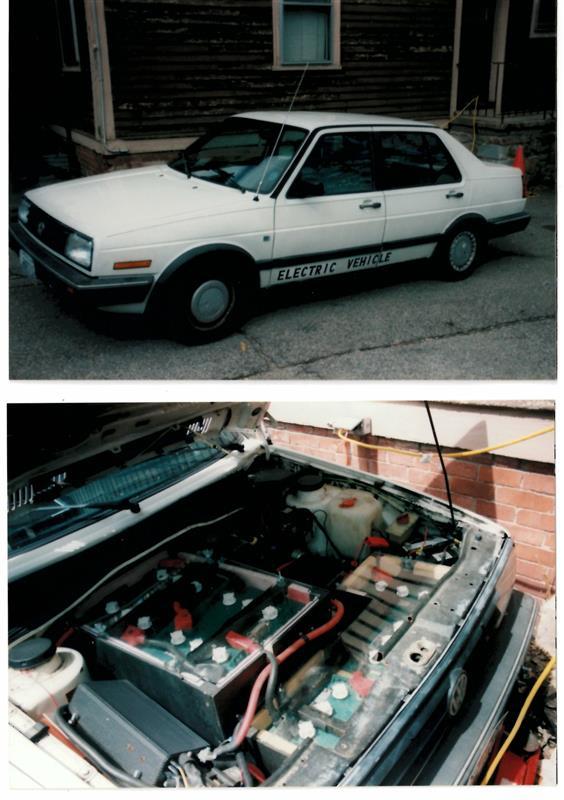
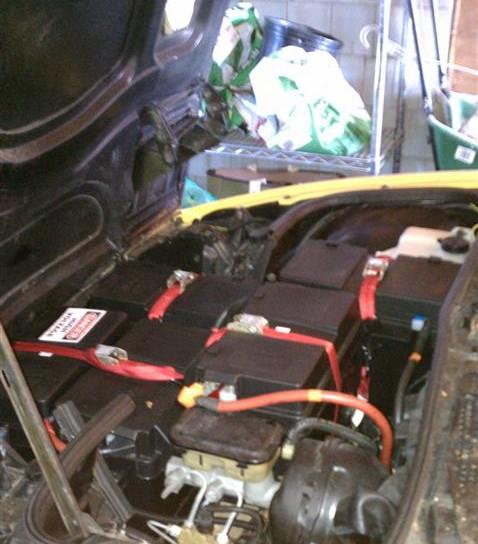
1988 VW Jetta (converted to EV in 1999 as an independent study project in grad school with friends) 

1984 Pontiac Fiero (converted to EV in 2005) 

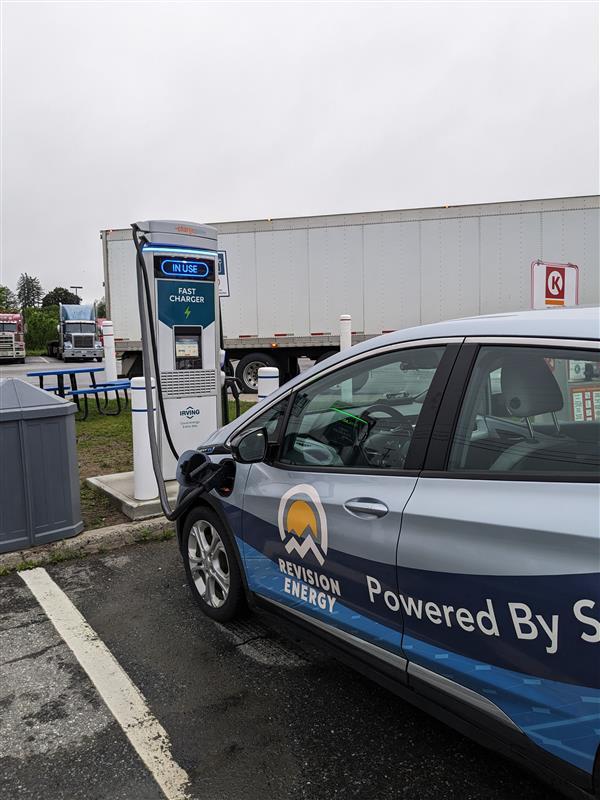
2017 Chevy Bolt: 

I think the Bolt is a great EV. It isn’t flashy and doesn’t set anyone’s heart aflutter, but when it came out it was the first affordable EV with range over 230 miles (both the affordability and the range have improved considerably since then). Though it is FWD, I put winter tires on it and have always felt confident driving it, even in poor winter weather. 

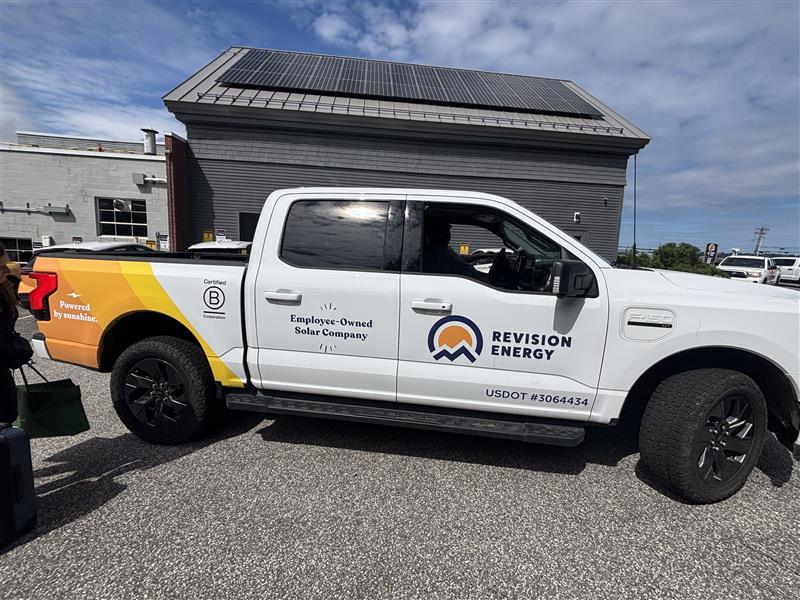
2024 Ford Lightning 

I really love most everything about the Ford Lightning. It is quick and comfortable to drive, and quiet. The frunk is huge, which is an awesome feature in a pickup; it’s great to have some meaningful storage space that is out of the weather for tools, etc. My only complaint is that I think it is just too big. Since I live in the country, that doesn’t usually bother me, but whenever I drive into the city (or frankly even to the grocery store), I am reminded that the truck is really just absurdly large. I hope that by the time I’m shopping for my next vehicle, an electric midsized truck is an option.

1997 Solectria Flash (Daihatsu Hijet)  

(obtained in 1997 but currently a work-in-progress in my barn)

Filed Under: Under the Sun Blog Tagged With: by Jill McLaughlin

Driving on Sunshine: EV Voices

October 8, 2025 by Mauricio Pence

Our latest blog series “Driving on Sunshine,” features the real-world experiences from our co-owners and customers as they navigate New England in electric vehicles (EVs). From Smart Cars to Ford Lightnings, from Chevy Bolts to Ioniq 5s, these stories will highlight the variety of ways to drive electric, and explore how pairing EV with solar can turn everyday driving into a cleaner, quieter, more enjoyable and more cost-effective experience.

Lisa Scott, Customer Experience Specialist, North Andover, MA

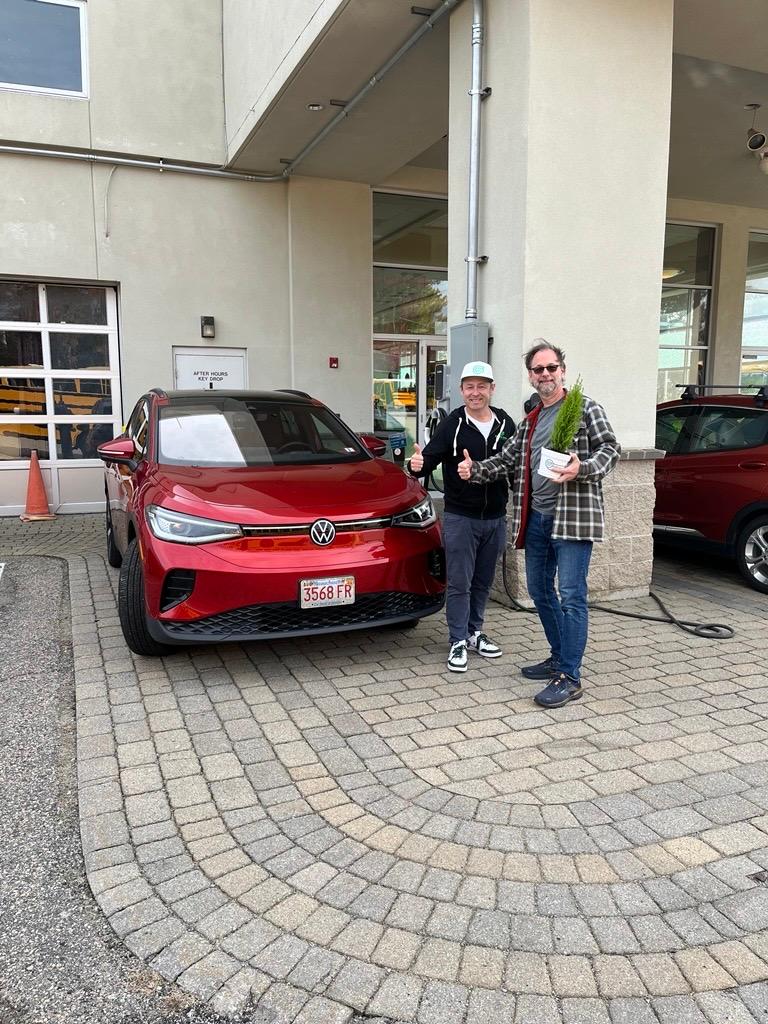
Lisa’s partner Dave and Jesse of Green Wave EV.

My partner, Dave, recently bought a pre-owned Volkswagen ID.4 from Jesse Lore at Green Wave Electric Vehicles in North Hampton, NH, and the whole experience was fantastic. Jesse spent most of a Saturday morning with us while we test drove around 10 different cars. Being able to compare so many options really helped us feel confident in our choice, so I would absolutely recommend Green Wave for their great selection and deep industry knowledge.

Driving the ID.4 has been life-changing. It’s powerful, quiet, and handles beautifully, like piloting a spaceship. It’s hands-down my favorite car ever. I’m hoping to get my own EV soon, once we’re ready to say goodbye to gas for good.

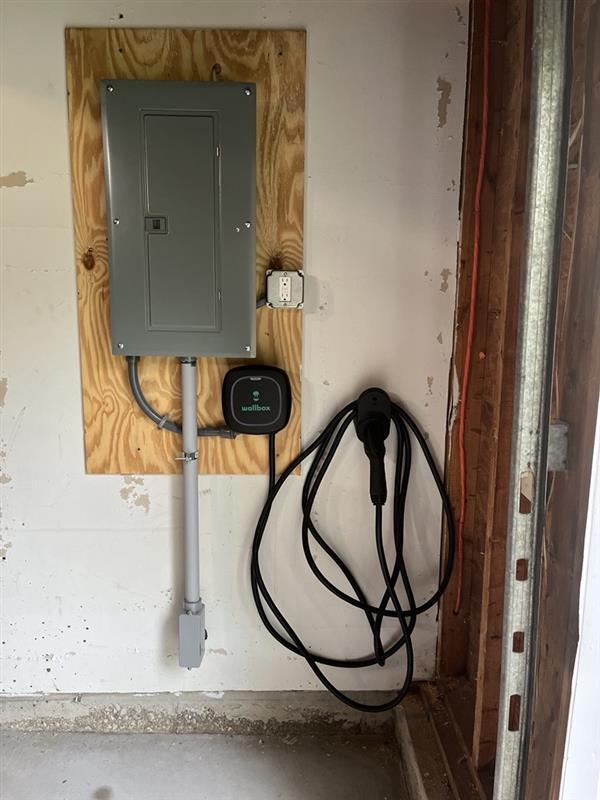
We have a Wallbox charger in our garage, which we generally use at night to earn bill credits from National Grid. We recently had our own solar and battery system installed by a wonderful ReVision crew, and are looking forward to charging from the sun.

 I drive the ID.4 to our North Andover branch about once a week and charge on one of the Level 2 chargers shared with other co-owners. I love those drives; the car is just so. much. fun. It’s so zippy that I don’t need to worry that I’m going to get clobbered by oncoming vehicles when I pull onto Route 114 in North Andover.

Dave and I have taken the car on several road trips to upstate New York and the Adirondacks. We were a bit cautious at first because of range anxiety, but the charging network is surprisingly extensive and improving quickly. Just be prepared to download a bunch of different apps; there’s a lot of variety out there. That said, charging stops haven’t been too frequent, and they usually only take 15 to 30 minutes, so they don’t slow us down much at all. This car has brought us more joy than I thought a car could, and we look forward to a future of widespread EV-adoption.

Dana Ward, Solar Champion, Biddeford, ME

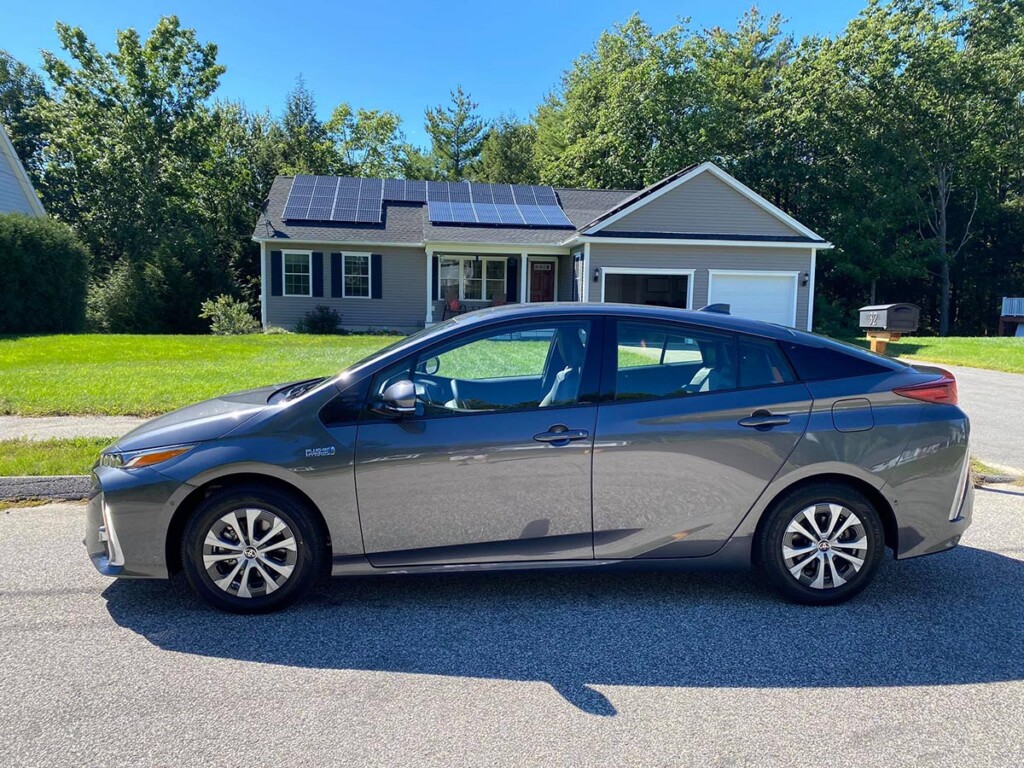
We have a 2020 Toyota Prius Prime Plug-in Hybrid. It gets around 28 miles on the battery in the summer and 22 in the winter. After the battery is fully discharged we get around 55 MPG in the summer and 60+ MPG in the summer. We power the battery with our ReVision Energy-installed solar panels and EV charger, all compliments of the sun. 

Hans Brandes, Solar Champion, Falmouth, ME 

I have a Ford Lightning and charge at home and at our camp up north. We are part of two ReVision member-owned community solar projects.

Filed Under: Under the Sun Blog Tagged With: by Jill McLaughlin

Solar Payback Periods

September 9, 2025 by Ale Moreno

We often get questions about the “payback period” on solar investments. At ReVision, we believe it’s important to take a holistic approach to evaluating the value of solar. Keep in mind that solar has been proven to increase home resale value, and is a more reliable investment than the stock market.

So while “payback period” shouldn’t be the only metric we discuss, we understand it’s a frequent topic of conversation. We show all of these numbers in our proposals (and more), to help you fully understand the long-term savings potential and wealth creation that renewable energy offers. Put simply, your solar payback period is the amount of time it takes for you to “break even” on your solar investment. This means calculating the time it takes for you to save as much on your electric bills as you spent on your solar energy system. 

2026 and Beyond

Although the federal tax credit for solar has been taken away, the solar payback period is actually the same – if not better – than it was five years ago. The cost of solar technologies has dropped 75% in the last ten years, while the cost of electricity has increased exponentially. (This is due to a number of factors including natural gas prices, increased storm damage, and aging transmission lines – check out our recent blog post for a deep dive into electricity rates).  

Relying on your utility for 100% of your electricity means you have no protection from their increasing rates, which have more than doubled over the past 20 years in New England. With a solar investment, you pre-buy your own clean electricity, which means your “solar electric rate” can only go down over time; the longer you use it, the cheaper each individual kWh becomes. Instead of worrying about electricity rates rising, go solar for a fixed amount and benefit from reliable, clean electricity for decades to come. 

Our co-founder Fortunat Mueller was recently interviewed about this on Maine Public:

The fundamentals and economics of rooftop solar for residential customers are still really really strong. There are forces making it a stronger, better investment even than it has been in the past. We’re finding that customers signing up for 2026 installations are getting just as good a deal overall in terms of lifetime value for their systems.  

The cost of electricity is going up at an accelerating pace, and there are a number of factors playing into that. So for a homeowner thinking about generating some of their own electricity on the roof, the argument for solar (in terms of increasing grid costs and decreasing reliability), is stronger than ever.”  

Below are examples that prove this argument, pulled from real proposals, designed in August 2025 by our local Solar Designers. These projects will be installed in 2026, meaning they do not include the former federal tax credit. Our proposals include everything from panel degradation to utility cost increases, and our projections tend to be conservative. 

Maine:

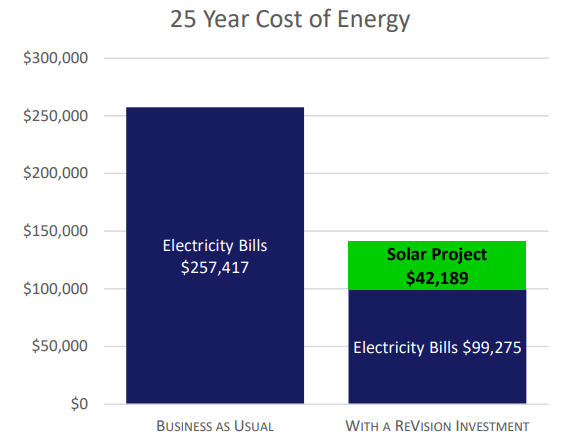
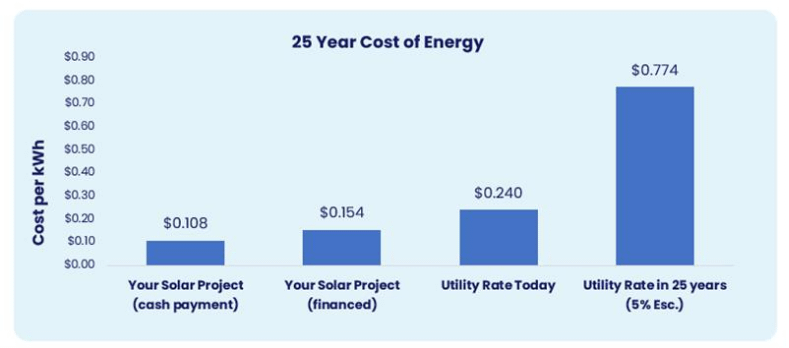
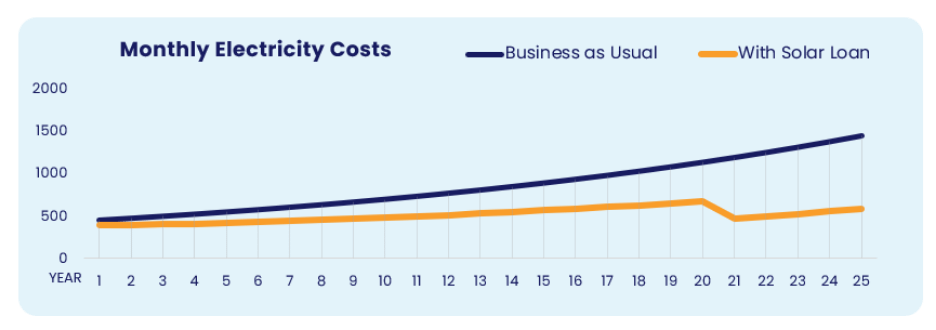
Here’s another recent example from a customer in Maine, we’ll call her Laura. Laura has four kids living at home, heat pumps, an electric vehicle, and a swimming pool – her family uses a lot of electricity. Her average monthly electric bill in 2025, at CMP’s current rate of $0.24/kwH, is $450. If she does nothing, and electric prices rise a conservative 5%, Laura can expect to pay $257,500 over the next 25 years.  

Laura’s solar array will cost about $42,000 total. Because of her roof orientation and shading, her array will only offset 65% of her home’s electric load, so she will continue to pay CMP for some electricity every month. This is still a huge financial win for Laura and her family:

 Her solar “payback period” is 10 years, and she will pay an equivalent of $0.10/kWh – less than half of what she was paying to CMP in 2025.  

Laura’s total net savings with solar over 25 years? $116,000.  


Massachusetts: 

Our Massachusetts customer, Alex, has an even better payback period: 7.7 years. Alex’s currently monthly electric bill is $154, meaning she can expect to pay $108,000 to National Grid in 25 years if her usage stays the same. But Alex is planning to get an EV in a few years, and is also considering switching to air source heat pumps – both of which will increase her electric bill. 

We designed a rooftop solar array for Alex that will actually cover 115% of her current electric usage, leaving room for her future EV and heat pumps. Her total project cost will be $22,500, but unlike our other states, Massachusetts does have state-specific incentives, bringing her cash investment to roughly $18,900. She’ll earn that back in utility savings in just 7.7 years and will have saved over $101,000 in 25 years (not to mention the money she will save on gas by switching to an EV and heat pumps). 

New Hampshire: 

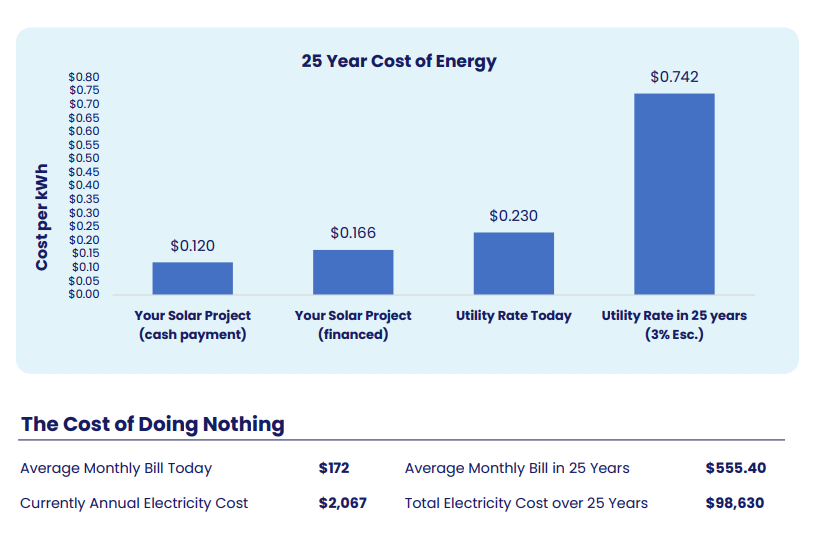
Let’s call this customer Simon. Simon currently pays an average of $143/month for electricity from Eversource. Based on our conservative projections for utility increases, Simon can expect to pay $81,900 to Eversource over the next 25 years.

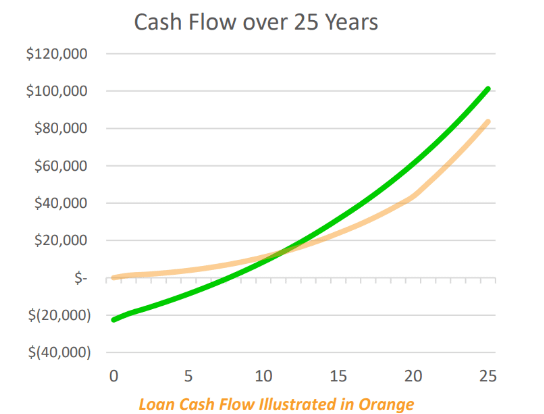
A solar array on his roof will cost Simon $23,734, but the energy generated from those panels will almost entirely cover his home’s usage. Simon can either pay for the solar project in cash now, or take out a loan. Even after he pays the interest on the loan, Simon will ultimately be saving over $50,000 on energy costs for the next 25 years.  

His solar “payback period” – the time it takes him to recoup his initial investment – is 10 years, meaning he will get 15+ years of nearly-free electricity.  

NH PV Chart 2026.png

Making a solar investment means your cost of electricity can only go down over time. Lock in your solar electricity rate today. 

Filed Under: Under the Sun Blog Tagged With: by Jill McLaughlin, Value of Solar

“Right for us and right for the planet.” Solar + Battery Storage in the Berkshires

September 5, 2025 by Mauricio Pence

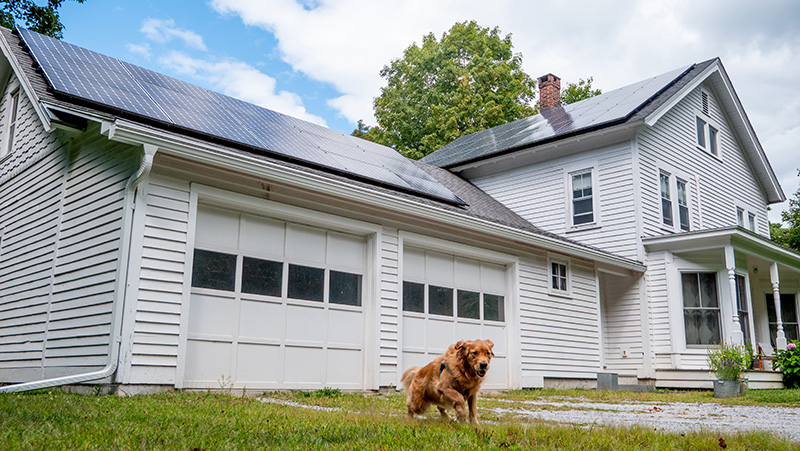
Marion and Tom worked with SunBug Solar in 2019 to install solar and battery storage at their home in the Berkshires, where they live with their dog Tilly (pictured above, loving her solar home). When ReVision Energy acquired SunBug in 2023, they joined the ReVision Energy community, and ReVision’s service team helped them sort out a minor battery issue. We sat down with Marion recently to learn more about her solar journey.

This interview has been edited and condensed for clarity.

What motivated you to go solar?

Marion: The main factor that motivated us to install a solar array was the desire for clean, renewable energy. The other factors include lowered electricity bills, grid resilience, and the amazing juxtaposition of 21st century energy technology in our 19th century house (which wasn’t even wired for electric until the late 1950s).

Are you noticing any financial benefits from your array?

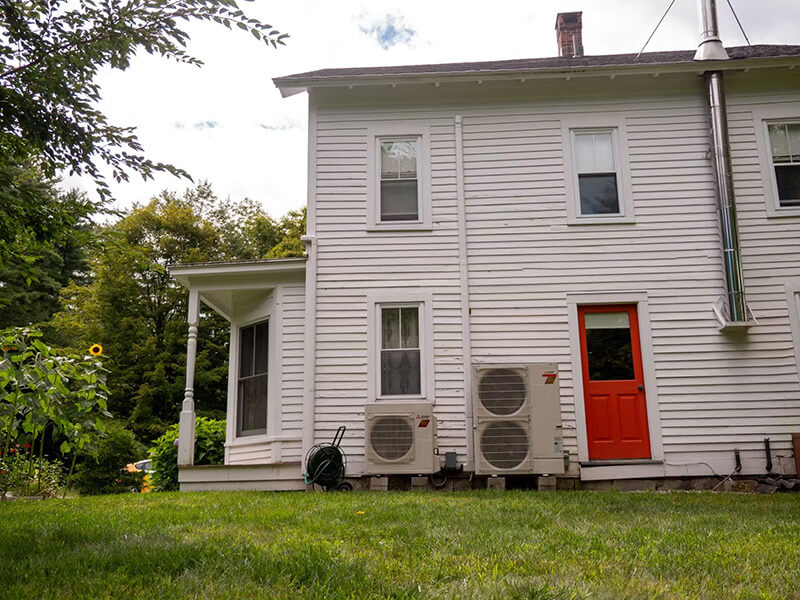
Marion: There are many financial benefits from our solar installation. When we installed, we made sure our array exceeded our energy needs. At the same time, we also installed battery storage as our primary back-up (we do have a gas generator as a back-up back-up, but we haven’t needed that once since our solar was installed). A few years after our installation, we purchased our first Electric Vehicle, and then two years ago we installed heat-pumps.

With our solar and battery storage system we produce so much excess energy that we only pay National Grid bills two or three months a year. All our other electric bills (nine or ten months each year) are zero dollars. The bonus is during the summer when we receive a few hundred dollars every month from National Grid — all while exclusively charging our car at home and using heat pumps as air conditioning (and as a heat source during the shoulder seasons).

While we haven’t done an in-depth analysis on energy savings since our system was activated, a back-of-the-envelope calculation: the system (including an additional array and battery storage) has paid for itself in about six years.

What was your experience like working with SunBug / ReVision Energy?

Marion: We had a very positive experience working with ReVision (formerly known as SunBug Solar). Our designer, Ned, was communicative and kind. The installers were professional and prompt. Sunbug helped us deal with the State of Massachusetts and National Grid to activate our array and to make sure we’re part of the statewide Connected Solutions program. Even with small concerns about our system which arose years after the installation, ReVision has been responsive and helpful.

Do you have a favorite spot in Western MA that you like to visit?

Marion: I loved our local bookstore in Great Barrington, The Bookloft, but it just closed this past year (boo!). But I love going to *my* local (Mill River) library. The librarian Deb O’Brien is a true hero, making everyone feel welcome, providing a safe space for those who need it, offering book recommendations for anyone who asks, and organizing fun programming that engages the whole town from babies to oldies.

What would you say about renewable energy to future generations?

Dear Future People,

Tom and I tried to mitigate our energy footprints as best we could. When we lived in an apartment in NYC we had no say about our energy choices, but even before we moved permanently to the Berkshires, we knew we wanted to do whatever we could to help with clean energy efforts; even if our neighbors either couldn’t or wouldn’t. We wanted to tread as lightly as possible on our little property and felt that any clean-energy choice was better than none. With our decision to install a solar array and batteries, then to purchase an EV over an ICE car, and finally to get heat pumps to help with cooling in the summer, we did what we thought was right for us and right for the planet. Hopefully you all have figured out how to get your whole neighborhood onto clean energy. It’s been great for us.

Interested in solar, storage, or heat pumps for your own home? Get a free estimate. 

Filed Under: Under the Sun Blog Tagged With: by Jill McLaughlin, OLD Solar Champion Stories

  • Page 1
  • Page 2
  • Page 3
  • Interim pages omitted …
  • Page 6
  • Go to Next Page »

sidebar

sidebar-alt

Subscribe to newsletter

Which newsletters would you like to receive?

Consent Enjoy the Sun(Required)
Consent(Required)
To provide the requested information, we need to store and process your personal data. By submitting this form, you agree to allow ReVision Energy to store and process your personal data for this purpose. Please see our privacy policy for more information.

  • Merch Store

Sitemap

  • Solutions
    • Homes
    • Commercial
    • Service
  • Our Work
    • Projects
  • About
    • Our People
    • Social Impact
    • Our Locations
    • Careers
  • For Customers
    • Support & Service
    • Be A Solar Champion
  • News & Events
    • Releases
    • Press
    • Under the Sun Blog
    • Events and Webinars
  • Our Partners
  • Resources

Follow Us

General Contact

Contact one of our branches for sales and non-service inquiries, or email us at hello@revisionenergy.com

Service

Need support for your existing system? Contact our Service Team:
Reach us at (207) 747-0076 or open a Support Ticket.

South Portland, ME

(207) 221-6342

Map & Directions 

Montville, ME

(207) 589-4171

Map & Directions 

Brentwood, NH

(603) 679-1777

Map & Directions 

Enfield, NH

(603) 632-1263

Map & Directions 

North Andover, MA

(978) 308-9041

Map & Directions 

Westfield, MA

(413) 884-1000

Map & Directions 

Copyright © 2026 ReVision Energy. All rights reserved.

Privacy Policy | Terms