• Skip to primary navigation
  • Skip to main content
  • Skip to primary sidebar
Revision Logo Revision Logo
Solar Calculator Get Started
Get Started Solar Calculator
  • Solutions
    • Homes
    • Commercial
    • Service
  • Our Work
    • Projects
  • About
    • About
    • Our People
    • Social Impact
    • Our Locations
    • Careers
  • For Customers
    • Support & Service
    • Be A Solar Champion
  • News & Events
    • Releases
    • Press
    • Under the Sun Blog
    • Events and Webinars
  • Our Partners
  • Resources

Give us a call

Maine (207) 221-6342
New Hampshire (603) 632-1263
Massachusetts (413) 884-1000
Contact Us

Solar Industry News

Clean Energy Incentives for MA Residents

May 5, 2025 by Ale Moreno

With one of the highest residential solar adoption rates nationwide, Massachusetts continues to provide some of the strongest incentives for powering your home or business with clean energy. By combining state incentives with federal support like the Clean Energy Tax Credit, Massachusetts homeowners can still capitalize on some of the best savings in the country.  

Solar, heat pump, battery storage, and EV charging technologies all come with their own benefits, but the rewards can grow when they’re installed together. Our experts are here to help you navigate and benefit from all the clean energy incentives outlined below.  

The Renewable Clean Energy Tax Credit  

Here are the key details of the Residential Clean Energy Credit :

  • Solar & Batteries (IRC §25D): Deduct 30 % of qualified solar and residential battery costs, with unlimited carry‑forward if the full credit can’t be used in the first year. 
  • Heat Pumps & Heat Pump Water Heaters (IRC §25C): A separate 30 % credit, capped at $2,000 per tax year, which applies to qualifying air source and heat pump water heater installations. 
  • EV Charger Credit (IRC §30C): Receive 30 % of hardware and installation costs, up to $1,000, when your residence is in a low‑income or rural census tract. 
  • Clean Vehicle Credits (IRC §30D new / §25E used): Claim $7,500 on a new all‑electric vehicle (or up to $4,000 on a used EV) that meets North‑American assembly, battery‑content, MSRP, and household‑income requirements. 

For more details, read our overview of federal tax credits and explore the visual roadmap for a fully electrified home below. 
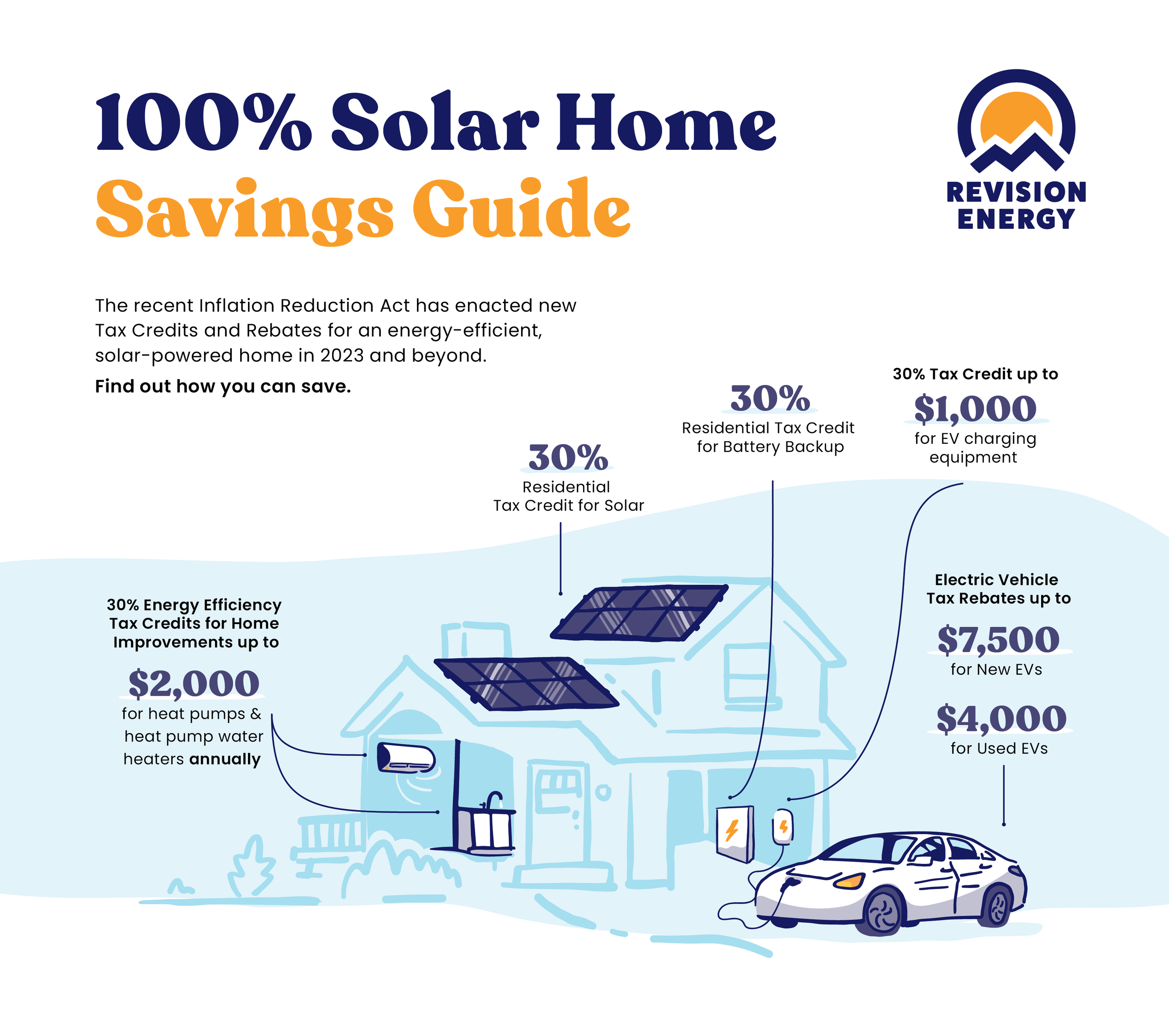
Residential_Clean_Energy_Tax_Credit_Graphic.png

Massachusetts Solar Credits & Rebates 

In addition to the federal credit, Massachusetts offers three tax advantages for going solar: 

  1. Property‑tax exemption on the increase in home value generated by your solar system (for 20 years). 
  2. Sales‑tax exemption (6.25%) on qualifying solar‑energy equipment and installation labor for systems installed on a primary residence. 
  3. Personal‑income tax credit equal to 15 % of net system cost, capped at $1,000.

Municipal Light Plant Rebates 

If your electricity comes from a Municipal Light Plant (MLP), you may qualify for a local, one‑time solar rebate, generally between $600 to $1200 per kW. Check your local MLP’s website, NextZero, or Abode Energy Management for current details. 

Renewable Energy Certificates 

Massachusetts has a strong REC Renewable Energy Certificates market. A REC represents the renewable attribute of a green megawatt‑hour of electricity. Solar system owners sell them to utilities who need them to meet a Renewable Portfolio Standard. And solar paired with battery storage may also generate Clean Peak Energy Certificates (CPECs), another revenue stream. 

Mass Save Benefits 

Customers served by Berkshire Gas, Cape Light Compact, Eversource, Liberty, National Grid, or Unitil can use Mass Save rebates, incentives, and financing: 

  • Whole‑home air source heat pumps: $3,000 per ton (the size of the heat pump), up to $10,000 (effective January 1st, 2025). 
  • Partial‑home heat pumps: $1,250 per ton, up to $10,000. 
  • Income‑qualified bonus: Up to $16,000 for households meeting Mass Save income guidelines. 
  • Connected Solutions battery incentive: Annual payments up to ~ $1,375 annually, earned for discharging battery power during grid‑peak events (paid at $275 per kW of average summer contribution). 
  • 0 % HEAT Loan: Interest‑free financing up to $25,000 for 7 years on heat pumps, batteries, weatherization, electrical‑panel upgrades, and more. 
  • EV‑charging programs: 
    • Eversource: Up to $1,400 toward wiring upgrades (higher for discount‑rate or EJ‑community customers) plus $25 per month for following off‑peak charging schedules. 
    • National Grid: Up to $700 for home wiring, and annual off‑peak charging rewards of about $100; larger incentives available in environmental‑justice areas. 
    • Unitil: Similar wiring rebates; check their current terms. 

The Case for Total Electrification 

With access to all these incentives and numerous financing options, homeowners in Massachusetts are well positioned to take control of their energy future and enjoy long-term savings. Electrifying everything at once often maximizes benefits, but a phased approach works just as well. Future-proofing your solar array for whole-house electrification is our specialty here at ReVision: we’ll project the additional electricity your heat pump, EV charger, or battery will require and size your solar system accordingly.  

Whether you’re ready to begin your electrification journey or just looking to learn more, contact our Solar Advisor team to get started. We look forward to working with you! 
Filed Under: Under the Sun Blog Tagged With: Solar Industry News

ReVision’s 2023 Sustainability Report

August 8, 2024 by Ale Moreno

sunshot 1.png

In 2022, ReVision’s Joel Alder took on the role of Sustainability Coordinator and began tackling one of our biggest “Sunshot” goals (like moonshot but solar-themed, obviously): to have fully net-zero operations by 2030. We work hard every day to combat the harmful effects of the climate crisis, but we are aware that aspects of our work come with their own carbon emissions.

Joel established a baseline report so that we could understand the sources of our emissions and waste, in order to create strategies for reductions and improvements. This report will help us phase in clean renewable sources of heat, power, and transportation so we can reach our Net Zero goals by 2030.​

Offsetting Emissions: Solar Energy

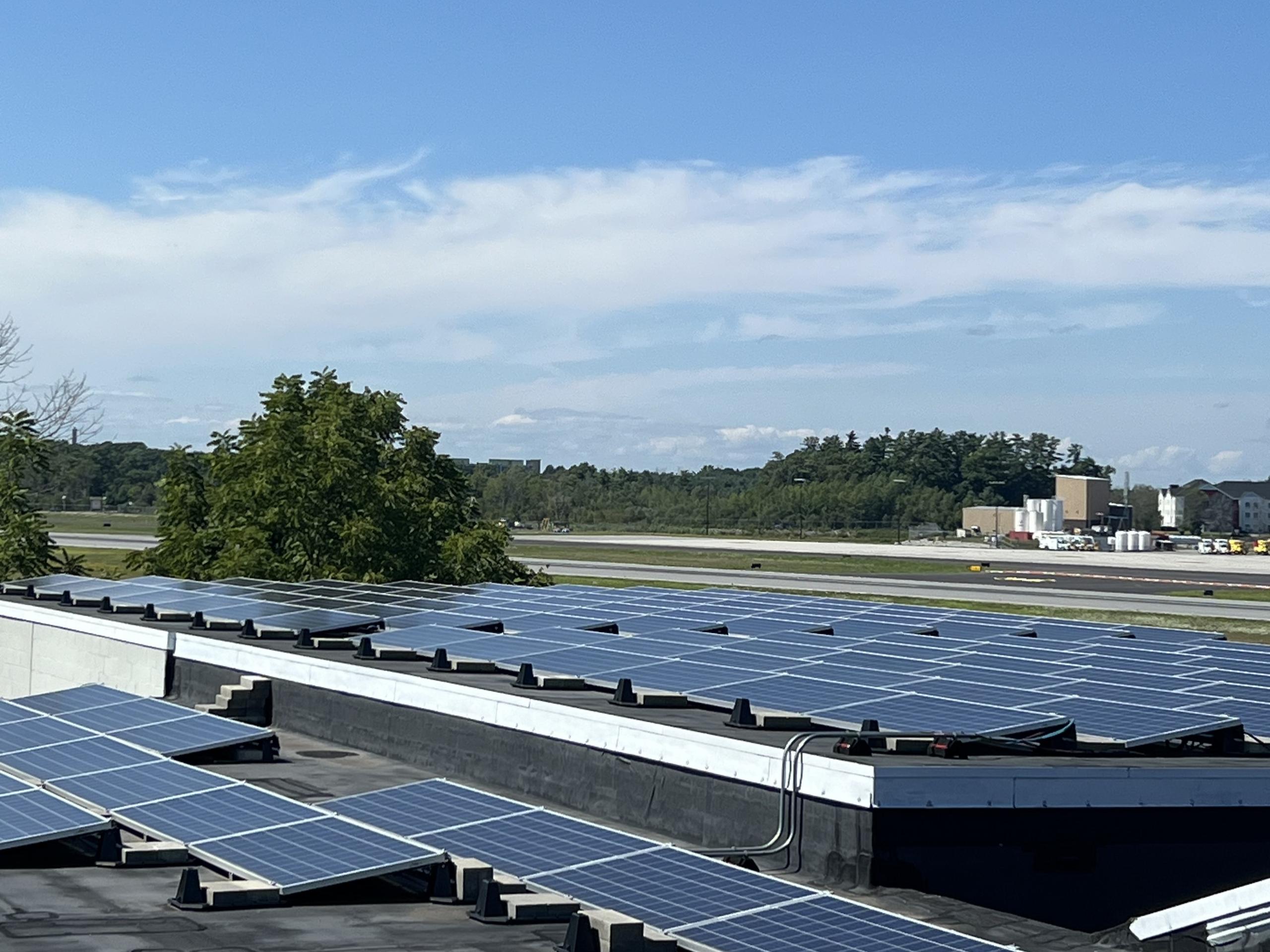
SoPo Roof Solar Airport.jpg

We know that solar energy systems are the best climate solution and reduce our electricity costs – that’s why we’ve installed a system on every ReVision branch that produces almost 100% of our electric needs.

In 2023 these arrays offset 214,568 pounds of carbon. We have also installed air source heat pumps for heating and cooling our offices in the most efficient way possible.

Emissions​: Gas & Diesel

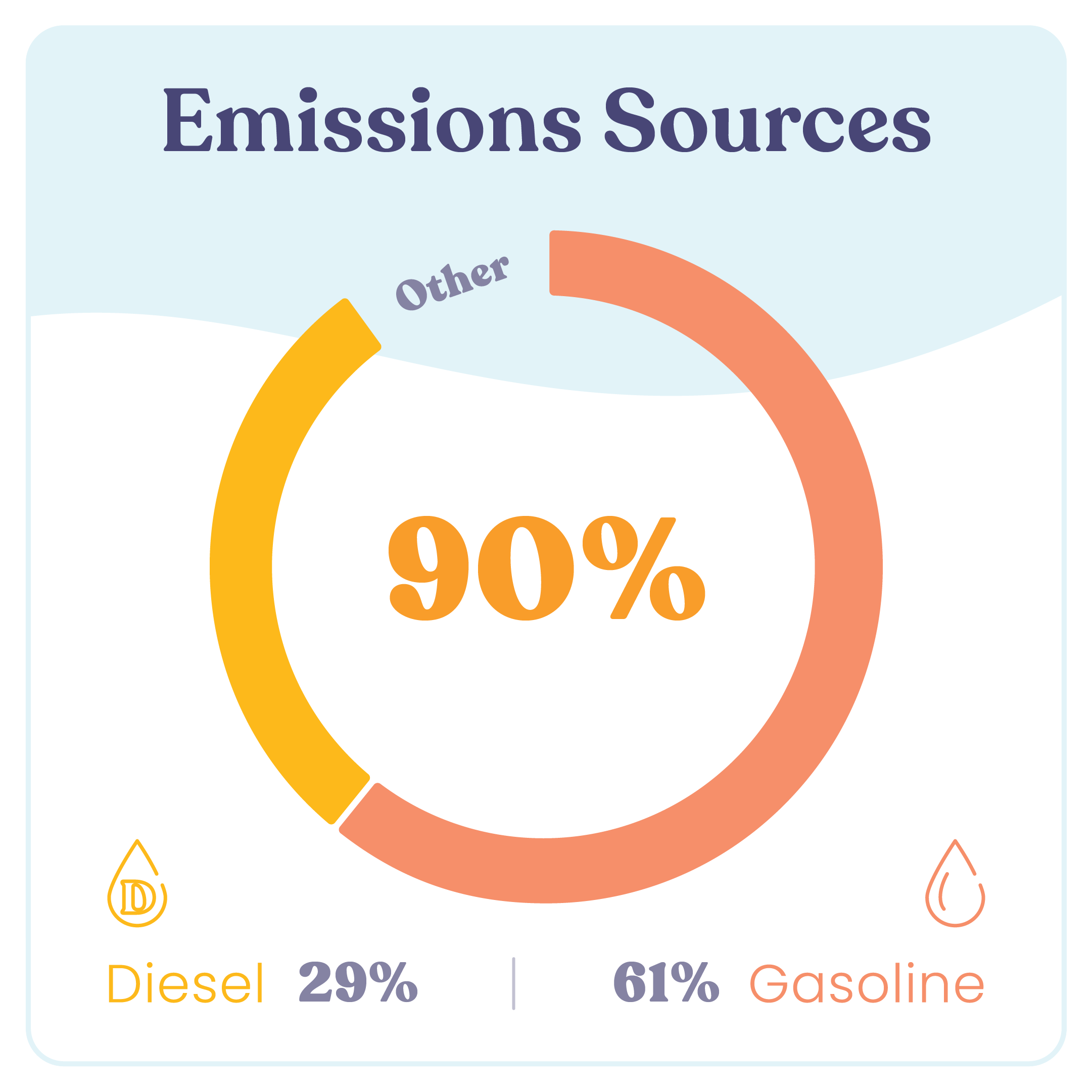
emissions-sources 1 (1).png

We hate fossil fuels and the fossil fuel industry. Unfortunately at the current time, we still have to use gas and diesel when we can’t use solar energy. Gas and diesel for our vehicles make up 90% of our emissions. The most obvious solution to reduce our carbon emissions would be to ensure we are primarily buying EVs in place of combustion engine vehicles. Our fleet today is 10% electric and ranges from smaller Chevy Bolts for site visits, to Ford F-150 Lightnings. 


cropped landscape EV charger.png

Pickup trucks, vans, and box trucks make up most of our fleet and electrified versions of these heavier-duty vehicles are less accessible right now. Because of this, the transition to a fully-electric fleet will be slower over the next 2-3 years and then will really start to ramp up. This will allow us to reach our 2030 goals, and access the EVs that match our needs. ​

Recycling & Waste

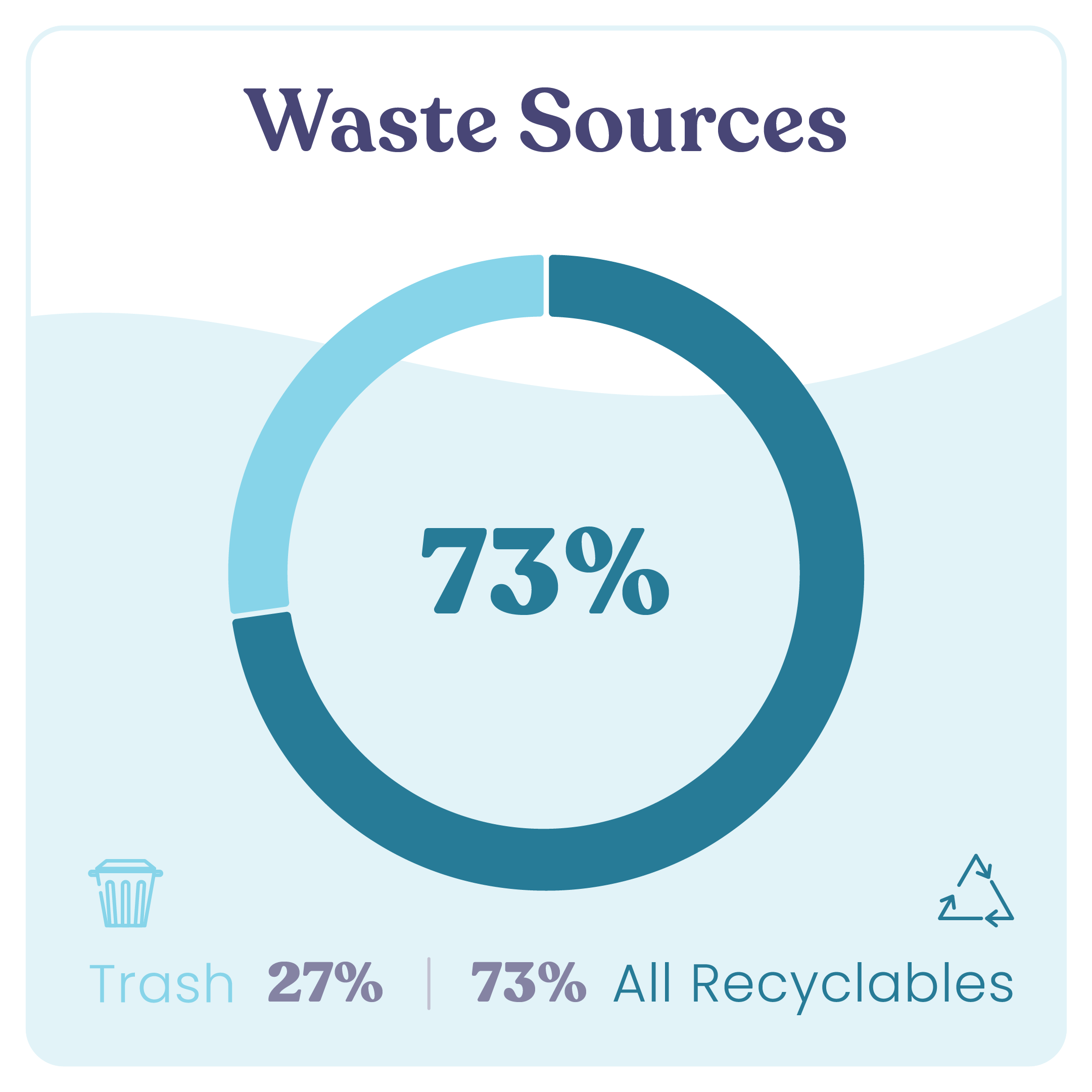
waste-sources 1.png

Overall, recycling at ReVision Energy makes up 73% of all waste, with trash making up the other 27%. This is remarkably good for a construction company and an improvement of 5% over 2022. We recycle scrap metal, cardboard, e-waste, wooden pallets, office papers, and the occasional broken solar panel, among other things. We also compost at every branch. 

We’re also continually exploring other recycling opportunities to decrease that 27% trash percentage. Polystyrene, otherwise known as Styrofoam, is the single most common item in our trash. It is light but it takes up a lot of room. Eliminating that single item from our dumpsters could reduce the amount of trash pickups we need while also bolstering recycling efforts. We are continuing to research Polystyrene recycling options and will make a decision on how best to handle that waste stream this year. 

groundwork lawrence cleanup.jpg

In 2023, we also focused on recycling education. Good recycling habits don’t catch on by themselves! Consistent and ongoing recycling education helped improve employee-owners’ understanding of recycling best practices and helped boost our recycled materials numbers. ​

Filed Under: Under the Sun Blog Tagged With: by Jill McLaughlin, Solar Industry News

ReVision Energy Ranked Top Solar Installer in New England

July 24, 2024 by Ale Moreno

We’re proud to once again be honored by Solar Power World‘s Top Solar Contractors list.  The list is the most recognized annual listing of solar contractors working in the utility, commercial, community, and residential markets in the United States. 

Top Solar Installer in New England

For the sixth year in a row (every year that the list has been published) we were named the #1 solar installer in Maine and New Hampshire. We were also the top rank in New England. Nationwide, we’re ranked the #8 solar installer and #8 solar+storage installer. 

Cait_installer_resize.jpg

“Solar projects in every market — residential to utility-scale — are getting bigger and oftentimes more complicated in scope, financing, and permitting. That’s why it’s all the more impressive when so many top installation companies have banner years,” said Kelly Pickerel, editor in chief of Solar Power World. “The Top Solar Contractors List is a great gauge for how strong individual companies are in their local markets.”

Of the total 392 companies on the list (which includes developers, EPC, and utility-scale construction), we improved our rank to #82 overall, and were featured in an article on Maine Workforce Development. 

“This recognition reflects the progress ReVision Energy is making in solving one of the most critical challenges of our time,” says co-founder Daniel Clapp. “Renewable energy is crucial to mitigating the damaging effects of the climate crisis in New England and we are proud to be a part of that effort. As a 100% employee-owned Certified B Corp, this ranking helps prove that prioritizing people and the planet is good for business.”

Filed Under: Under the Sun Blog Tagged With: by Jill McLaughlin, Solar Industry News

Maine PUC Report: Benefits of Solar Outweigh Program Costs

May 8, 2024 by Ale Moreno

A new report, released in April by the Maine Public Utilities Commission, has a clear conclusion: the tangible economic benefits of Net Energy Billing exceed the program’s costs. For 2023, the costs were approximately $130 million, while the benefits were $160 million.  

Let’s not lose sight of the big picture.

Mainers are experiencing the damaging impacts of climate change today, from flooding and erosion to wildfire smoke and poor air quality. We know that fossil fuels cause such damage, and to avoid this continued future, we must transition rapidly to a clean energy economy.  

Over the past few years, the costs of natural gas have spiked, and those fighting the clean energy transition have blamed the solar industry while giving the real culprit—fossil fuels—a pass.  

In 2023, CMP raised rates to 28 cents per kWh — 60% of that rate (16.6 cents) was due to supply costs (natural gas), and 4% (1 cent) was due to stranded costs—which includes clean energy programs, among other things. It has been immensely frustrating for clean energy advocates to watch opponents fight this 4% of our bills instead of identifying real solutions to get Mainers off the volatile pricing of fossil fuels, which accounts for 60% of monthly bills in CMP territory in 2023. 

Forward-looking reform

That’s why, in 2023, ReVision Energy worked alongside other clean energy advocates in the Maine Statehouse to pass legislation that reformed our state’s Net Energy Billing program. Part of this reform was to ensure the PUC conduct an annual evaluation of both the costs and benefits of the NEB program. To date, only programmatic costs had been calculated (and recovered through stranded cost proceedings), and benefits, including tangible economic and environmental benefits, had not yet been evaluated to have a clear understanding of the program’s net impact. 

Talking about the costs of this program – which provides clean energy to thousands of Maine residents, municipalities, schools, and businesses -without consideration of benefits is only telling half the story. According to the independent analysis released by the MPUC on April 1, for 2023, the NEB program costs were approximately $130 million, while the benefits were $160 million. Essentially, for every dollar we invest in the program, we receive $1.23 back in benefits. 

Just a few of the benefits of distributed generation that were identified in the report:

  1. Avoided energy and capacity costs
  2. Avoided transmission and distribution costs
  3. Avoided fossil fuel costs
  4. Avoided transmission and distribution line losses
  5. Demand reduction induced price effects
  6. Transmission and distribution plant extensions or upgrades funded by the net energy billing customers

At ReVision Energy, we actually find these savings conservative due to the specific program costs evaluated. The study does not break down costs as it does benefits, nor outline specific cost categories included. For this reason, we believe the programmatic benefits of NEB will likely be even greater.

The bottom line: Maine’s NEB program is delivering tangible economic and environmental benefits to all, and these benefits exceed the costs of the program.

Overall, this report is a critical step forward for the public narrative around the costs of Maine’s NEB program—it paints a clear picture that NEB program costs are a smart investment in our clean energy future as they are definitively outweighed by a myriad of societal benefits.

Share With Your Community

Filed Under: Under the Sun Blog Tagged With: by Jill McLaughlin, Solar Industry News

How to Navigate the Solar Boom: Questions to Ask a Solar Company

May 7, 2024 by Ale Moreno

The solar industry is rapidly expanding; it is predicted that the amount of solar installed in the U.S. will quadruple over the next ten years. Our government recognizes that we need solar to combat the climate crisis and is providing incentives to help boost the expansion. The Biden administration recently announced the creation of the Solar for All program, which provides $7 billion to deliver solar to low-income households across the country.  

With this growth comes an increase in the number of solar companies. And, as solar emerges as a profitable alternative to fossil fuels, it inevitably attracts its share of bad actors. In pursuit of profits, some solar companies prioritize their own interests over those of the consumer. Knowing this, potential customers need to be well-informed to avoid being misled by unethical business practices.  

Don’t Get Scammed: Unethical Sales Practices 

Door knocking salesperson


Buyer beware! Some solar companies have adopted aggressive sales models to maximize profits and expand their customer base quickly. These models incentivize salespeople to prioritize profits over customer satisfaction and transparency. Some “solar sales bros” take to social media to openly brag about the earnings they achieve through selling solar systems. One video features a door-to-door salesman describing his approach as “being a sheep in the doorstep, and a wolf in the door.” This example highlights a trend towards high-pressure sales tactics in the industry. 

Many solar installers outsource their sales operations to freelance networks that work purely on commission. These networks negotiate a minimum price with installers, which is the lowest amount the installation company will accept to install a system. For example, let’s say that minimum price is $3 per watt installed. Networked salespeople are then allowed to mark up the price, often $5 per watt or more, and pocket the difference. This potential gain can tempt salespeople to overpromise the system’s capabilities or understate the long-term costs, putting homeowners at risk of making a decision that will hurt them in the long run. 

Regulatory Gaps and Business Ethics 

How do salespeople get away with these unethical sales tactics? One reason is that the business structures of these larger firms often prioritize rapid profit generation. These large solar companies have used complicated financial investment models to accelerate their growth, intensifying the push to acquire more customers. Many national companies package together hundreds of consumer solar leases into asset-backed securities (ABS) to sell to investors, allowing companies to immediately access capital that would otherwise accumulate gradually over the lifespan of the leases. This financial maneuver, while innovative, increases pressure on the company to quickly expand their customer base in order to keep these ABS-based financial models running.   

It’s this pressure for rapid growth that can lead companies to overlook unethical behaviors among their salespeople. There have been many instances where the terms of solar panel leases and loans were obscured by salespeople eager to close deals quickly — regardless of whether the conditions were fully understood or beneficial to the customer. The drive to hit sales targets and the opportunities for financial deals with investors can often take priority over fundamental values of customer service and honesty.  

Inkedimage (17) (1)_LI.jpg

Another common tactic of unethical solar companies is advertising “free” solar panels. This kind of messaging is misleading, creating a false sense of urgency and misinformation – there is no such thing as a free solar installation.  While a generous federal tax credit and other state-specific incentives are available to residents across the nation, no state or agency will pay for you to go solar. As a result of these ads, homeowners may enter agreements based on inaccurate information, ultimately finding themselves with unexpected financial obligations and lower-than-expected savings.

The Role of Responsible Business Models 

These issues highlight the importance of choosing a company with a responsible business model. That’s the strength of employee-ownership models like ReVision, where employees are owners. This approach helps ensure that employee-owner’s interests are aligned with the long-term health and reputation of the company. Our team members work hard to reflect this commitment from the initial site visit to the final system walk-through, upholding our values of responsibility, transparency, and kindness every step of the way.  

Photos-160 (1).jpg

We’re also a Certified B Corp, meaning we prioritize the planet and our local communities over profit. We don’t owe anything to outside investors, so we can make decisions based on what is best for the customer and the long-term health of our environment.   

Also, we’re local! We live and work in these communities with you. We’re not going to scam you because we’re good people, but also because we’d probably just run into you the next week at a farmers’ market.  

Essential Tips for Potential Solar Customers 


  1. Research the Company:

    Before agreeing to anything, research the company and check its reputation. Ask your friends, neighbors, and colleagues for recommendations. Look through a company’s reviews and social media comments to get an idea of what other customers say about their experience.

  2. Avoid Rush Decisions: Be wary of high-pressure sales tactics such as “today only” offers. Solar is an investment, and businesses should understand the importance of their customers making informed decisions.

  3. Read the Contract Thoroughly:Understand all the terms and conditions before signing any documents. Look for hidden fees, cancellation terms, and understand what the contract covers. Do not sign incomplete contracts or those with blank spaces.

  4. Energy Savings Projections:Salespeople might present optimistic energy savings and cost projections. Review these projections carefully and compare them with current utility rates. Understand the factors your salesperson is using to calculate these savings.

  5. Trust Your Instincts:If something feels off or too good to be true, it probably is. Trust your instincts and feel comfortable saying no or asking the salesperson to come back at another time after you’ve had a chance to think it over.

  6. Ask Questions:Don’t hesitate to ask detailed questions about the products or services offered. A credible salesperson should be able to provide comprehensive and straightforward answers. At ReVision, our primary goal is to provide straightforward solar education and work with you to achieve your energy goals. We will never pressure you or force you into a decision that isn’t right for you.

What Questions Should I Ask a Solar Salesperson?

Check out our homeowner’s guide to going solar to learn more about these questions.

Financing Questions:
  • What are my options for payment?
  • What does it mean if I’m leasing the system?
  • What happens if I sell my house?
  • Will I still get a bill from the utility?
Maintenance Questions:
  • What is solar maintenance? What kind of maintenance is required or suggested?
  • If my system needs maintenance, how long will I have to wait?
  • Will you fix the system if it breaks?
  • What happens if I need to fix or replace my roof?
  • What happens if critters damage my system?
  • Does the company do its own Service/O&M work? Do they have licensed/certified technicians?
  • Where are those service techs responding from?
Tax and Incentive Questions:
  • What are the federal tax incentives I may be eligible for?
  • Are there additional incentives or rebates specific to my town?
  • What are Renewable Energy Credits (RECs)?
Warranty Questions:
  • What’s the difference between workmanship and manufacturers’ warranties?
  • What does your solar workmanship warranty cover?
  • Do you cover your workmanship warranty, or do you outsource it to a third-party company?
  • What does the manufacturers’ warranty cover?
  • Who provides the service for manufacturers’ warranties?
  • How long does the warranty last for major components like solar panels and inverters?  
  • Can the warranty be transferred if I sell my home? 
  • Are there any conditions or actions that could void the warranty?

General Questions:
  • Is the company doing the installation the same company the salesperson works for?
  • Is the salesperson an employee or just a commissioned salesperson?
  • Does the company have the appropriate licenses to do the work they are proposing?
  • How long has the company been in business? How long have they been working in this geography? 
  • What is the company’s ownership structure?
Share this page with friends

Filed Under: Under the Sun Blog Tagged With: by Ben Joslin, Solar Industry News

What Happens to Solar Panels When They Die?

April 10, 2024 by Ale Moreno

Recycling Solar Panels

We are approaching a period when many solar panels will be reaching the end of their useful lives. While solar waste only accounts for a small fraction of all global electronics waste, the U.S. needs to have a plan in place for addressing solar panels that are no longer viable. Many obsolete panels do unfortunately end up in landfills.

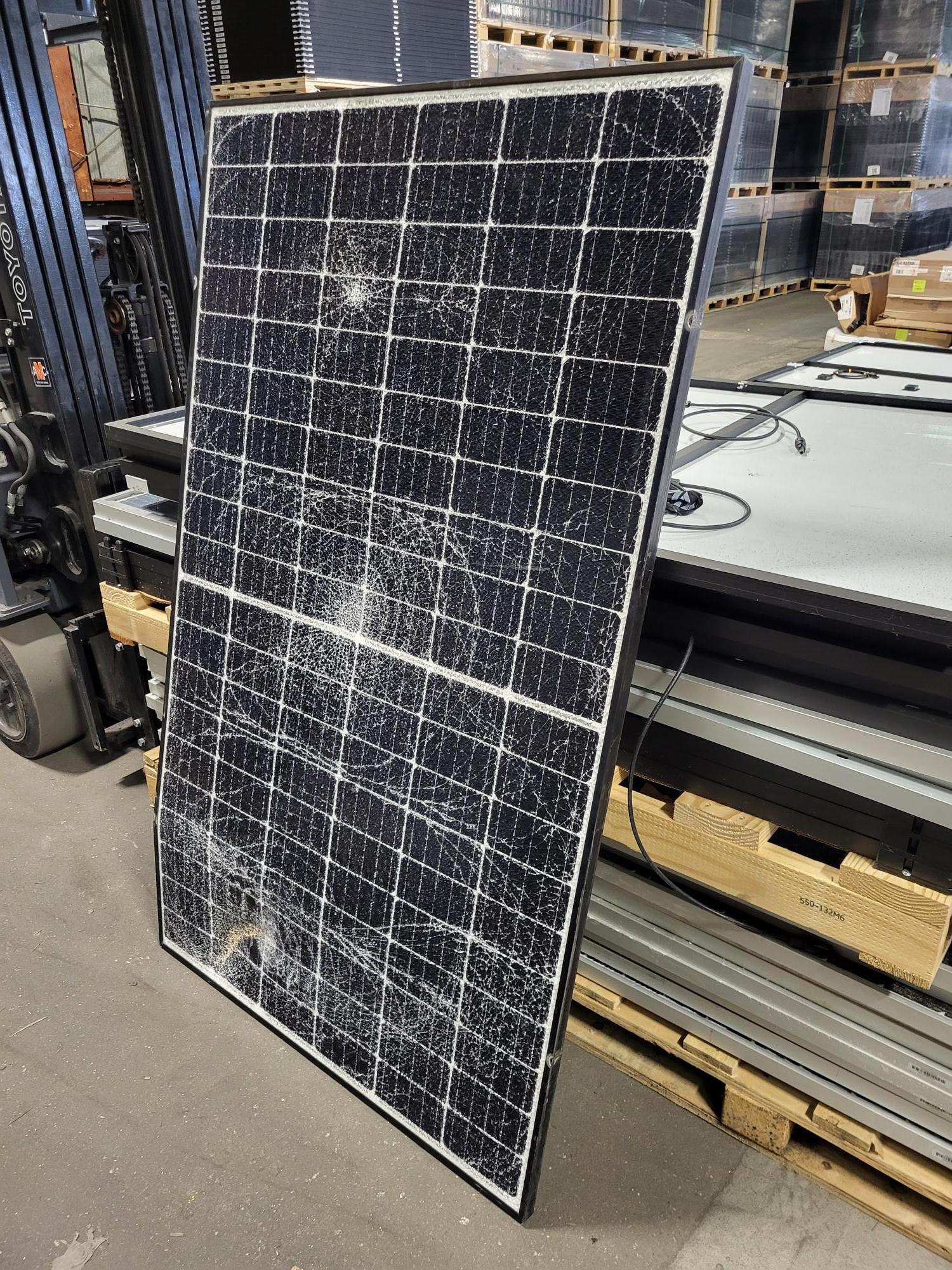
ReVision recycles any broken panels (usually caused by fallen trees, but occasionally an errant golf ball) with New Hampshire-based Aurum Recovery Group, keeping them out of landfills. This is not true industry-wide, however, highlighting the need for more sustainable practices across the solar field. Experts confirm that recycling is the answer, but we need government policies to encourage and support the practice. Joel Alder, ReVision’s Sustainability Coordinator, says “we’re proud of our sustainability efforts at ReVision, but we recognize that it’s just the beginning. We need to work towards a future where responsible end-of-life management for solar panels is the norm, not the exception.”

A solar panel has reached the end of its useful life when its ability to generate electricity has significantly decreased. This process takes 30 to 35 years. To understand what can come next for solar panels, it’s helpful to know more about what goes into them. 

What Are Solar Panels Made Of?

ReVision installs a type of solar panel known as a crystalline silicon module (C-Si). C-Si panels are made of silicon cells and a combination of glass, aluminum, plastic, copper, silver, and other special metals. The cells are made up of narrow slices of silicon, a material perfect for turning sunlight into electricity; it’s the second most abundant element in Earth’s crust (after oxygen).

When sunlight particles hit the silicon cell, it causes electrons to break away from the silicon atoms. These un-bonded electrons can then be captured and used to produce electricity. These silicon slices are either “poly” (many crystals), or “mono” (one crystal) based on their creation process.

The cells are then enclosed in a frame of plastic film, tempered glass, and aluminum to protect them from weather conditions like rain or snow. 

components.png


What Are the Benefits of C-Si Panels?

C-Si panels are the most common type of solar panel sold in the United States. This is because: 

1.     They’re reliable.

C-Si modules produce electricity for 30+ years and can withstand harsh New England weather conditions. ReVision installs panels from manufacturers that offer a 25-year power production guarantee, so you can rest assured we only install panels any of our employee-owners would be proud to have on their roof. 

2.     They’re efficient.

C-Si module efficiencies range from 19% to 22.8%, meaning ~22.8% of incoming sunlight is converted into electricity. These are some of the most efficient residential panels on the market. Keep in mind that no machines run at 100% efficiency, meaning that some energy is always lost in the form of heat, sound, or other forms of waste during the process of converting one form of energy into another. For instance, gas-powered cars operate at around 30% efficiency, meaning around 65 cents of every dollar spent on gas goes to waste (EVs have a much higher efficiency, operating at around 73%, but that’s a topic for another blog post).  

The Recycling Process: A Step-by-Step Guide 


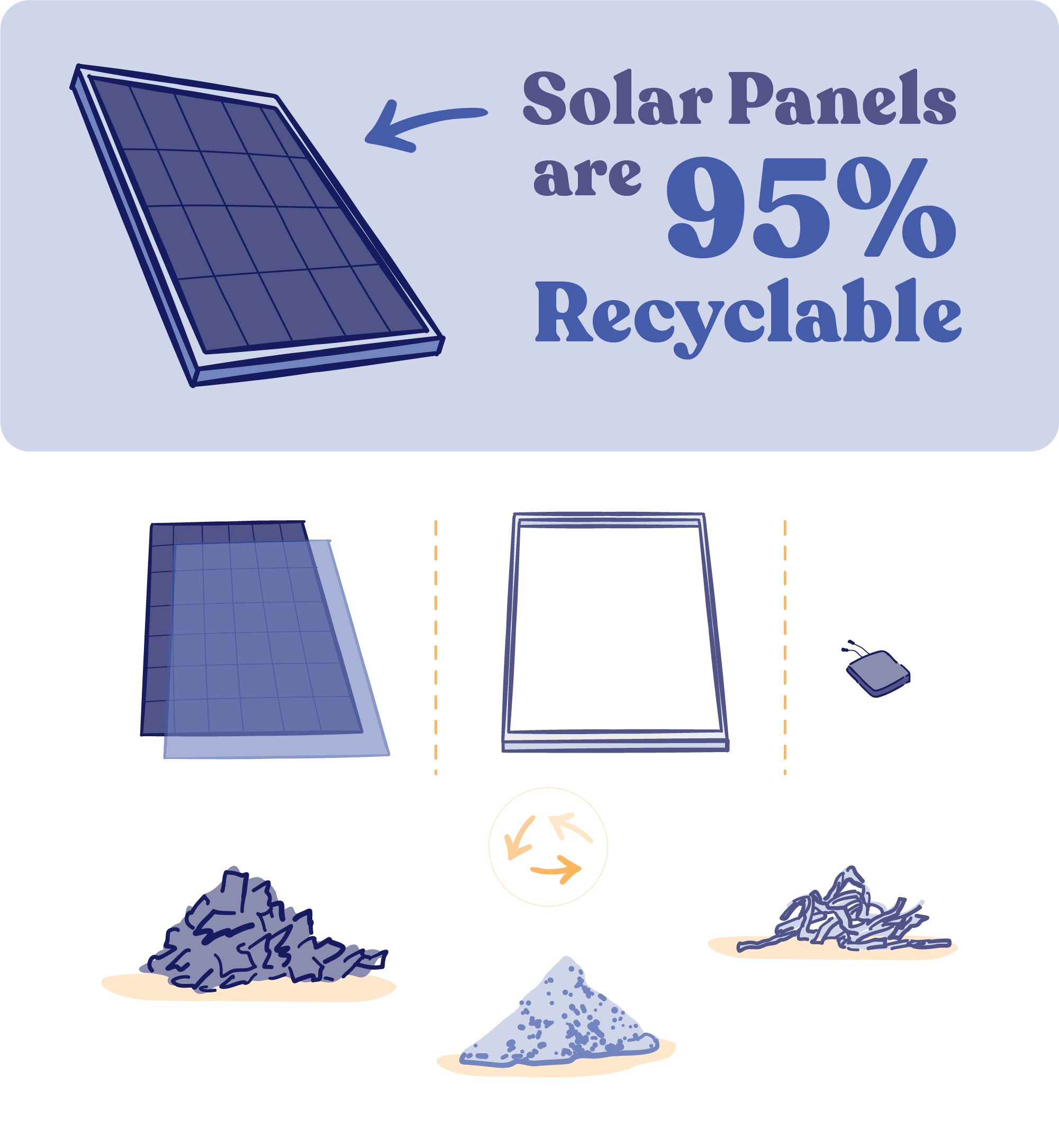
95% of the materials that go into C-Si solar panels can be recycled, setting the stage for an eco-friendly disposal process. The first step is to figure out what you’re going to do with the panels. Companies that specialize in solar panel recycling are a great option, but they often prefer to work with larger quantities. Luckily there are also many electronics waste companies capable of handling solar panels, including ReVision’s partner Aurum Recovery Group. The actual process of breaking down solar panels to be recycled starts with the following steps: 

  1. The company removes the aluminum frame and the junction box attached to the panel. 
  2. They then separate the glass from the silicon cell through a combination of thermal, mechanical, and chemical processes. 
  3. Finally, the silicon cells and special metals (silver, tin, copper, etc.) are purified by mechanically shredding the cells into fine particles that can then be separated and processed. 
recycling process.png

Addressing Waste Classification Concerns 

In considering the recycling process, it’s important to address concerns about the waste classification of solar panels, which is often a point of confusion. Throwing solar panels in a landfill is wasteful but not harmful. Labeling all solar panels as “toxic” waste is misleading. 99% of all components in solar panels are non-hazardous materials. Due to the other 1%, the EPA can’t definitively say whether all solar panels are considered hazardous waste. Because of this, current U.S. policy leaves it up to the producer of the panel to determine whether the panel has hazardous waste characteristics.

Of the few hazardous materials that are found in solar panels, the vast majority are found in “thin film” panels. These comprise less than 5% of solar panels sold in the U.S. and are primarily sold outside New England. Companies like First Solar, one of the largest producers of thin panels in the world, use robust lifecycle management processes to ensure any hazardous materials are captured and managed properly at the end of a panel’s life. 

Broken solar panel.jpg

Why Recycle Solar Panels? 

While concerns about hazardous materials in solar panels are valid, it’s essential to understand the distinction between hazardous and non-hazardous materials in solar panels to recognize the potential of solar panel recycling.

The International Renewable Energy Agency estimates that by 2050, recycling solar panels could generate 78 million tons of raw materials worldwide. If ultimately reintroduced into the economy, the value of these raw materials could surpass $15 billion. So, why aren’t more solar panels recycled? It boils down to government policy. 

Moving Forward: Advocating for Better Recycling Policies 

Lawmakers recognize that U.S. solar panel recycling regulations fall far behind our European counterparts. EU regulations “require 85% collection and 80% recycling of the materials used in PV panels.” Compare that to a U.S projection from 2020 to 2050 which predicts we will recycle only 10% of materials in end-of-life solar panels. Unlike the EU, the U.S. currently does not require solar panels to be recycled.

This contrast shows that we need more economically viable recycling solutions in the U.S. The average cost to recycle a solar panel in the U.S. is $28. A supportive recycling policy that helps reduce this cost by just $10 could significantly boost U.S. recycling rates, raising them from 10% to 35%.

Seeing that our current regulations are outdated and stifling our recycling practices, lawmakers are working to change waste policy; as of late 2023, the EPA is developing a proposed rule to add solar panels to the universal waste regulations and states like California have already characterized solar panels as universal waste to promote recycling and reuse. As the adoption of solar energy expands, the policies and economic incentives for recycling need to expand too.  

How Can I Take Action?

If you think your system is reaching the end of its useful life, contact the ReVision Energy Service team. Our technicians are highly skilled electricians who are certified to handle solar arrays. They’ll remove the system permanently without damaging the panels or your roof If you want to ensure your panels won’t be dumped in a landfill, contact us, and we will help you create a plan for disposing of your end-of-life array. 

Share this page with friends

Filed Under: Under the Sun Blog Tagged With: by Ben Joslin, Solar Industry News

How Maine Battery Storage Owners Can Support the Grid and Earn Rewards

April 8, 2024 by Ale Moreno

Homeowners in Maine are familiar with power outages: we have one of the most vulnerable grids in the country. The most recent winter storm left 50% of Central Maine Power customers in the dark. More than ever, the value of reliable energy sources is apparent. While solar energy is dependable (the sun will continue shining for the next five billion years), homeowners with solar arrays will still find themselves without power in the occurrence of an outage. This is to protect line workers from dangerous reverse currents. So how do you keep your solar working when the grid is down?  

Battery backup systems

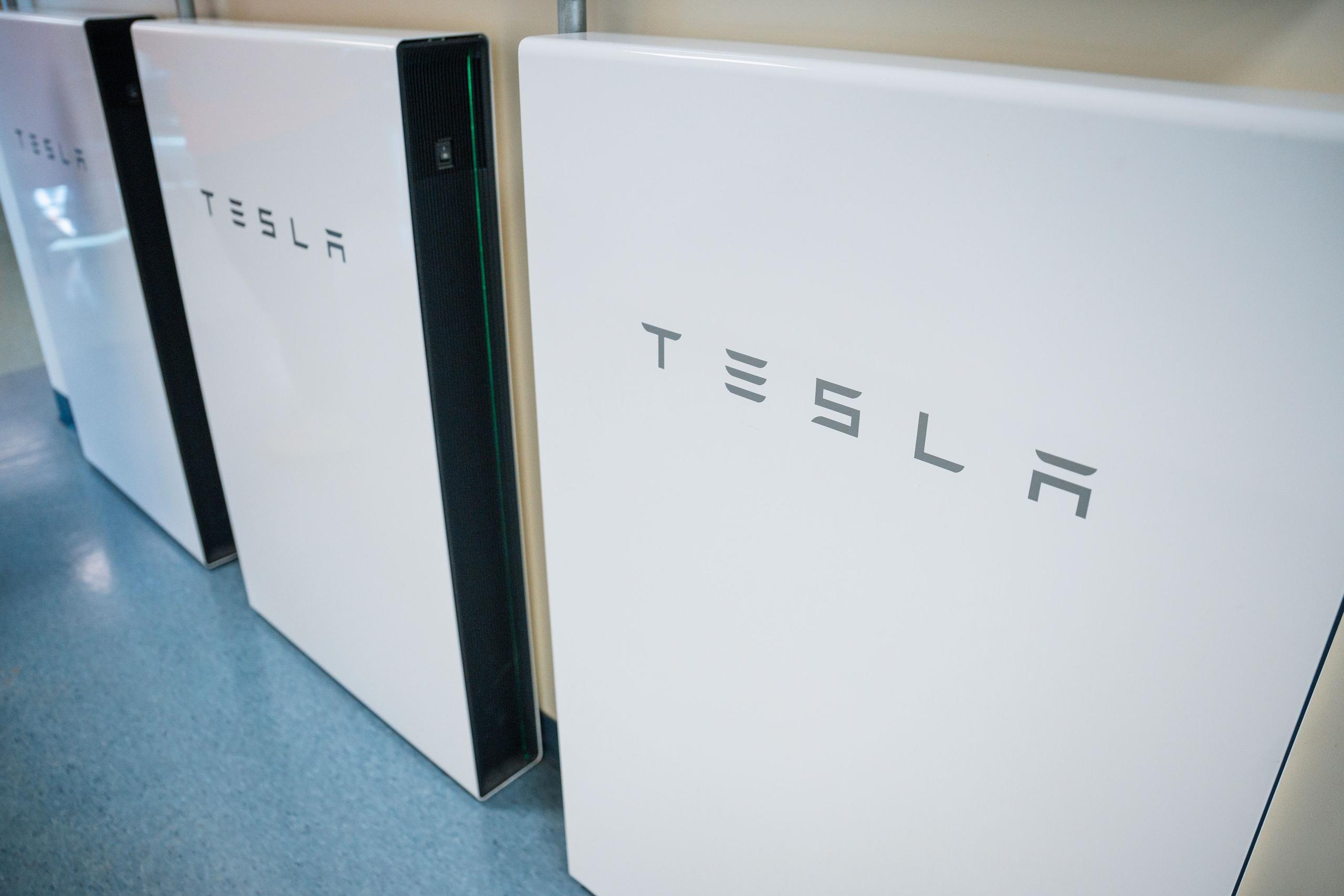
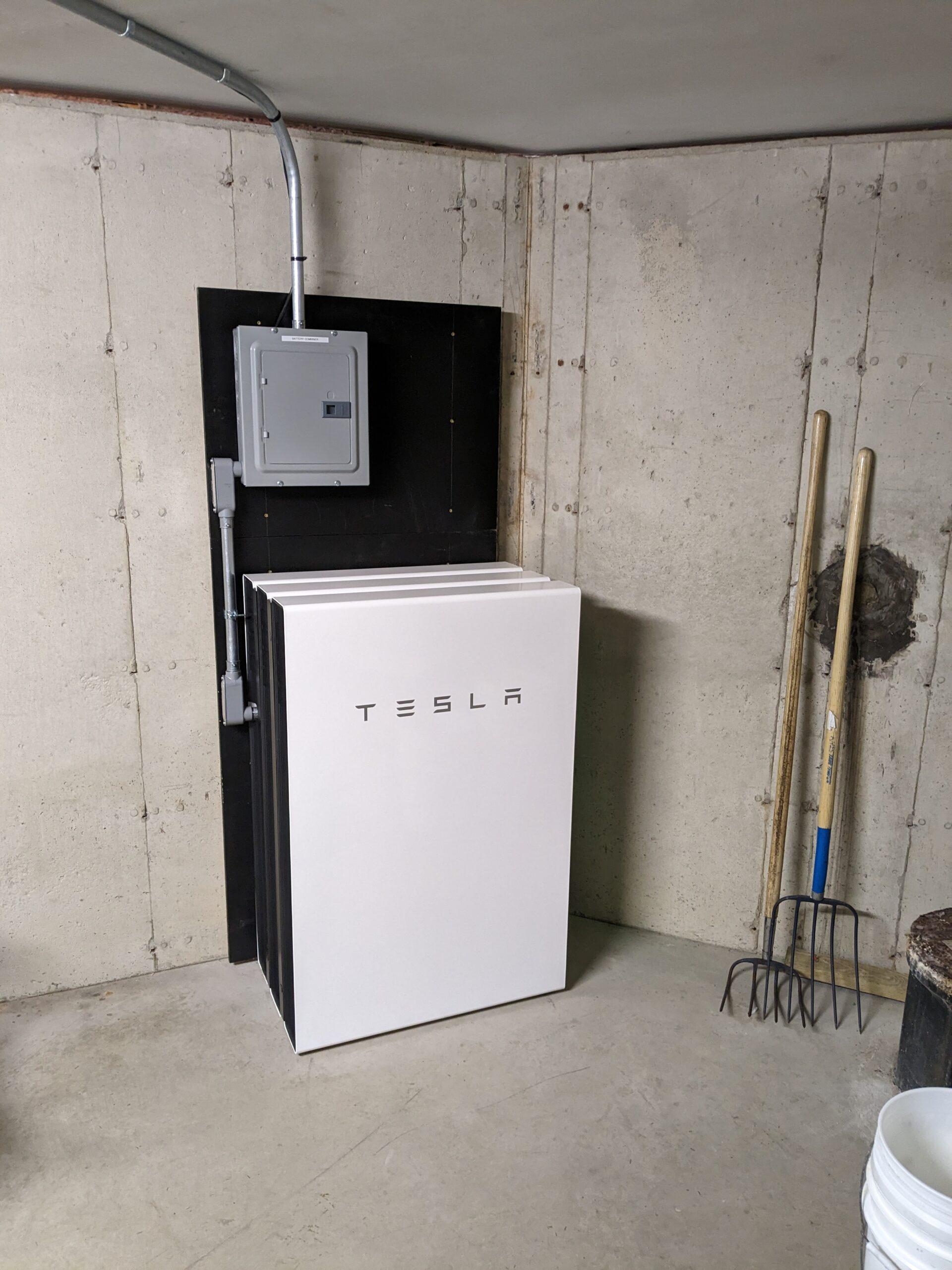
These systems store energy generated by a solar array, allowing homeowners to continue using their solar-produced electricity even during a power outage, keeping the lights on. ReVision installs two of the most popular and dependable battery storage units on the market, the Tesla Powerwall and SolarEdge Home. Now, there is further incentive to invest in battery backup for Mainers looking to bring energy resilience to their home and community.  

Montville-2 (1).jpg

Recognizing the importance of home battery storage, Efficiency Maine, an organization created to design and execute energy efficiency programs, recently rolled out the Small Battery Demand Management Program. Homeowners participating in the program can share their battery’s stored energy during high-demand periods, helping prevent blackouts. On top of providing community support, the program lets participants earn around $300 per year.  

Overview: 

Program Summary: 
  • Register your battery to support the grid during high demand and earn hundreds of dollars.   
Demand Events: 
  • These will occur 40-60 times between June 1st and September 30th (there will be no events during severe outages). 
Enrollment:
  • Sign up quickly through Tesla’s mobile app or Efficiency Maine’s web form (non-Tesla batteries are also eligible). You can opt in or out of events as you prefer.  
Incentives:
  • Earn $100 per kW of average discharge, paid through Tesla’s app or Efficiency Maine’s website in December.    

Sound interesting? Here’s a more in-depth breakdown of the program.    


What is the Small Battery Demand Management Program?

3 Tesla Powerwalls deer isle.jpg

Efficiency Maine’s program compensates eligible battery owners for helping reduce the strain on the New England electric grid during times of high demand, called demand response events. These events will occur about 40 to 60 times between June 1st and September 30th, each lasting no more than three hours.

Participants will earn payment depending on the amount discharged from their battery during the events. Efficiency Maine will notify participants at least four hours before an event. Once enrolled, the only action required is to maintain a Wi-Fi connection to your battery during events; no further steps are necessary. 

When you discharge electricity from your Powerwall during peak demand grid conditions, it helps balance the overall stress on the grid. By entering the program, your battery will discharge up to 85% of its stored energy during these high-demand events. If you own a Powerwall, remember that Tesla’s warranty covers unlimited cycles, so the additional cycles from this program won’t affect their system’s warranty.    

How do I enroll?   

Eligible participants can enroll through the Tesla app or Efficiency Maine’s website. If you’re a Powerwall owner already enrolled through the website, you will be able to access the Virtual Power Plant section of the Tesla app when your enrollment is processed through Tesla. This process should take one to two weeks.  

If you own a different type of battery backup system, like Generac, Enphase, or SolarEdge, you can also enroll through Efficiency Maine’s website. Tesla strongly recommends Powerwall customers enroll through the app to simplify and expedite the process. Efficiency Maine recently released a Small Battery Incentive Calculator, where users can input their exact information to get a better understanding of their potential earnings. 

What are the benefits of participating?   

Grid Support:

Contribute to a more stable and sustainable energy system in Maine, reducing the need for expensive and polluting “peaker” power plants.   

Financial Incentives:

Receive $100 per kW of average discharge during demand response events, paid annually through Tesla’s app or Efficiency Maine’s website in December. Participating in these events will earn you around $300 a year, depending on how many events you participate in.   

Easy Management:

Participation can be easily managed through your Tesla app, allowing you to opt in or out of specific events. You set your backup reserve in the app so you can decide how much of your battery to share for each event. You can even change your backup reserve during an event and opt-out if needed. Just remember that any adjustments will affect your total payment since the incentive is based on the average total kW discharged during the whole program. (One quick caveat is that when enrolling through Tesla’s app, they will ask you for an account ID or number. They’re referring to your utility account number.)   

How does this program benefit my community?   

Participating in programs like this with multiple homes equipped with solar and batteries helps create a “virtual power plant,” stabilizing the grid and making it more resilient against outages while reducing reliance on fossil fuels.

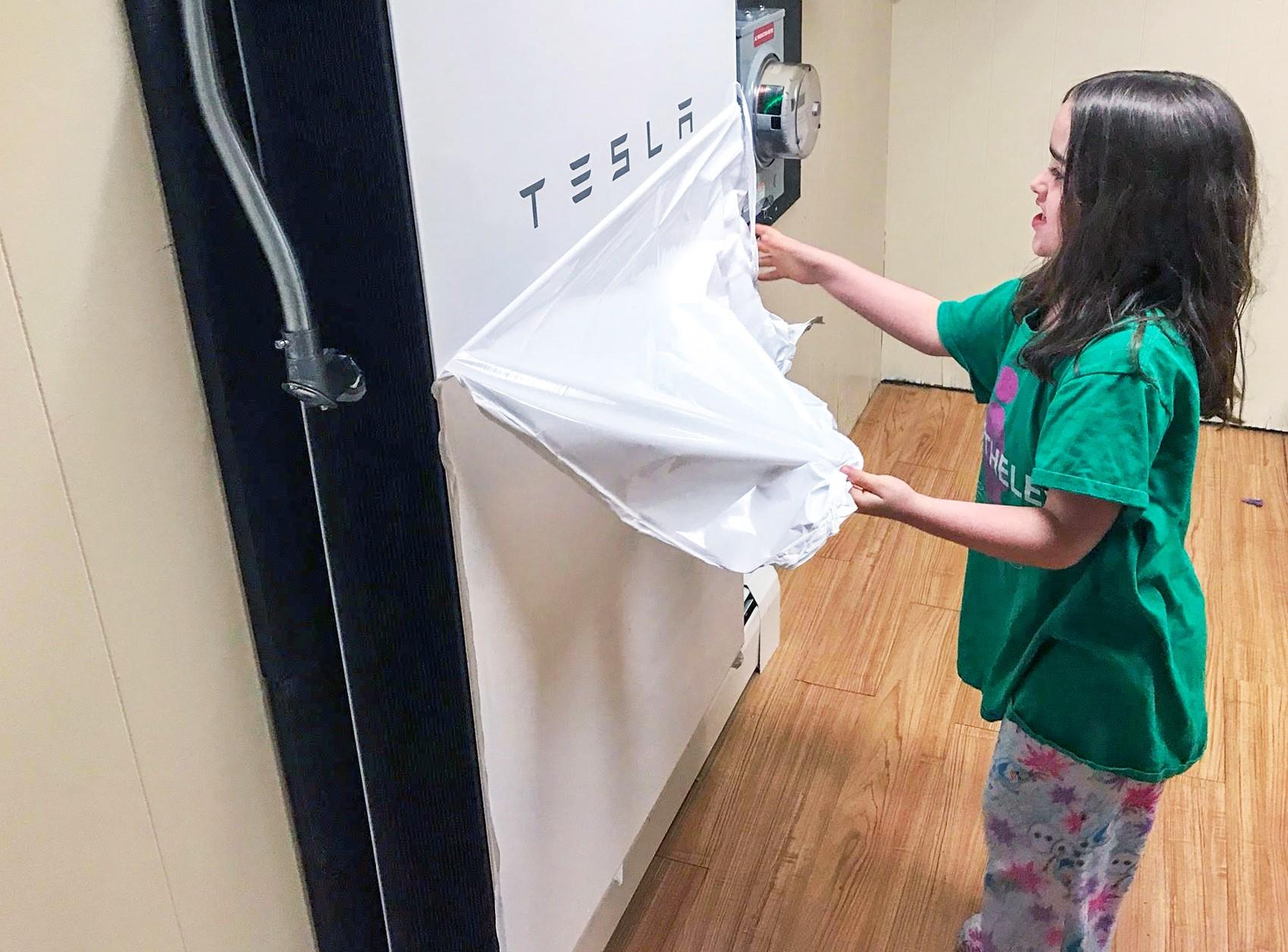
tesla-reveal-2.jpg

Through Tesla’s app, you’ll see how much power your system is sending to the grid and the collective contribution of all participating homes in Maine. Enhancing the grid’s strength benefits all Mainers and is a step toward a cleaner energy future.   

By supplying your stored energy to the grid during times of high demand, you reduce the need for the grid to draw additional power from other sources, which can be more expensive and less efficient. Supplying stored energy from your Powerwall also reduces the need for costly and polluting power plants and delays the construction of expensive power lines – the cost of which is typically transferred to consumers’ electricity bills. Ultimately this program is designed to save all ratepayers money and prevent grid-wide outages.   

This program lets battery storage owners in Maine make money year over year throughout the lifetime of their Powerwall. As we navigate the challenges of the current storm, think of the broader impact your Tesla Powerwall can have. Beyond ensuring energy independence for your home, you’re empowering the community with a more robust, greener grid. Join the movement and make a positive difference for your community. 

Filed Under: Under the Sun Blog Tagged With: by Ben Joslin, Solar Industry News

ReVision Energy Welcomes Two New External Board Members

April 2, 2024 by Ale Moreno

Welcome to our two newest external board members! We have appointed Todd Black, a former Unitil executive, and VJ Strehl, a retired finance and energy executive to our board of directors. Chief Counsel and Director of Development Steve Hinchman has also been appointed to chair the board.

Todd Black.jpeg

Todd Black brings more than 30 years of start-up and executive-level energy and utility industry experience to ReVision Energy’s board. In addition to his role on ReVision’s board, Black serves as chair of the board of directors for Normandeau Associates, Inc.; vice chairman of the executive advisory board of the University of New Hampshire (UNH) Peter T. Paul College of Business and Economic; board trustee of the UNH alumni association; and board member on the UNH Foundation.

Previously, Black held several executive roles at energy companies, including senior vice president of external affairs and customer relations for Unitil, president of Usource, New England region manager of business and market development for Southern Company, and vice president of services delivery for EnergyUSA. Black earned a MBA from Southern New Hampshire University and a bachelor’s degree in business administration from UNH. He has also completed executive education programs at the Tuck School of Business at Dartmouth College, and the Graduate School of Business at Stanford University. He is based in Dover, New Hampshire.

VJ Strehl.png

VJ Strehl is a retired finance and energy industry executive. Currently, Strehl volunteers for the Conservation Law Foundation, Southeast Land Trust of New Hampshire, and New Hampshire Charitable Foundation. Previously, Strehl served as a co-founder for NextGen Capital, deputy director of the Hunt Institute for Engineering & Humanity at Southern Methodist University, vice president of business development for the energy sector at Capgemini, and held several leadership positions at several finance and energy companies including TXU Energy, Aquila Energy, Merrill Lynch, and Bankers Trust. Strehl earned a bachelor’s degree in economics from Wellesley College. Strehl is based in New Castle, New Hampshire.

“Keeping the good ship ReVision Energy strong and steady through the turbulence of transitioning society to clean energy is an extraordinary challenge,” says co-founder Phil Coupe. “That’s why we are strengthening the company’s board of directors by welcoming two new members with extensive energy and utility industry experience. Both VJ Strehl and Todd Black are committed to accelerating the adoption of renewable energy combined with hyper-efficient, zero emission electric technology. We are confident that bringing VJ and Todd’s extensive knowledge of the traditional energy sector to the board will help ReVision Energy advance its mission to make life better by building our just and equitable electric future.”

Phil continues, “While it may seem counterintuitive to add gas and utility industry experience to a renewable energy company’s board, we think that their deep understanding of energy markets will help us better understand and respond to the challenges we are currently facing with regard to utility interconnection delays and myriad other roadblocks to deploying solar, heat pumps, battery storage and electric vehicle charging stations. As we scale our 100% employee-owned B Corp, we are buoyed by the fact that VJ and Todd are adding their formidable talent, passion, and expertise to the energy transition.”

MicrosoftTeams-image (169).png

After a unanimous board vote, Steve Hinchman was appointed as chair of the board. Hinchman drafted the first solar Power Purchase Agreement in Maine, helped create ReVision’s financing and investment program for municipal and nonprofit solar projects, led the project development and financing team for the last decade, and served as chief counsel overseeing legal and regulatory compliance. In addition to his role as chair of the board of directors, Hinchman serves as ReVision’s senior counsel and is focused on developing financing solutions to scale low-income solar development. Hinchman earned his J.D. from Vermont Law School. He is based in Maine.

Filed Under: Under the Sun Blog Tagged With: by Jill McLaughlin, Solar Industry News

B Corp Month 2023

March 8, 2024 by Ale Moreno

Every March we gather virtually with 6,000 other Certified B Corps worldwide to celebrate B Corp Month. We love using business as a force for positive social change and want to show other businesses and consumers the importance of the B Corp Certification.  

It’s Important to the World

b corp score.png

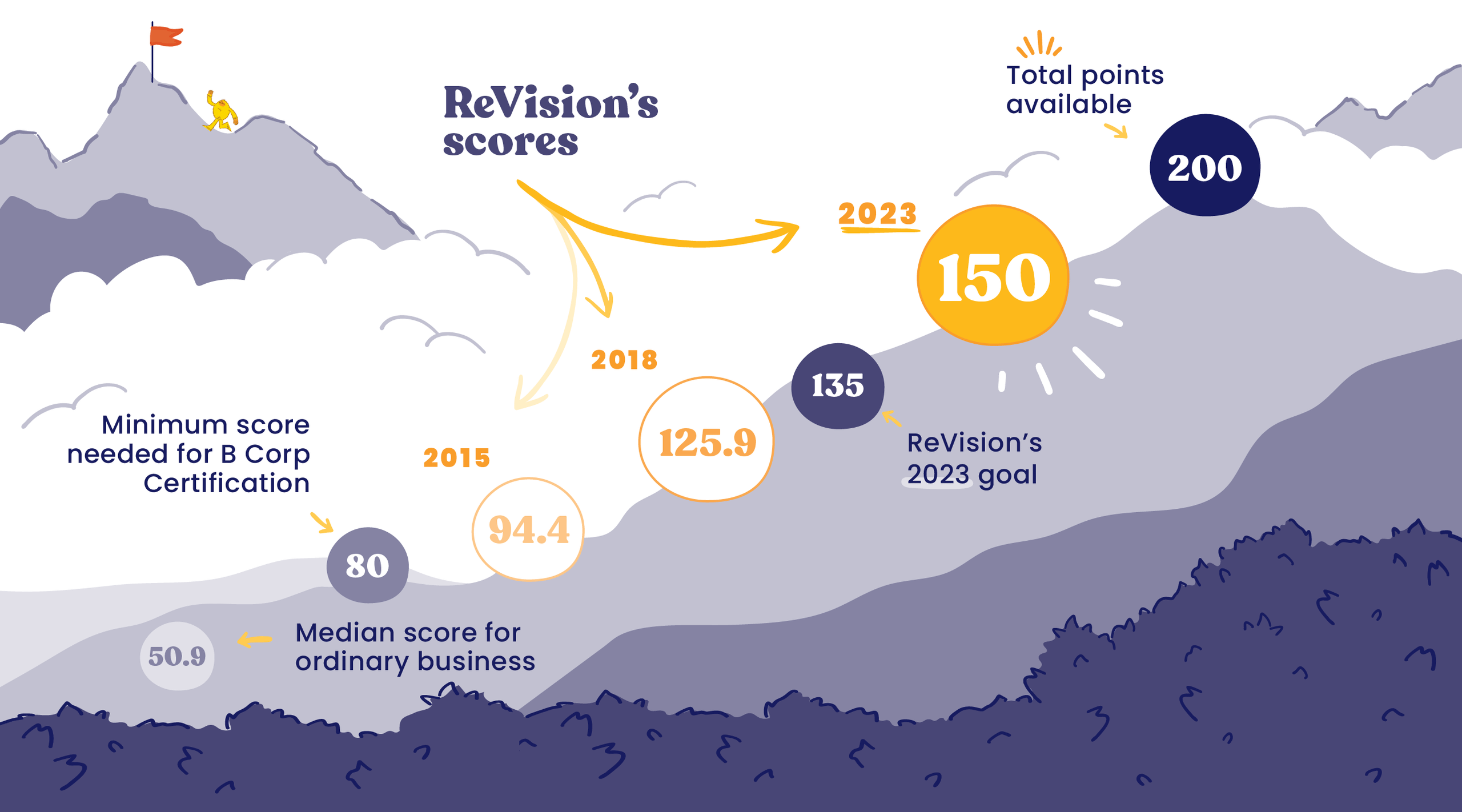
We recertify every 3 years. This is a big undertaking, requiring us to measure air quality, submit financial reports, prove we’re sourcing sustainably, and much more. Last year we recertified at our highest score ever – 150! This puts us in excellent company with some of our favorite fellow B Corps: Patagonia has a score of 151.4, Dr. Bronner’s is 177, and our fellow Amicus member South Mountain Company is at 184.

It’s Important to ReVision Employee-Owners

With our certification, we get to meet and work with mission-driven companies from all over the world! Through our B Corp work, we’ve been able to partner with: 

  • an ethical travel company that volunteers with animals all over the world 
  • everyone’s favorite Vermont creamery co-op
  • a Denver-based tea using regenerative farming practices to salvage barren lands
  • a leadership organization that helped ReVision develop an entire in-house training program  
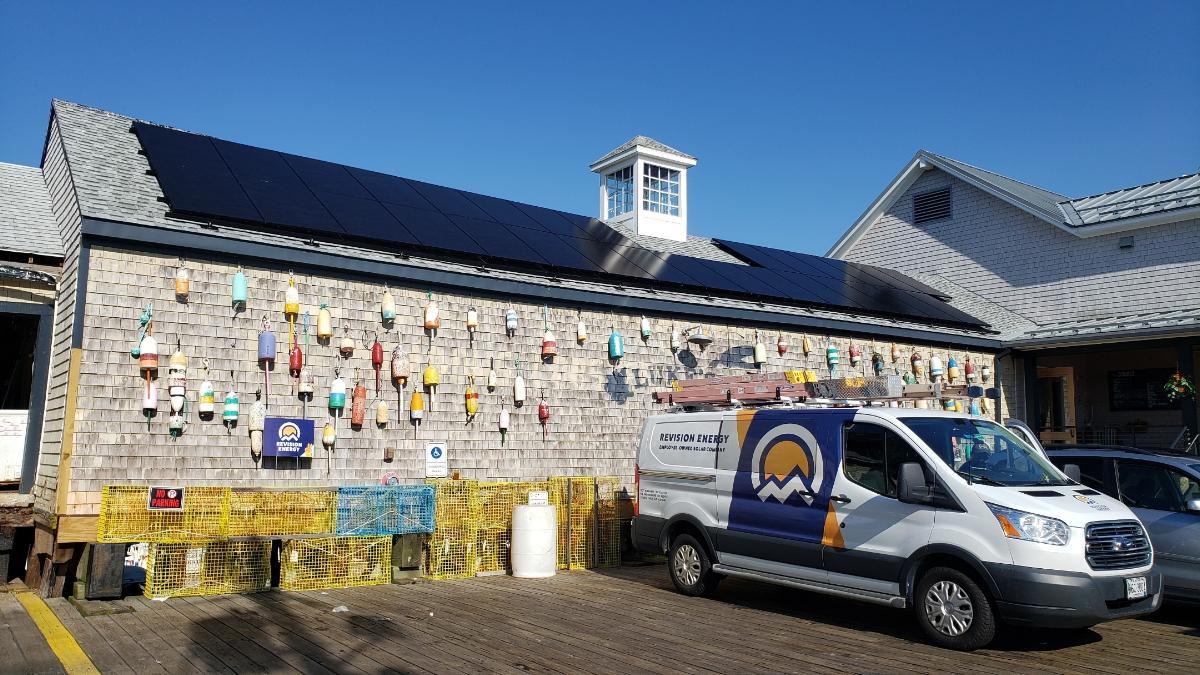
  • and obviously all of our wonderful B Corp Solar Champions: Badger Balm, Wicked Joe, Luke’s Lobster, Redbird Media Group, TideSmart Global, Androscoggin Bank  
lukes lobster revision van.jpeg

“The folks that come to work for ReVision really want to make a change. Being a B Corp, showing that we put people and planet before profits, being an employee-owned company, is huge. It says we care about the earth and we care about our employees.” —Amy, Solar Designer

It’s Important to Customers 

We’ve been mission-driven from the start, but the B Corp Certification is a third-party label clearly proving that we care about the planet, our people, and our local communities. We’re not just another solar company knocking on your door looking to make a profit; we’re in this work, and in this beautiful region, for the long-haul. And that matters to customers. 

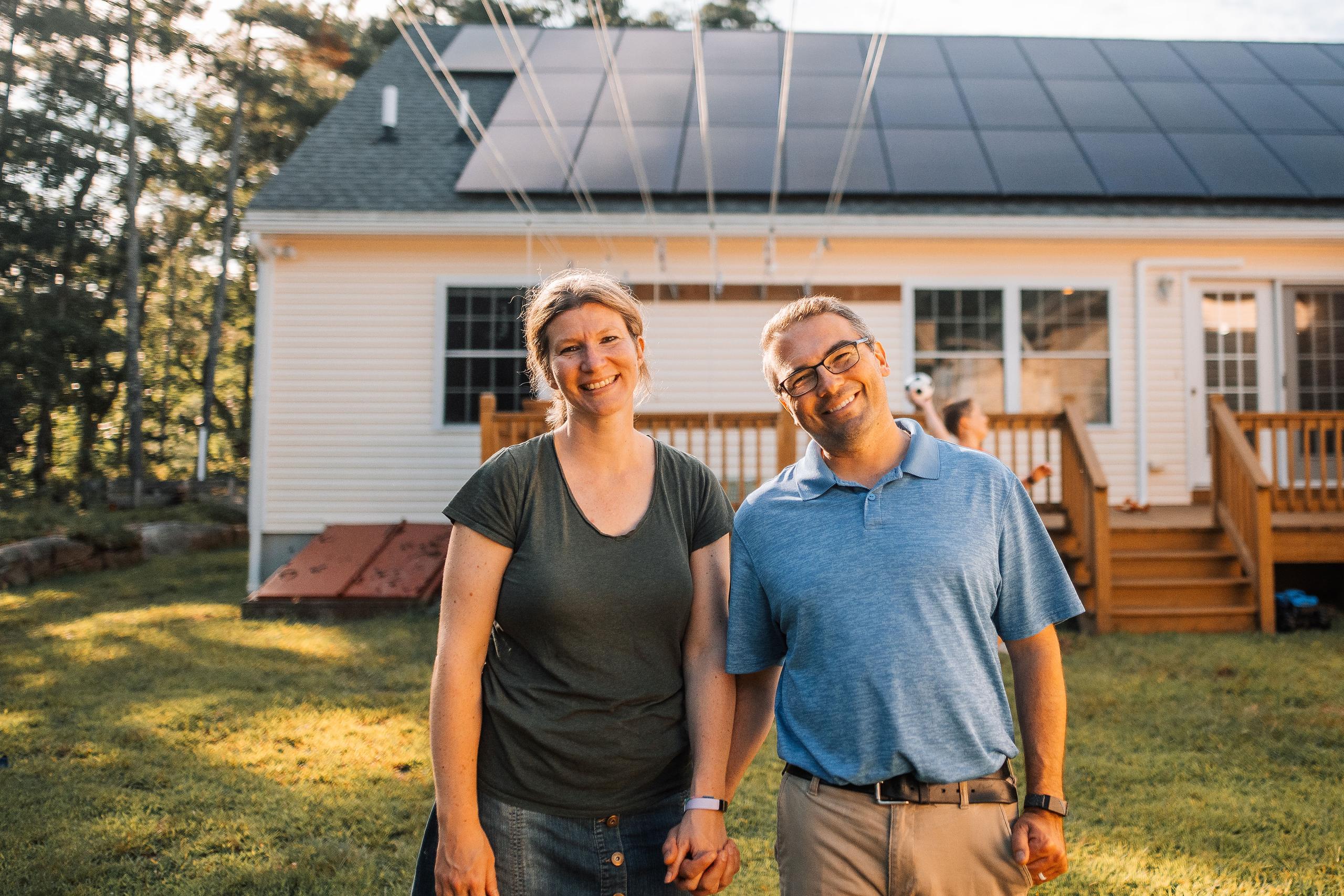
Michele Solar


“ReVision is a B Corporation, and employee-owned. Those were huge factors for me. I was able to have my dollars speak strongly to my values and I feel great about that.” —Michele, Solar Champion

“Sales, office, and installation staff were all very cool to work with. Plus, they are such a great company. B Corp and everything! Highly recommend.” —Jesse, Solar Champion  

SolaratHome-50.jpg

“ReVision Energy’s B Corp culture helps them focus on high quality customer experience. There are no perverse incentives to cut corners to pad the bottom line!” —Bob, Solar Champion

“Sunbug was an absolute joy to work with . . . On top of it all, they are a B Corp, so you can feel good that they meet the necessary standards of environmental and social equity. Would definitely recommend to anyone in the Boston area looking to go solar.” —Benjamin, Solar Champion (that’s right, our new Sunbug teammates are also coming from a Certified B Corp!)

Follow us on social media all month to learn about the B Corp process and discover other cool B Corps!

Filed Under: Under the Sun Blog Tagged With: by Jill McLaughlin, Solar Industry News

Intersolar Solar Games

January 2, 2024 by Ale Moreno

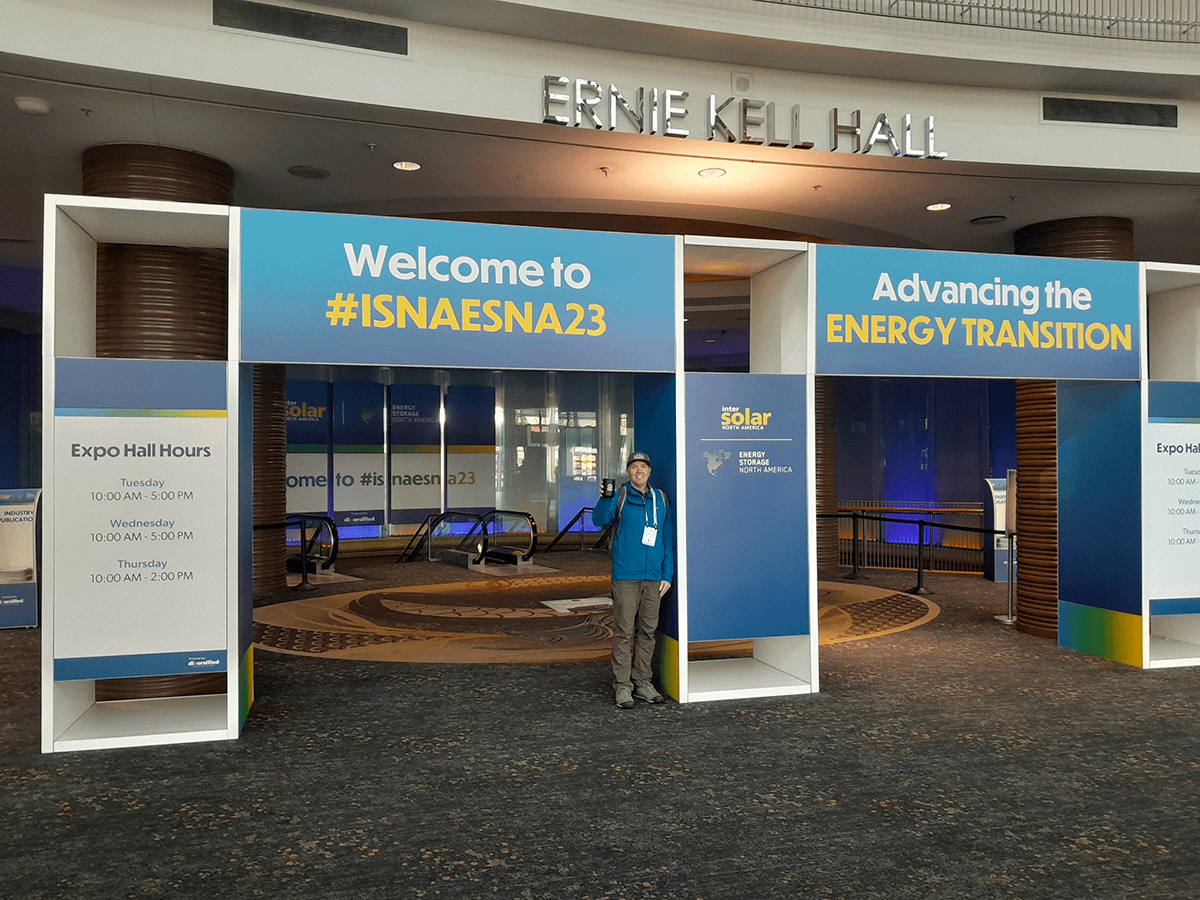
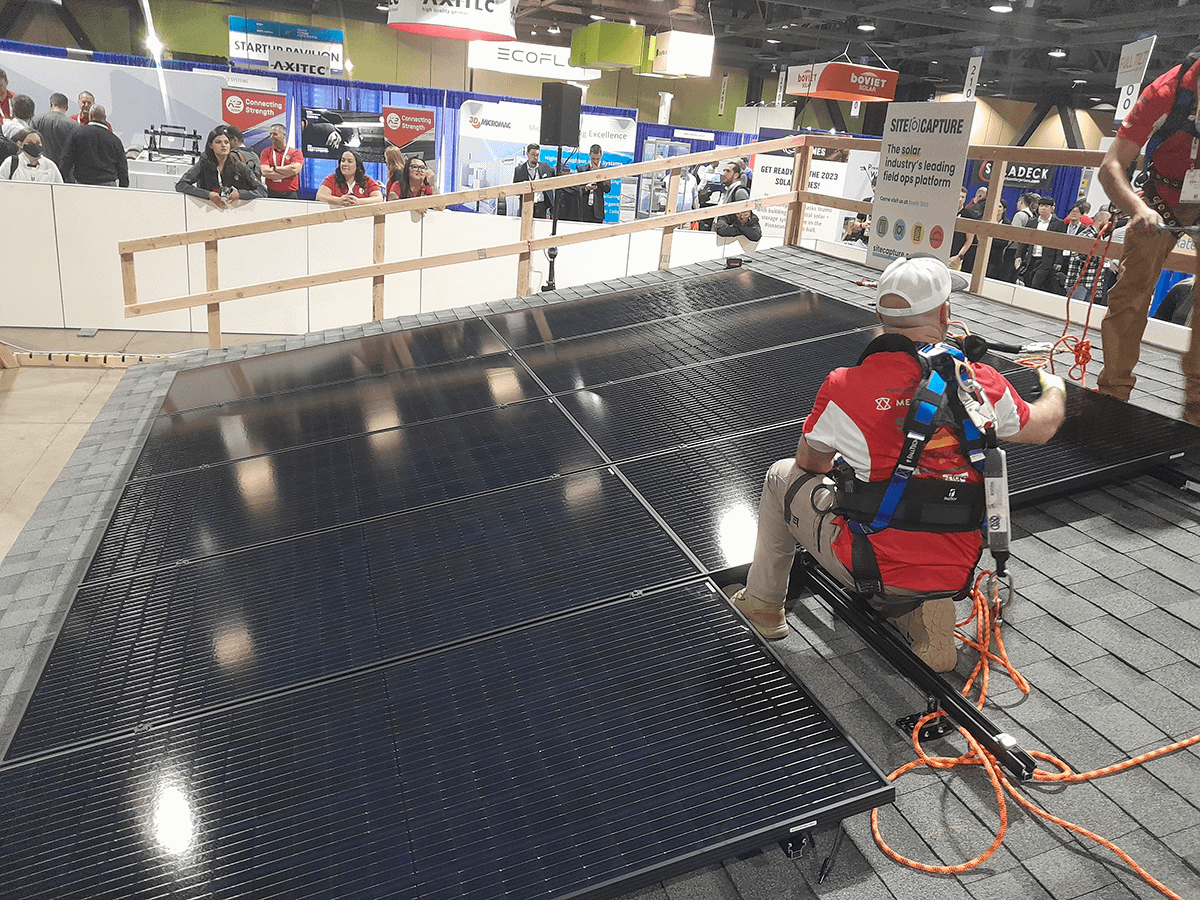
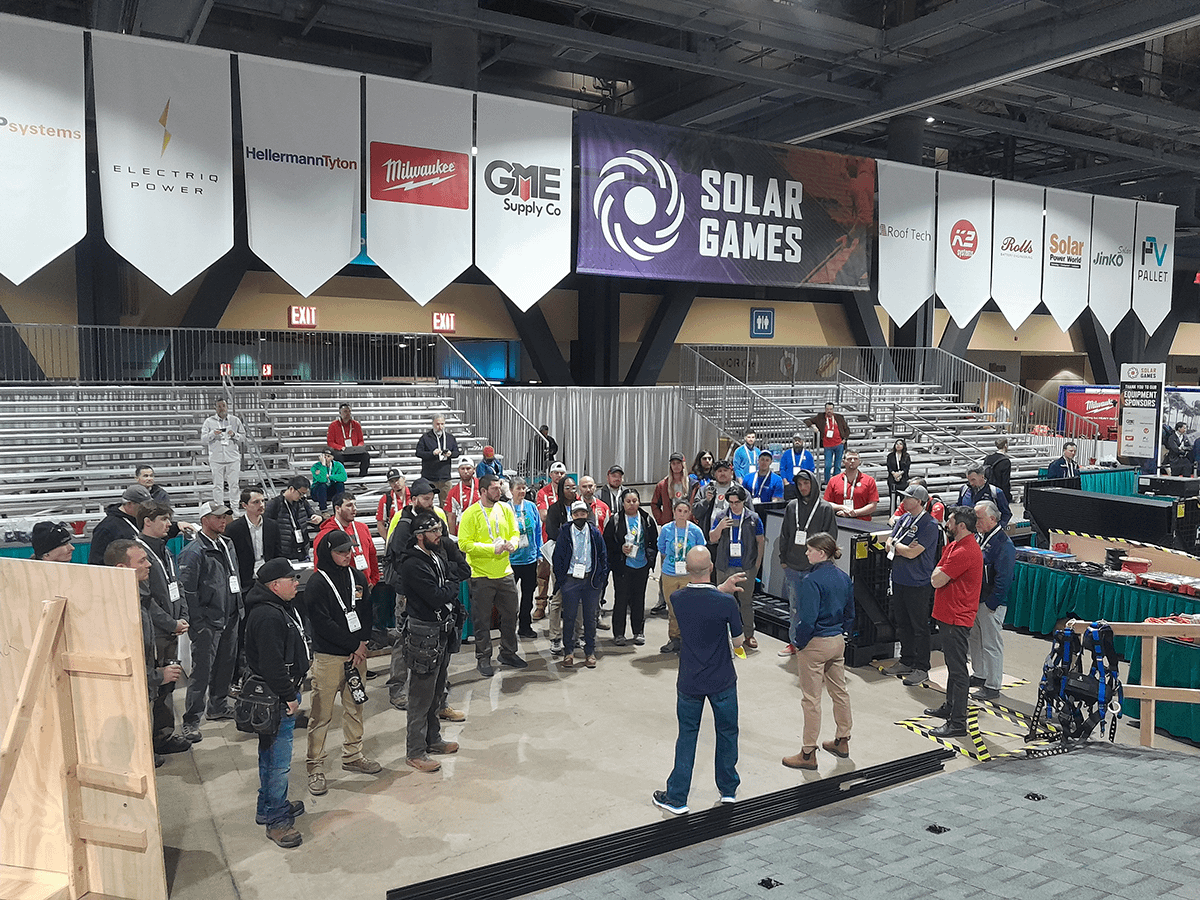
ReVision Energy is headed into our 5th year of supporting the Intersolar North America Solar Games. Like the Hunger Games but less lethal, more renewable! Eight installation teams from all over North America compete to build a solar + battery storage system in the middle of the conference hall; they are judged on installation quality, safety, speed, and efficiency. Travis Genatossio, a commercial project manager based out of our Brentwood branch, has been involved since the beginning, and looped in Chris Pamboukes, Master Electrician, to help as a judge. 

Intersolar North America 

SolarGames6.png

Organized by Portland-based Diversified Communications, Intersolar North America is one of the largest conferences in the country around solar and energy storage. Diversified Communications partnered with ReVision Energy in 2018 as the investor of the large-scale solar array at the Brunswick Landing, so when they were looking to launch the Solar Games in 2019, they asked ReVision for technical help. Travis stepped in to help organize and later brought in Chris. 

“I was honored that Travis should ask me to help facilitate,” says Chris, “because frankly, I’d help Travis anywhere. Travis really sets the bar for teamwork, helping others, getting it done and getting it done right.

SolarGames4.png

I asked him, ‘Why’d you pick me? There are so many people that should go over there.’ He reminded me that on his first day working with me at ReVision, I kept telling him about my latest scheme: ‘Solar Olympics; International Solar Teams Competing for Best in Class.’ Ten years later and here we are, a version of my Solar Olympics are underway at the 2024 North America Intersolar Games Competition in San Diego, CA. Who knows what they’ll look like in ten more?”

Chris and Travis are on the advisory board, providing consultation on all technical aspects of the Games. 

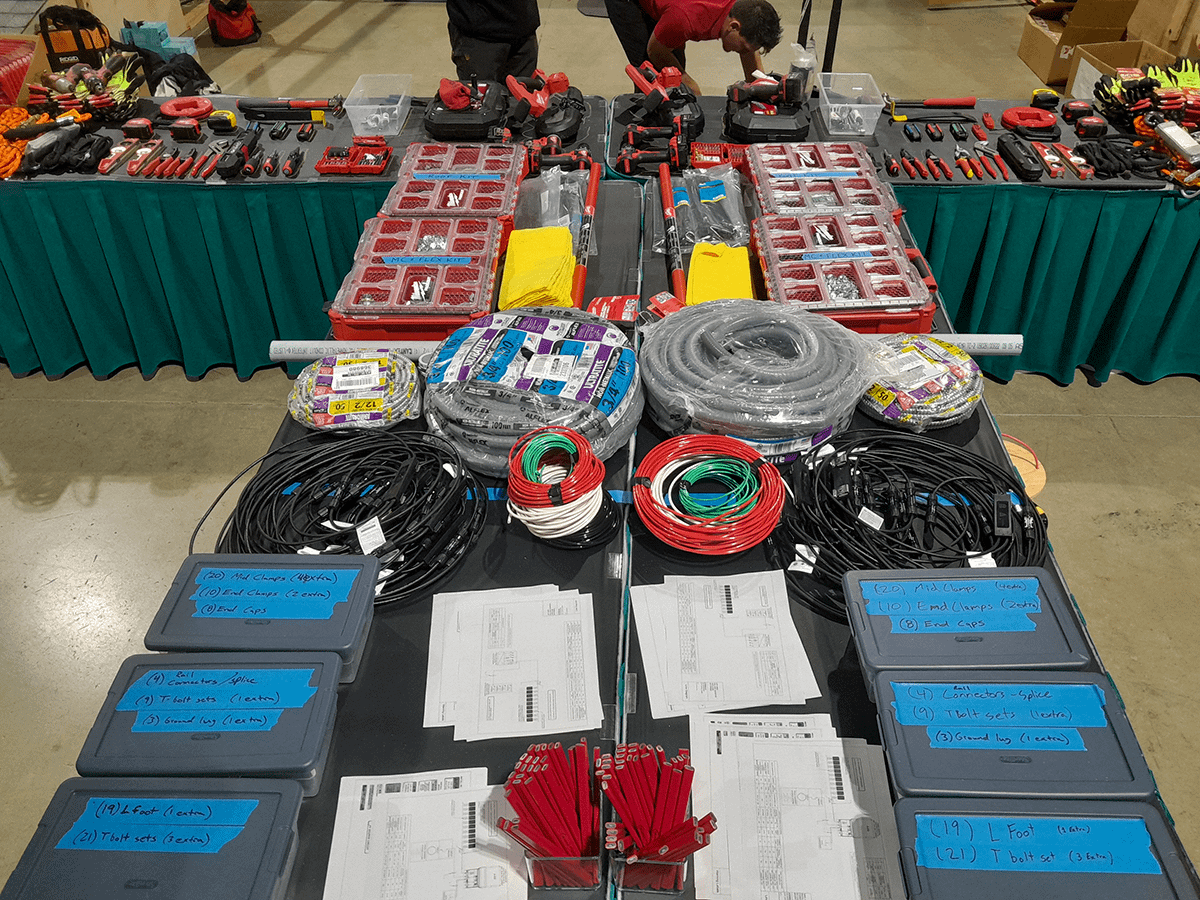
“During the early parts of the planning,” explains Travis, “we help vet the equipment and manufacturer sponsors that will be used during the competition such as the solar panels, inverters, racking, tools, etc. The other critical part of our role is to be responsible for making sure all the necessary tools and installation materials (conduit, fittings, wire, fasteners, hardware, etc.) are prepped and organized for the teams. The teams come to the conference from all over the country, so it’s important we have everything ready and available for them to complete an entire installation in the middle of a huge conference hall.”

Celebrating the Solar Industry & Mission

Although the Games are technically a competition, there’s such a high level of teamwork and comradery among the installers that it’s more of a celebration of the industry, rather than a cutthroat challenge. 

SolarGames9.png

“It’s just fun to get together with other installers from all over the country,” says Travis. “The solar industry is unique compared to other construction services and there’s definitely a high level of comradery amongst the installer community. It’s great to share stories and be exposed to new installation techniques and tips.”

Yes, it’s a conference, but because everyone is focused on the same mission – installing solar and eradicating fossil fuels – it doesn’t feel like a standard trade show. There’s a sense of shared urgency and passion at the event.

SolarGames2.png

“It’s easy relate to the other installers because we’re all in this together,” says Chris. “We clearly have shared challenges and opportunities. We all know that we share our unwavering obligation to the planet and to future generations to fight climate change. It’s such a daunting task, it can make you go a little crazy sometimes! So when everybody does it together, it sheds light on the shared camaraderie and common purpose. I experience this binding force of camaraderie here at ReVision every day so it’s no surprise that there’s a bunch of Solar Champions and chuckleheads just like us all over the country that share our passion and enthusiasm for making the world a better place.”

Sustainability at the Games

SolarGames7.png

The Games require a lot of supplies, because teams arrive from all over the country to compete, unable to bring their usual tools. As employee-owners of a Certified B Corp, Chris and Travis are focused on making the Solar Games as sustainable as possible so that companies can share best practices and friendly competition without waste.

The solar panels and technology used in the Games are donated afterwards to nonprofit Twende Solar to be used in projects for under-resourced communities. But what about all of the tools and other materials required for assembling a solar array? 

SolarGames8.png

“Historically we would try to arrange, gather, and organize everything once we arrived at the show, having to source everything locally near the venue,” says Travis. “That’s always felt a little hectic and disorganized.” 

“We maintained all of last year’s tools and maintained a great deal of the parts and materials,” adds Chris. “We had everything sent to the Brentwood warehouse will be stored for future use in the games. We keep an inventory of all equipment and we are doing everything we can to reduce, reuse, and recycle all parts that can be so that we can be environmentally conscious.”

Promoting Solar Power Across the Country

Just like Chris’s original idea for the “Olympics of Solar” the Intersolar Solar Games also promote renewable energy and solar teamwork across the country. By getting a real-time display of solar installations, visitors to Intersolar (and everyone who watches them streamed at home) can see “behind the scenes” of the renewable energy industry. 

SolarGames10.png

“The Games promote the actual humanity of the solar industry,” explains Chris, “beyond all those shiny parts and materials. Every single one of these arrays gets installed by someone who chose to make a living doing good work for their community and for the world. It’s hard work, but it’s fun, enjoyable, and rewarding, especially because you’re doing it with a team.”

At the Solar Games, eight teams of dedicated installers put their passion and craft on display for everyone in friendly competition to prove they’ve got what it takes to build like the best. “That’s pretty awesome stuff,” says Chris.

The 2024 Intersolar Solar Games will take place January 17-19 in San Diego. Follow our social media channels for live updates from Travis and Chris! 

Filed Under: Under the Sun Blog Tagged With: Solar Industry News

One Year of the Inflation Reduction Act

September 11, 2023 by Ale Moreno

It’s been one year since the Inflation Reduction Act (IRA) was passed, marking the United States’ largest investment in renewable energy and electrification. Let’s take a look at what the bill has done for our collective effort to build an equitable, electric future, and identify the places where we are still falling short.

commercial solar install.jpeg

The IRA bill has been positive for renewable energy’s growth in the U.S. by making it more cost effective for people and businesses to transition to clean energy like solar. This will help decrease our country’s projected carbon emissions and combat the growing onslaught of climate disasters.

However, if we don’t grow awareness of renewable energy products and incentives, we risk alienating a large segment of the population from the renewable energy movement.

Moving Towards our Electric Future

Coming on the heels of the United States’ disastrous departure from the Paris Climate Agreements, the passing of the IRA bill signaled our country’s continued commitment to fighting the climate crisis by shifting away from fossil fuel dependency and investing in renewable energy. The bipartisan bill provided $700 billion in funding for clean energy projects, grid improvements, domestic manufacturing, and workforce development. While it lacked a significant focus on climate justice, the bill dedicated $369 billion to “Energy Security and Climate Change” to make the clean energy transition more accessible, inclusive, and effective.

A Year of Lower Solar Costs

Most notably for our customers and community, the IRA extended the Solar Tax Credit, renamed the Renewable Clean Energy Tax Credit, which is now available at 30% until 2033. It also created new tax credits and incentives for other clean energy and household electrification products like heat pumps and induction stoves.

vawter-indoor-ashp_MC.jpg

In the year since its passing, we can see the positive impacts of these new and expanded programs, which have enabled states to double down on their climate goals. For example, Maine has already exceeded its goal of installing 100,000 air source heat pumps by the year 2025. It has upped its goal to 175,000 heat pumps by 2027.

The IRA, alongside a flurry of state climate bills, is also projected to help drive down carbon emissions in the U.S. Before the bill, we were on track to reduce emissions by 26% to 41% by 2035. Now we are projected to cut emissions by 32% to 51%, according to a report published by The Rhodium Group, an independent analytic company that tracks fossil fuel emissions produced by the U.S.

The bill has increased access to affordable clean energy, decreasing costs and allowing companies like ReVision Energy to expand their business and advance their missions. The incentives have helped lower the cost of renewable energy (solar by nearly 40% and wind by 55%), furthering the momentum of renewable energy investments.

Still in the Dark about Solar Incentives

Although solar is more affordable than ever, many people are still not aware of the IRA incentives. According to a June 2023 study by SunPower, over 60% of Americans who are considering solar would make the switch if they received some sort of government incentive; they are unaware of the incentives provided by the IRA. 24% of people who know of the IRA bill don’t believe the clean energy incentives apply to them. 52% aren’t aware that the IRA contains any clean energy benefits (SunPower ESI report).

The report also shows that those poised to benefit the most from clean energy incentives (low-to-moderate-income communities, women and minorities, and younger generations) are least familiar with the bill’s benefits. As we continue to grow awareness of the benefits of solar and other renewable energies, we also need to make an effort to ensure everyone understands the incentives and can access these benefits.

To Decrease our Carbon Emissions We Need to Increase Awareness

Without increased focus on collective, inclusive change, we will not move away from our carbon-based systems, we will not gain energy independence and security, and we will fall short of the emission reductions needed to build a livable, equitable future. Falling short will result in rising global temperatures and an increase in the climate disasters we are already experiencing: extreme heat, flooding and landslides, and harmful effects from wildfires. From June to August, we have seen devastating effects of the climate crisis, and even worse, a summer like this will “feel like a mild summer” in twenty years. Luckily, it’s not too late to do something.

dana ward sunsquatch.jpg

Solar Champions Dana and Paula Ward meet Sunsquatch at a recent community event. There has never been a greater urgency to educate people on the value of solar. At ReVision, our teams are focused on sharing information with our communities about solar and home energy efficiency products, and their costs, savings, and benefits. However, we can’t grow our mission alone. We need you, our Solar Champions, to help us spread the excitement of solar energy! Do your friends and family know about the clean energy incentives in the IRA? Are they interested in solar but worried about cost?

Here are some resources you can share with your community about the IRA incentives and the benefits of solar:

  1. A Complete Guide to the Federal Solar & Clean Energy Tax Credits
  2. 10 Reasons to Go Solar
  3. Rewiring America’s IRA Saving’s Calculator

If you have a friend or family member who is ready to turn their solar dream into a reality, refer them through our Share the Sun program (you’ll get $250 when they go solar with us!)

Filed Under: Under the Sun Blog Tagged With: by Kat Malone-Harling, Solar Industry News

ReVision is #1 Solar Installer in Northern New England, Again!

August 3, 2023 by Ale Moreno

The Inflation Reduction Act (IRA) has driven a surge in federal support for solar and energy storage technologies in the United States, triggering unprecedented excitement for the industry. The rise in interest has prompted solar developers, installers, and contractors to undertake larger projects nationwide.

A New High Ranking: #7 Solar Installer Nation-Wide

happy installers on roof summer.jpeg

Here at ReVision Energy, we are honored to be recognized by Solar Power World magazine as a Top Solar Contractor for another year. This year, we were ranked as the #7 solar installer in the nation, moving up from our 2022 ranking of #9. For the 5th year in a row – every year since they started state rankings – we have been named the #1 installer in Maine and New Hampshire. We were also ranked #7 nationwide in Solar + Storage installations for residential and commercial projects. 

“It’s inspiring,” said Cole Phillips, Solar Design Specialist, “I hold myself at a higher standard because of it, and you see everyone at the company doing their best. Everything from playing basketball together in the parking lot to our annual company-wide meeting keep us close. It all works because we have an awesome team with great attention to detail.”  

Solar Energy Has Strongest First Quarter Ever in 2023

Each year, the industry publication Solar Power World curates the Top Solar Contractors List as a tribute to U.S. solar installers’ achievements. The list ranks solar companies from utility, commercial, and residential sectors based on the kilowatts they installed in the previous year. These firms are then classified and presented based on their specific services, target markets, and geographical locations.

woman on a roof.jpg

“Renewable energy accounts for a quarter of U.S. electrical generation, now far exceeding electricity produced by burning coal,” said Kelsey Misbrener, managing editor of Solar Power World. “Solar power is an important member of that renewable makeup, and companies on the Top Solar Contractors List are all contributing to our country’s shift to cleaner electricity. We are honored to recognize them each year for their necessary work putting green kilowatts on roofs, over parking lots, in desert locations and across water reservoirs. Every project is making a difference.”

The United States reported its strongest first-quarter ever in Q1 2023 for solar panels installed, and industry analysts expect the solar market to triple in size over the next five years. This industry growth parallels the growth of ReVision, as we just hired our 400th employee-owner. The industry will stay busy, and we’re beyond excited to continue making a positive impact towards our just and equitable electric future.

Filed Under: Under the Sun Blog Tagged With: by Ben Joslin, Solar Industry News

  • Page 1
  • Page 2
  • Page 3
  • Interim pages omitted …
  • Page 23
  • Go to Next Page »

sidebar

sidebar-alt

Subscribe to newsletter

Which newsletters would you like to receive?

Consent Enjoy the Sun(Required)
Consent(Required)
To provide the requested information, we need to store and process your personal data. By submitting this form, you agree to allow ReVision Energy to store and process your personal data for this purpose. Please see our privacy policy for more information.

  • Merch Store

Sitemap

  • Solutions
    • Homes
    • Commercial
    • Service
  • Our Work
    • Projects
  • About
    • Our People
    • Social Impact
    • Our Locations
    • Careers
  • For Customers
    • Support & Service
    • Be A Solar Champion
  • News & Events
    • Releases
    • Press
    • Under the Sun Blog
    • Events and Webinars
  • Our Partners
  • Resources

Follow Us

General Contact

Contact one of our branches for sales and non-service inquiries, or email us at hello@revisionenergy.com

Service

Need support for your existing system? Contact our Service Team:
Reach us at (207) 747-0076 or open a Support Ticket.

South Portland, ME

(207) 221-6342

Map & Directions 

Montville, ME

(207) 589-4171

Map & Directions 

Brentwood, NH

(603) 679-1777

Map & Directions 

Enfield, NH

(603) 632-1263

Map & Directions 

North Andover, MA

(978) 308-9041

Map & Directions 

Westfield, MA

(413) 884-1000

Map & Directions 

Copyright © 2026 ReVision Energy. All rights reserved.

Privacy Policy | Terms