• Skip to primary navigation
  • Skip to main content
  • Skip to primary sidebar
Revision Logo Revision Logo
Solar Calculator Get Started
Get Started Solar Calculator
  • Solutions
    • Homes
    • Commercial
    • Service
  • Our Work
    • Projects
  • About
    • About
    • Our People
    • Social Impact
    • Our Locations
    • Careers
  • For Customers
    • Support & Service
    • Be A Solar Champion
  • News & Events
    • Releases
    • Press
    • Under the Sun Blog
    • Events and Webinars
  • Our Partners
  • Resources

Give us a call

Maine (207) 221-6342
New Hampshire (603) 632-1263
Massachusetts (413) 884-1000
Contact Us

Rational Cause for Optimism

Rational Cause for Optimism: Leveling Up the Clean Tech Playing Field

February 6, 2023 by Ale Moreno

From our bird’s-eye view of the renewable energy industry, we often see positive developments for humanity before they become common knowledge. The purpose of this blog is to highlight the clean energy innovations and sustainability actions that are legitimate cause for optimism despite the very real threats to people and the environment posed by climate damage.

by ReVision Energy co-founder Phil Coupe

michael-wilson-jld4MmOc4Uk-unsplash.jpg

In the hyper-competitive global economy, China has surpassed the rest of the world when it comes to manufacturing the tools necessary to abandon fossil fuels. After investing tens of billions of dollars over the past thirty years in clean tech research, development, and manufacturing, China produces roughly 75% of all solar panels, 80% of polysilicon (a key ingredient for solar panels), 85% of solar cells, and nearly 100% of silicon ingots and wafers. China similarly dominates the manufacturing of lithium-ion batteries, air source heat pumps, and electric vehicles. 

Why is America so far behind on the clean tech playing field? In 1979 Ronald Reagan campaigned against President Jimmy Carter by ridiculing renewable energy and promising to re-focus on oil, gas, and coal. When President Reagan had the solar hot water system removed from the White House in 1986, he symbolically and literally conceded the multi-billion dollar clean energy manufacturing boom to the rest of the world, enabling China to pounce on one of the greatest wealth creation opportunities of the 20th century. Until now.  

With the passage of the Inflation Reduction Act (IRA) in 2022, President Biden and Congress have unleashed a generational opportunity for America to compete on a level playing field with China and to establish true long-term energy independence. The IRA’s Advanced Manufacturing Production Credit is expected to attract more than $114 billion in domestic investment by 2031 as companies rush to build American-based facilities to process silicon into polysilicon, create silicon ingots, wafers and solar cells, and ultimately manufacture solar panels.

NREL SILICON.jpg

Photo credit: National Renewable Energy Laboratory, NREL.gov 

American-Made Solar Panels 

Qcells-Bartow-County-solar-factory-artist-rendering.jpg

An artist’s rendering of the new QCELLS factory in Georgia. (Credit: QCELLS)Q CELLS, one of ReVision Energy’s long-time solar panel suppliers, announced last month that it is investing $2.5 billion to expand its manufacturing capacity in Georgia. It’s noteworthy that the majority of this investment is going toward the construction of America’s first facility capable of turning polysilicon into ingots and wafers, and eventually solar cells and panels. 

Keeping the entire clean tech supply chain within U.S. borders is one of the key objectives of the Inflation Reduction Act and early signs indicate this is possible. The future Q CELLS plant in Cartersville, GA will source its polysilicon from the REC Silicon Plant in Washington state. To create polysilicon, REC Silicon plans to source the base, high-purity silicon metal from Alabama, Ohio, Mississippi, and West Virginia. When it’s operational in 2024, Q CELLS’ Cartersville plant will be the only U.S. facility manufacturing silicon-based solar panels all the way from raw materials to finished product. 

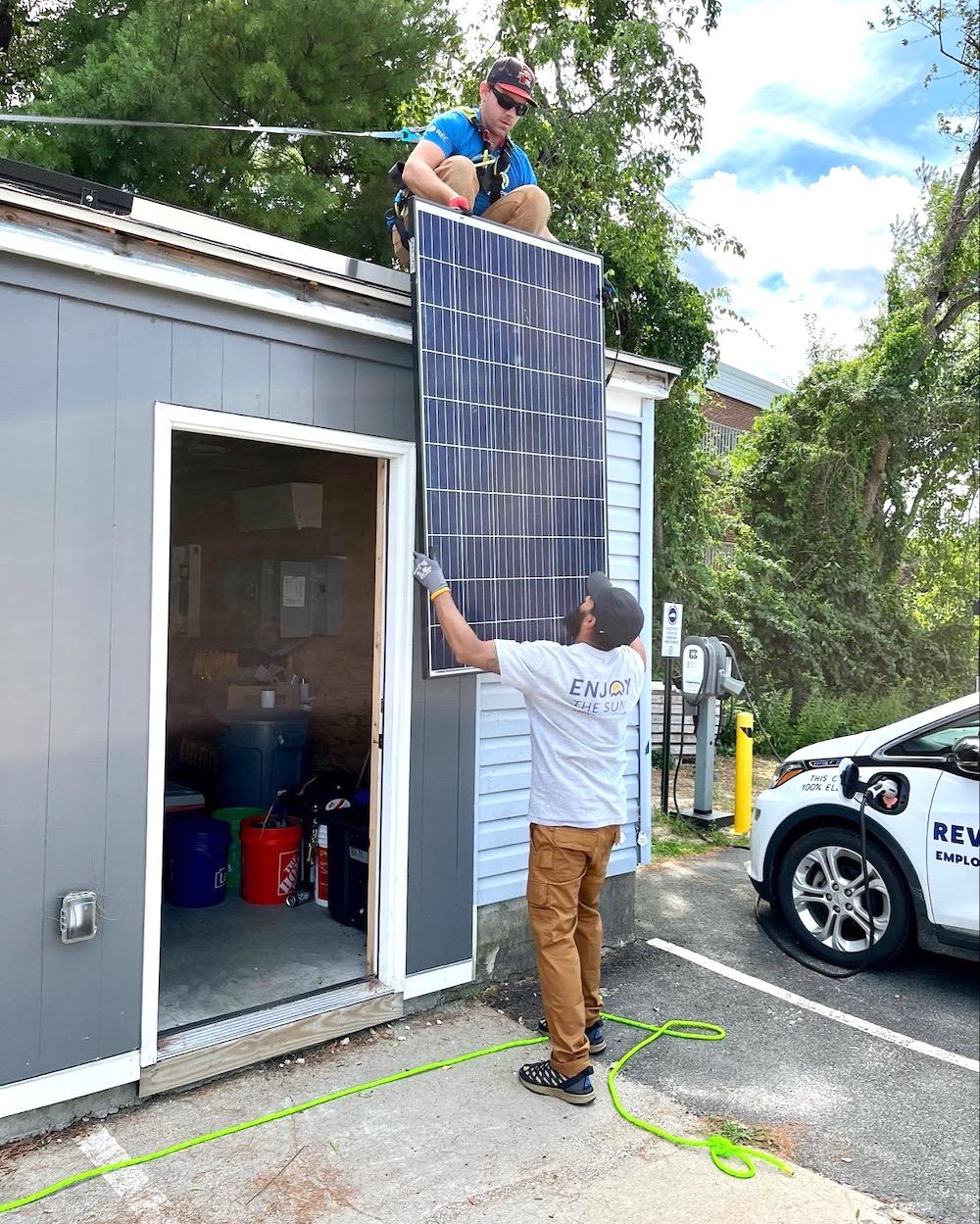
Claremont Makerspace Roof Lg

Swiss solar panel manufacturer Meyer Burger is also re-committing to manufacturing in the U.S. as a result of the IRA. The company recently announced plans to build a solar panel manufacturing plant in Goodyear, Arizona along with plans to expand its facility in Switzerland to meet surging U.S. clean energy demand. Chinese solar panel manufacturer JA Solar has announced plans to build a plant in Phoenix, AZ and global manufacturing giant First Solar is now planning to open its fourth U.S. plant in Alabama. 

Domestic manufacturing of lithium-ion batteries and electric vehicles (including the raw material supply chains) are also getting huge boosts from the Inflation Reduction Act. As one example, Ford stands to benefit from roughly $3 billion in tax breaks on the twin factories it has under construction in Kentucky. 

4-tesla-powerwalls-installed-by-revision.jpeg

Critical minerals and raw materials for batteries qualify for a 10% tax credit, while American-produced battery modules qualify for a $10/kWh credit; these together eliminate about 30% of the cost to assemble an electric vehicle battery pack. The IRA’s battery storage incentives have caused Tesla to pivot on its battery manufacturing strategy with the company moving factory equipment planned for Germany to a Texas location. Similarly, Hyundai has announced plans to open an EV manufacturing plant in Georgia. 

Sourcing Domestic Raw Materials 

The IRA’s incentives for domestic raw materials throughout the supply chain have sparked intense dialogue in Maine about the potential to mine an estimated $1.5 billion lithium deposit in Newry. An early Department of Environmental Protection ruling has classified the deposit as a resource with the potential to contaminate groundwater that would fall under the state’s most restrictive mining rules, making it extremely difficult to access for the mine’s owners. An effort is underway to reclassify the Newry deposit to make it accessible to mining. This will be a highly controversial subject in Maine in the months and years ahead as America tries to wean itself off foreign rare earth metal supply chains. 

In the early 1900s, fossil fuel companies stood at the threshold of the largest wealth creation opportunity in history; today America’s clean tech industry is crossing a similar threshold. We think it’s cause for optimism that the IRA has already begun creating thousands of good domestic jobs by unleashing billions in clean energy investments. Companies like ReVision Energy have an extraordinary opportunity to change the world by capitalizing on the IRA and distributing wealth far more equitably than the oil oligarchs of the past.  

Filed Under: Under the Sun Blog Tagged With: by Phil Coupe, Rational Cause for Optimism

Rational Cause for Optimism: The Clean Energy Tipping Point

January 4, 2023 by Ale Moreno

Have We Reached the Clean Energy Tipping Point?

From our bird’s-eye view of the renewable energy industry, we often see positive developments for humanity before they become common knowledge. The purpose of this blog is to highlight the clean energy innovations and sustainability actions that are legitimate cause for optimism despite the very real threats to people and the environment posed by climate damage.

by ReVision Energy co-founder Phil Coupe

Remember the old rotary phone with its long pigtail cord, or the grainy black and white TV that could pull in three local channels if you were lucky enough to have good weather? Innovative digital technology rendered them both obsolete, and now the internal combustion engine is heading for the same fate.

Pipistrel_Velis_Electro_sn003_LJAJ_left.jpg

An electric plane, ready for flightElectric motor and battery storage innovations are happening so rapidly that today we can fly in an electric airplane, catch a ride on an electric ferry, and drive an electric car 500 miles on a single charge. Even electric excavators and massive electric dump trucks are  beginning to replace the diesel engines of heavy construction and earthwork. Thanks to modern solar technology, along with wind and hydropower, this can all be done without burning fossil fuels.

When he flipped on the first light switch in 1879, Thomas Edison imagined he would be making life better by eliminating the need to burn dirty kerosene indoors to light houses and buildings. By 1904, roughly 5% of U.S. homes had become electrified and by 1950 almost all of America was connected to the electric grid.

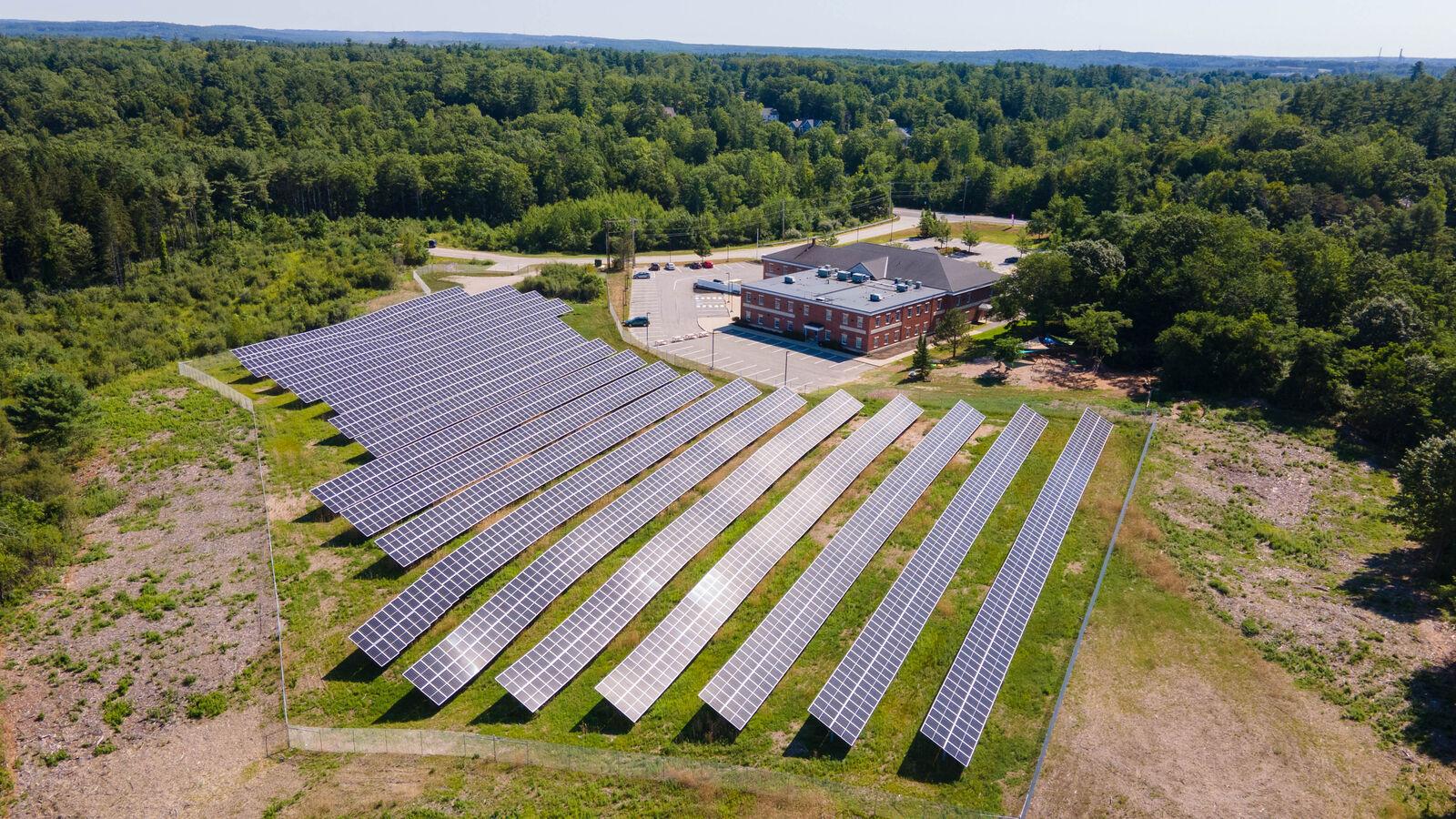
revision energy gorham savings bank drone.jpg

The 5% penetration threshold of Edison’s innovative technology proved to signal a major tipping point, and Bloomberg recently reported that 87 countries now generate at least 5% of their energy from wind and solar.

The U.S. hit 5% of electricity generation from wind and solar in 2011, surpassing 20% in 2021. It’s now looking possible for us to reach 50% by 2032, which is decades ahead of forecasts that were made just a few years ago. Today more than seventy countries have targets to eliminate greenhouse gas emissions, including China, the United States, and Europe. Nineteen countries have now passed the 5% threshold on electric vehicle adoption, and electric heat pumps have replaced 20% of the fossil fuel combustion boilers in Europe, saving consumers $100 billion per year in energy costs.

To illustrate how fast things are moving, wind power generated 2.8 billion kilowatt-hours of electricity in 1990, then doubled to 5.6 billion kWh in 2000, then leaped to 94.6 billion in 2010 and 379.8 billion in 2021.

DJI_0183.jpg

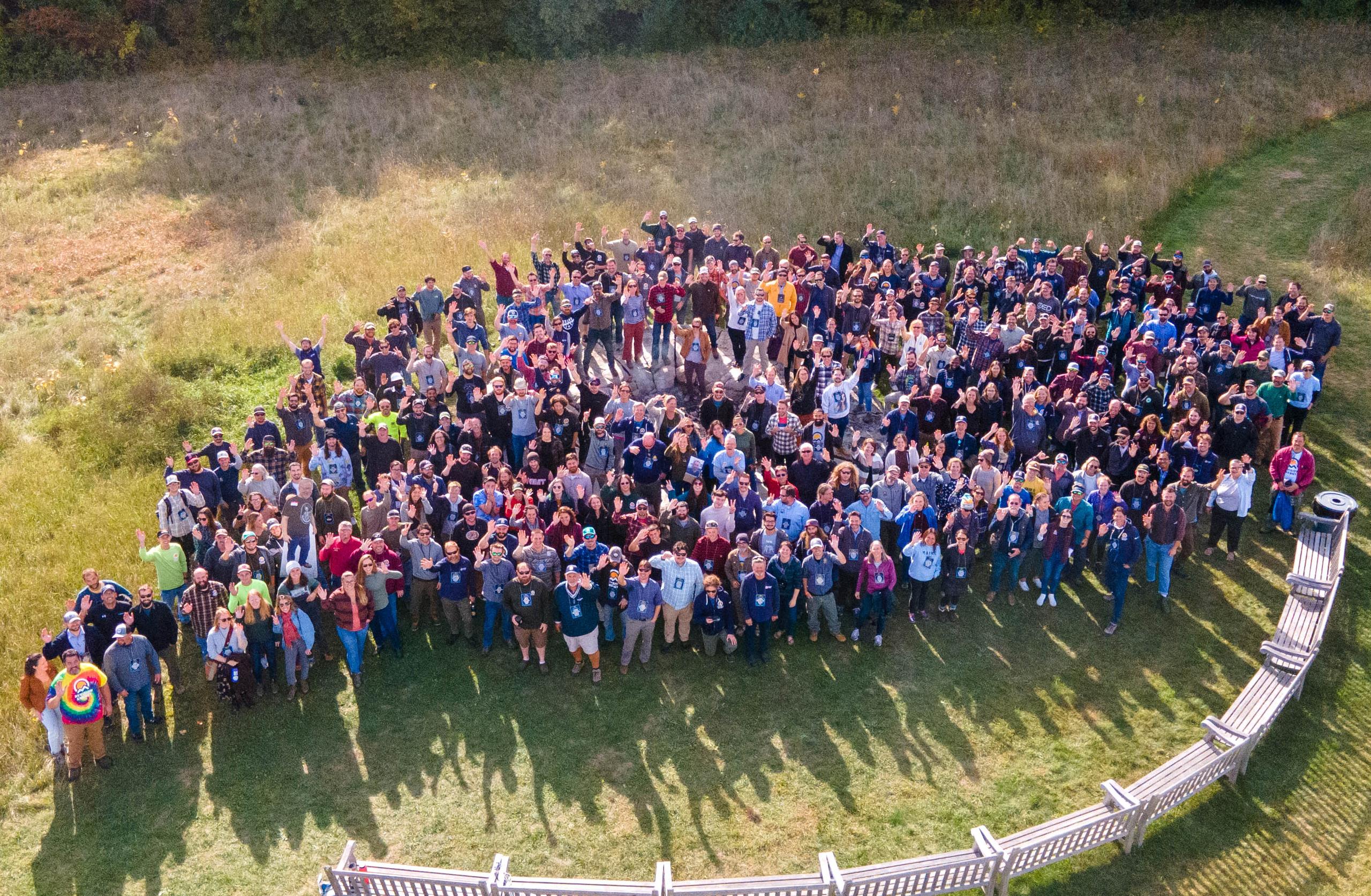
Our co-owners at last year’s annual company gathering.ReVision Energy itself has become a microcosm of the clean energy transition, hurtling along at maximum velocity. In 2003 we were two people in a garage trying to figure out how to sell astronomically expensive solar electric systems.

Today our employee-owned B Corp solar company is comprised of nearly 400 passionate people doing everything in their power to hasten the transition away from fossil fuels, helped by the fact that electricity generated from solar panels costs significantly less than “brown” power from utilities that burn natural gas, oil, and coal. In our first twenty years of business we have witnessed and contributed to the crossing of multiple clean energy tipping points!

History is replete with examples of disruptive technology and energy innovations that radically altered life as we know it. Today we are living through a tipping point of unprecedented scale and impact that is touching every aspect of modern life. We think it’s cause for optimism that nearly half the world has already crossed the 5% clean energy threshold, and we are doing everything in our power to thrust the transition forward as quickly as possible.

Filed Under: Under the Sun Blog Tagged With: by Phil Coupe, Rational Cause for Optimism

Rational Cause for Optimism: Hurricane Strength Resilience

November 7, 2022 by Ale Moreno

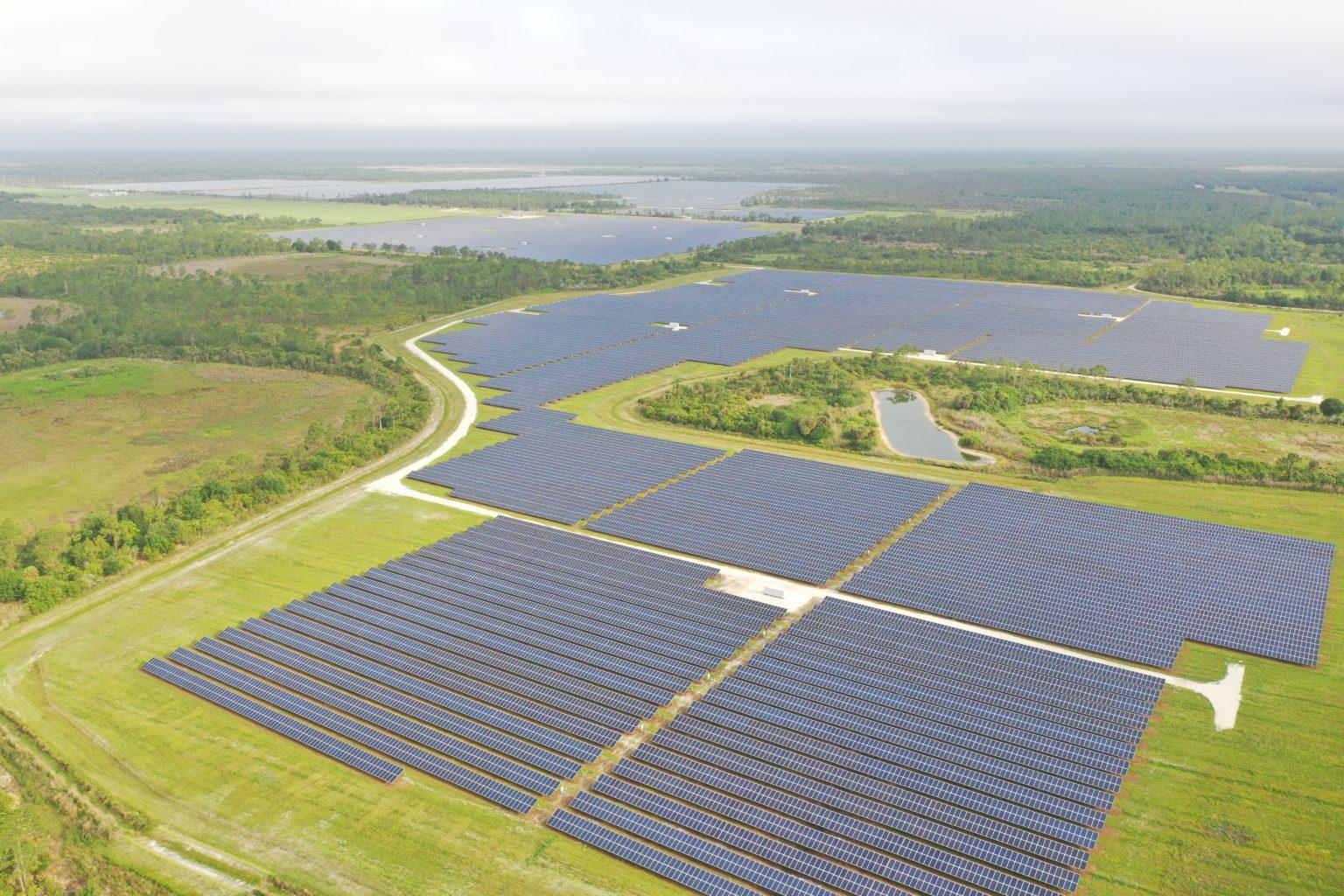
Babcock Ranch Solar Array (Photo Credit: Babcock Ranch)

Rational Cause for Optimism: Hurricane Strength Resilience 

From our bird’s-eye view of the renewable energy industry, we often see positive developments for humanity before they become common knowledge. The purpose of this blog is to highlight the clean energy innovations and sustainability actions that are legitimate cause for optimism despite the very real threats to people and the environment posed by climate damage.

by ReVision Energy co-founder Phil Coupe

Photo Credit: Florida Fish & Wildlife

Although New England is generally north of the southern coastal geography known as “Hurricane Alley,” we install solar arrays in Maine, New Hampshire, and Massachusetts that are designed to withstand 100+ mph winds, just in case a lethal storm like Hurricane Sandy ($70B in damage + 230 deaths) strays into our region. . 

This abundance of caution is partly due to regulations, but is also the correct way to make our energy systems resilient in the face of climate damage, which is already making weather events more extreme and damaging because of warmer ocean temperatures. 

Are current solar array design and installations standards going to be strong enough for that inevitable day when a super storm comes our way in northern New England?

Amidst the devastation inflicted upon Florida’s Gulf Coast by Category 4 Hurricane Ian, there was a shining oasis of resilience that might be cause for optimism regarding our ability to keep the power on when Mother Nature goes catastrophic. 

Anchored by a 700,000-panel solar array and located just 25 miles from the wreckage of Fort Myers, FL (ground zero during Hurricane Ian), Babcock Ranch is a community specifically designed to withstand whatever weather events come its way. All of Babcock Ranch’s electrical infrastructure is buried underground, and the landscaping is designed such that individual lots and the entire parcel shed water to large retaining ponds and streets so that houses don’t flood. 

How-Solar-Works-at-Babcock-Ranch-.jpeg

During Hurricane Ian, Babcock Ranch developer Syd Kitson and sustainability design engineer Jennifer Languell both decided to ride out the storm in their resilient homes. According to Kitson, Languell, and other residents who stayed despite evacuation warnings, Babcock Ranch passed its first severe hurricane test with flying colors. One traffic light at the entrance was knocked down, along with some palm trees and signs, but that was the sum total of damage to the resilient community. Among the 2,000 homes built so far, not a single one lost power, internet, or water.

For people who like this approach to sustainable living, there’s room for another 28,000 homes in the community. 
ST-BabcockPreserve-2020-1536x1024-1.jpg

With homes starting at $250,000 each, Babcock Ranch is generally affordable compared with other retirement home communities in Florida and in the Northeast. Kitson and Languell said they welcome “imitators” to copy their design to build resilient communities elsewhere, which is a high likelihood considering the many billion dollars of storm damage still left to be cleaned up throughout Florida. 

With storms predicted to become increasingly forceful around the globe, it’s time for every community to start hardening infrastructure in pursuit of resilience. The good news is that we have already begun that important work here, so that we’ll be ready if and when a super storm finds its way to northern New England.  

Filed Under: Under the Sun Blog Tagged With: by Phil Coupe, Rational Cause for Optimism

Electricians Will Save the World

October 4, 2022 by Ale Moreno

Rational Cause for Optimism: Electricians Will Save the World

written by Vaughan Woodruff, Director of the ReVision Energy Training Center

The lack of a robust technical workforce is now the greatest threat to our ability to address the climate crisis in the U.S. On the heels of the passage of the Inflation Reduction Act, we are seeing an increased focus on electrifying our transportation and building sectors. However, to meet our goals the U.S. will need roughly one million new electricians in the next decade. Without significant intervention, we will fall 600,000 electricians short. Hidden in these numbers is a harsh reality: for every new electrician developed in the U.S., we lose two electricians to retirement or a career change. For every step forward in the national effort to develop our electrical workforce, we are taking two steps back. 

If we take a critical look in the mirror, we can identify how we as a country find ourselves here. Though trades professionals often embody qualities that our culture professes as virtues – financial security, self-sufficiency, autonomy – our educational system has marginalized the construction trades for decades. With some exceptions, career and technical education in the U.S. is largely perceived as second-class programming for students that might otherwise drop out of school. This is wrong. The technical trades represent a critical career pathway that supports aspiring professionals and develops crucial contributors to our society’s advancement. 

We need to reverse workforce trends and the perception of the construction trades if we are going to act on climate in a real and meaningful way. 

RETC PV 101 training.jpeg

ReVision Energy took an important first step in this process in 2018, when we launched our ReVision Energy Electrical Apprenticeship Program (REEAP). At the time, it was clear that traditional electrical licensing pathways weren’t a great fit for sustainably growing the company’s workforce. Our apprenticeship program offers a combination of online courses, in-person instruction, and on-the-job learning. Since 2018, REEAP has had more than twenty-five apprentices achieve an electrical license, and we currently have sixty co-owners on their way to licensure. REEAP is now an indispensable resource to our employees and our business model as we navigate the challenging workforce trends facing the country’s two oldest states, Maine and New Hampshire. 

ReVision Energy’s ability to respond meaningfully to the climate crisis will be largely dependent on our workforce development efforts. In June, we were honored when the Maine Department of Labor announced that ReVision Energy was one of fourteen entities to receive funding to further advance apprenticeship in Maine. As part of this funding, we will: 

  • develop three new apprenticeships in customer service, technical sales, and management
  • adapt REEAP to better support the development of heat pump installers, service technicians, and crew leads 
  • partner with Portland Adult Education to develop a heat pump pre-apprenticeship for new Americans that prepares them for participation in REEAP 
  • collaborate with LearningWorks YouthBuild to support clean energy career planning tracks for participants in their construction program 

While ambitious and meaningful, this work alone is not enough. To effectively tackle our industry’s long-term needs, we need to actively address the perception of technical trades with students, parents, and educators long before they are making decisions about a career. Recently, ReVision Energy’s marketing team collaborated with the ReVision Energy Training Center to strategize solutions to some of ReVision’s longer-term workforce development challenges.  

The message? Electricians will save the world. 

ground mount wiring.jpg

The first time I heard that line this summer, it hit hard. I thought of friends, family, and colleagues who carried the stigma that often accompanies the lack of a college degree. “But you’re a Master Electrician,” I’ve said, followed by their response of a head shake with a clear sentiment that their critical accomplishment isn’t largely deemed as “being enough”.

I thought of kids I’ve known who felt demoralized for not being “the right kind of smart” at school even though they could disassemble and reassemble an engine, or build incredible things with their hands. I thought of colleagues with degrees from prestigious academic institutions who ultimately realized that their heads and hearts were best served by working outdoors with tools in hand, implementing solutions to the thing they care about most. 

I thought of my own experiences, of how it took me two degrees and a decade-plus of professional experience to find my calling in the solar industry. I thought of how my kids’ generation will need to perceive this work for us to ultimately be successful in responding to the challenge of climate. 

Electricians will save the world.

We need to work together to save our planet, and doing so will require us to reconsider the role of blue-collar workers, and how we communicate the value of their work to our kids. ReVision Energy’s new “Electricians Will Save the World” campaign will soon extend across the Northeast through a coordinated outreach effort to help kids, parents, and educators better understand the importance of clean energy careers. 

solar-service-electrician.jpeg

This effort will complement a new pre-apprenticeship program that will serve communities historically excluded from the construction trades and general workforce. Our campaign will clearly define solar career pathways and provide access to those pathways for individuals in the pre-apprenticeship, as well as for others seeking careers in solar. 

We face many workforce challenges today and will face even more substantial ones tomorrow. These daunting problems can be an excuse for inevitable, collective failure or we can recognize them as opportunities to reimagine the path towards a more just and equitable future. The task may seem daunting, but the creative solutions that will rise from these challenges are filled with inspiration and potential. By leading with hope, collaboration, and resolve, we can put electricians in the position to save the world. 

Filed Under: Under the Sun Blog Tagged With: Rational Cause for Optimism

Rational Cause for Optimism: The Bionic Leaf

September 7, 2022 by Ale Moreno

Photo Credit: Mylan Cannon/The New York Times

Amidst the noise, haste, and chaos of modern life there are more positive developments for humanity than one might think. Everyone focuses on the disasters of the climate crisis, and while those do motivate our daily work, we also feel it’s important to highlight the hopeful – the very real innovations pushing our clean energy movement forward. The purpose of this new column on our blog is to explore noteworthy causes for optimism that we observe from ReVision Energy’s front row seat in the renewable energy arena.

The Bionic Leaf: Can We Create Effective Energy Storage ‘Fuels’ Without Carbon?

revision-solar-installers-sq.jpeg

“The Stone Age did not end because the world ran out of stones, nor will the Oil Age end because we ran out of oil,” writes economist Thomas Friedman. Tectonic shifts in the energy sector have historically created enormous wealth and radical societal disruptions. When New England switched from whale oil to coal, and eventually petroleum, wealth shifted dramatically from seafarers to land lubbers, and oil lamps gave way to the vast electrical grid and its myriad appliances.

Today the renewable energy industry stands at a threshold similar to that of the oil industry in the early 1900s, on the cusp of one of the biggest infrastructure and wealth creation opportunities in world history. The societal switch to fossil fuels more than a century ago unleashed some of the most profound advancement in human history. Now, the Inflation Reduction Act is poised to unleash clean technology at an even greater scale, but with greater potential to benefit all people because the wind and sun are infinite resources that can’t be controlled by oligarchs.

Gaps in Renewable Energy Production

bionic-leaf.jpeg

While modern wind, solar, hydro, and battery storage technologies are generally robust and reliable, it’s also true that most renewable energy is intermittent (with the exception of some hydropower facilities) and today’s batteries are not yet scalable to completely fill the gaps in wind and solar generation.

Batteries have limited capacity, which we see in the daily need to charge our cell phones and in the struggle to enable electric vehicles to mirror the range of internal combustion engines. The best batteries of today achieve roughly 25% of the energy storage capacity of fuels like gasoline and oil. That’s why we can’t rely on batteries to power an entire city when the grid goes down.

A Bionic Solution

To solve the storage problem at massive scale, Harvard University chemist Daniel Nocera has invented what he calls a “bionic leaf” that is more efficient than natural photosynthesis and can simultaneously generate energy fuel and storage. The leaf itself is a small man-made solar collector that uses sunlight to create oxygen and hydrogen, which can then be converted into fuels or fertilizers. Nocera says that storage must be scalable so that everyone can use it and powerful enough so that fossil fuels become unnecessary and thereby obsolete.

Natural_Photosynthesis_vs_the_Bionic_Leaf.jpeg

Photo: Creative Commons: The Bionic Leaf

“If you think about it, photosynthesis is amazing,” Nocera tells the Harvard Gazette. “It takes sunlight, water, and air—and then look at a tree. That’s exactly what we did, but we do it significantly better, because we turn all that energy into a fuel.” According to Nocera, the bionic leaf is 10 times more efficient than photosynthesis. This is the equivalent of pulling 180 grams of carbon dioxide from the atmosphere per kilowatt-hour of electricity generated. By comparison, photosynthesis only pulls 18 grams of carbon dioxide per kilowatt-hour if we were to imagine biomass growth as electricity generation.

nocera_leaf_in_hand.jpeg

Nocera (pictured right, in his lab) envisions a world where everyone can use the bionic leaf to create and store the energy they need to power their homes, vehicles, etc., and farmers are able to create their own energy and fertilizers.

He thinks this technology will be disruptive in developing countries by helping them largely avoid the expensive and polluting development of fossil fuel energy infrastructure. Harvard is currently funding a bionic leaf pilot program in India to test the technology and determine its scalability.

Utilizing just sunlight, water and air, Nocera believes it will be possible for humankind to eliminate the need for any type of fossil fuel through mass deployment of bionic gardens, “and you can do it in your own backyard” he said.

This blog post was inspired by Daniel Norcera’s presentation to E2Tech, Maine’s leading energy, environmental, and clean technology business and economic development organization. You can watch the presentation here.

More “Under the Sun” →


Filed Under: Under the Sun Blog Tagged With: by Phil Coupe, Rational Cause for Optimism

Rational Cause For Optimism: Underground Autonomous Transport

June 21, 2022 by Ale Moreno

Amidst the noise, haste, and chaos of modern life there are more positive developments for humanity than one might think. Everyone focuses on the disasters of the climate crisis, and while those do motivate our daily work, we also feel it’s important to highlight the hopeful – the very real innovations pushing our clean energy movement forward. The purpose of this new column on our blog is to explore noteworthy causes for optimism that we observe from ReVision Energy’s front row seat in the renewable energy arena.

Rational Cause For Optimism: Underground Autonomous Transport

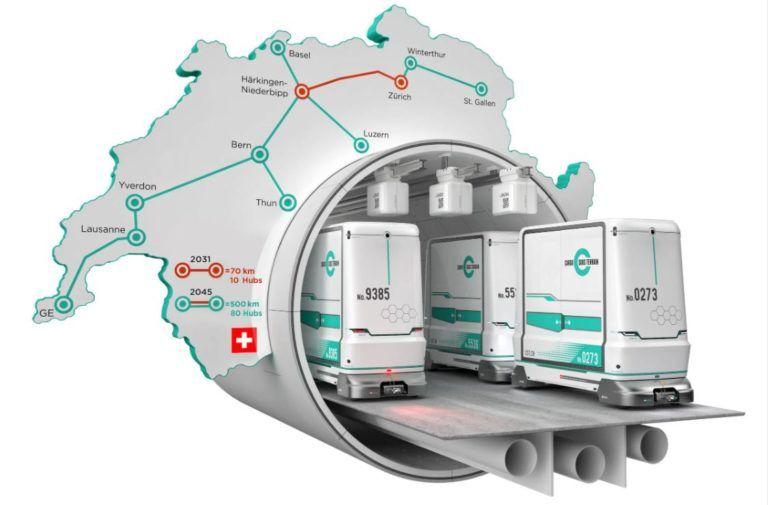
Imagine driving your car (preferably electric) down the highway without any 18-wheeler tractor trailers polluting the skies and/or threatening to crush you like a bug. This vision is about to become reality as Switzerland launches its innovative “Cargo Sous Terrain” (Cargo Underground) project.

With a growing population and economy, the Swiss foresee highway gridlock and increased air pollution if they do not overhaul their cargo transportation system.

The plan is for electric autonomous vehicles, powered by renewable energy, to travel in underground tunnels at roughly 25 mph to move freight at lower cost and zero emissions compared to diesel-powered highway big rigs. The project design includes an overhead ‘rapid track’ for smaller goods and packages.

Here in the United States, roughly two million 18-wheelers criss cross our highway system, burning about 40 billion gallons of diesel per year to transport goods. In addition to 500,000 truck-related accidents resulting in about 4,000 deaths per year, the trucking industry is pumping more than 80 billion pounds of carbon pollution into earth’s closed atmosphere every year.

screengrabswitzerland-768x505.jpg

Moving a large volume of cargo transportation underground is expected to reduce Switzerland’s highway congestion by more than 30%, while also reducing accidents, deaths and carbon pollution.

Although underground cargo transportation is not a practical solution nationwide in the U.S., it could be a gamechanger regionally in congested places like New England where urban highways become impassable at rush hour. It has been estimated that traffic jams are costing Americans roughly $300 billion/year in lost productivity and missed delivery deadlines.

Switzerland’s ‘Cargo Sous Terrain’ project is expected to cost $30 to $35 billion once the 310-mile underground network is completed, with 100% paid by private industry. Portland, ME to New York City is 315 miles. Imagine driving from Maine to the Big Apple with no big rigs nor diesel pollution, while cargo moves invisibly and cleanly beneath your tires!

All photos and facts taken from IEEE Spectrum.

Filed Under: Under the Sun Blog Tagged With: by Phil Coupe, Rational Cause for Optimism

Rational Cause for Optimism: A Message for 2022 Graduates

June 6, 2022 by Ale Moreno

Shared Destiny Has Become Humanity’s Greatest Opportunity

This commencement speech was given by Phil Coupe to the graduating class of Baxter Academy in Portland, Maine, on June 4th, 2022. It has been edited for length and clarity.

Love is the single most important word you need to know in life, so I wanted to say it first. Students and teachers, congratulations on all you’ve accomplished. We can’t thank you educators enough for nurturing society’s most precious resource, which is you students.

Besides the fact that we love you, do you students know why you are so important? It’s because you will soon be carrying our hopes and dreams for the better future we know is possible, along with your own ideas for the kind of world in which you want to live.

Wow, that’s a lot for you to carry, but we know how strong you are because you’ve already survived the worst pandemic in 100 years while doing whatever it took to graduate high school. It’s hard, right? You’ve experienced Covid-19, you’ve seen the horrors of war in Ukraine and unrelenting gun violence in America. You’ve witnessed hunger, homelessness, and hopelessness, just like generations of students that came before you.

Modern society can be overwhelming, but it’s also true that every one of us has superpowers to help us cope and ensure we can carry whatever weight might fall upon our shoulders as we learn and grow, as we fall down and get back up, as we battle injustice, as we love one another and ourselves. Life is often really hard, and it hurts sometimes, but this is what makes us stronger, and helps us discover our ability to help ourselves and ultimately, others. And that’s really the greatest opportunity in life: to nurture oneself such that we have capacity to help others, all in pursuit of a better self and society.

Helping Others

BaxterPhil2-768x576-1.jpg

In my life, the words of the famous speaker Zig Zigler have been unfailingly true: You Can Get Everything You Want in Life if You Help Other People Get What They Want.

Here’s an example of what Zig meant. I wanted to get into the solar industry but had no relevant experience. So instead of blindly starting a company, or applying for a job with no qualifications, I decided to help schools get solar power as a way to teach students about clean energy and to save money for the schools. Once I started trying to help schools get solar, I suddenly found myself building positive connections with solar companies and school superintendents. Within a year I was in discussions with a couple engineers who eventually became my fellow co-founders of ReVision Energy.

This begs two important questions: what do you want in life? And what kind of world do you want to live in? With love, tenacity and a willingness to help others, we have to fight for a life worth living, and a world in which to do it. At today’s scale of 8 billion people globally, civilization has necessarily become a team sport whereby everyone needs to contribute to the continuous improvement of our ourselves and those around us.

Never Give Up, Never Quit

Travis-and-Coupes-768x1024.jpg

The Japanese have a term for this idea of always trying to make things better. The word is Kaizen, which literally means “continuous improvement.” Let me tell you about Staff Sargent Travis Mills. He was on patrol during his third tour of duty in Afghanistan when he set his backpack down on a land mine that blew off most of his arms and legs. When the excruciating pain from nerve damage and unimaginable surgeries became unbearable, Travis decided he was Never Going to Give Up and Never Quit because he didn’t want his beloved infant daughter to lose her dad.

(Pictured right: Philip Coupe, Travis Mills, and Dmitri Coupe last weekend at the Miles for Mills Race.)

Today Travis walks and drives a car with two carbon fiber legs, one prosthetic arm and one shoulder stump. I know this because I was very nervous when he initially told me to hop into the passenger seat of his truck – but he was a great driver. Instead of self-pitying the worst wounds ever survived by a soldier, Travis has chosen to Kaizen what is left of his physical body, and to deliver Kaizen opportunities for others with extreme challenges. Instead of deciding he was crippled for life, he got busy creating a retreat for wounded warriors in Augusta called the Travis Mills Foundation that is helping hundreds of veterans find peace and healing.

shackletons-expedition-to-the-antarctic-ice-hole-on-elephant-island-where-the.jpg

Here’s one more example, which occurred in the South Atlantic Ocean in 1917 when the British explorer Sir Ernest Shackleton sailed his ship Endurance to Antarctica in an attempt to be the first to traverse the south pole. Soon after arriving at the coast of Antarctica, the Endurance and its 27 sailors became hopelessly stuck in pack ice. Considered one of the greatest human survival stories of all time, Shackleton and a few of his men sailed a small lifeboat 800 grueling miles across the roughest seas on the planet to get back to their original launch point, but their skiff was tossed onto the rocks on the wrong side of an island and they had to scale a 10,000-foot mountain range in winter to get help. Then they sailed 800 miles back to rescue the rest of their team. Never Give Up, Never Quit.

Heroes Like You

I’m telling you about people like Travis Mills and Ernest Shackleton because they are just like you and me except for the fact that when presented with colossal challenges, they rose to the occasion with uncommon grace and fortitude. These are the kinds of heroes that give me strength when I’m struggling to deal with the challenges of running a business that’s trying solve one of humanity’s biggest problems.

Confronting the negative impact of 8 billion people burning fossil fuels in earth’s closed atmosphere feels like a David vs. Goliath battle every day.

But when I’m feeling overwhelmed or depressed by the sheer magnitude of it all, I draw immense strength and rejuvenation from people like Travis Mills and Ernest Shackleton, Martin Luther King Jr., and Jacinda Ardern, the extraordinary woman who became prime minister of New Zealand at age 37.

The common thread shared by these people is their humanity, and how well they understood the assignment about doing whatever it takes to help others while making the world a better place. No, we can’t all be superheroes like these folks, but we can decide for ourselves what it is we want in this world, and if we’re smart we’ll help a bunch of other people get what they want.

And if we have to pick one single thing to focus on with the same relentlessness with which Martin Luther King Jr. pursued a better future for his people and generations to come, that one thing is LOVE.

Filed Under: Under the Sun Blog Tagged With: Rational Cause for Optimism

Rational Cause for Optimism: Solar as Homeland Security

May 13, 2022 by Ale Moreno

Amidst the noise, haste, and chaos of modern life there are more positive developments for humanity than one might think. Everyone focuses on the disasters of the climate crisis, and while those do motivate our daily work, we also feel it’s important to highlight the hopeful – the very real innovations pushing our clean energy movement forward. The purpose of this new column on our blog is to explore noteworthy causes for optimism that we observe from ReVision Energy’s front row seat in the renewable energy arena.

(Above photo credit: U.S. Marine Corps photo by Lance Cpl. Tyler S. Giguere.)

Renewable Energy Is Homeland Security for America

Because fossil fuels are finite, and population growth is expected to increase global energy demand by 50% over the next 30 years, could it be argued that our underground reserves are now America’s most valuable strategic defense assets?

At present there are only two possible future fossil fuel scenarios: they run out, or they become too environmentally problematic to burn (scientific consensus indicates we’ve already crossed this rubicon). Long-term national energy security, resilience, and independence can never be truly achieved through a strategy that relies upon non-renewable resources like coal, oil, and gas. These resources are vulnerable to supply chain disruptions, extreme weather events, price volatility, and eventual depletion.

Forward-thinking defense brass have long been concerned about the U.S. Military’s over-reliance on fossil fuels as a weak link in the battlefield supply chain. In 2003, Lt. Gen. Jim Mattis (who later served as Secretary of Defense under President Trump) stated that the military “must be unleashed from the tether of fuel.” That’s because Mattis saw the casualties that resulted from deadly enemy attacks on fuel convoys in Iraq and Afghanistan. The Army estimated that one in twenty-four fuel convoys resulted in a U.S. casualty from 2003-2007 in the Middle East.

The Energy-Security Paradigm in 2022

The war against Ukraine, combined with Russia’s decades long petro-stranglehold on western Europe, further highlights the energy-security paradigm. As Ukraine desperately tries to fend off Russian air superiority, ground troops, and naval firepower, the unrivaled energy density of aviation fuel, diesel, and gasoline underscore how precious these resources are to a nation’s defense. It’s nearly impossible today to defend airspace, borders, and the high seas without liquid fuels to power fighter jets, heavy artillery, and naval ships.

Armed with this information, Americans have an opportunity to vastly increase national security by minimizing fossil fuel use and helping build the renewable energy, storage, and grid infrastructure necessary for a societal pivot away from coal, oil, and gas.

Considering all the above, it’s plausible to argue that the last nation standing with the greatest underground reserves will eventually be the strongest on the planet.

If that is true, then getting 100% of Americans on board with the clean energy transition is mission critical. Today’s reality – that renewable energy is crucial to national security – might be the strongest argument to convince people like the Koch brothers and the fossil fuel industry itself that the U.S. is stronger when its energy resources are less vulnerable. Together we can pursue a defense strategy that includes energy independence and resilience without burning fossil fuels except to protect our country and to power critical industries.

us-air-force-academy.jpg

Fortunately, we already have powerful allies in the Pentagon. Renewable energy, battery storage, heat pumps, and electric vehicles are being rapidly deployed at U.S. Military bases across the nation because the Department of Defense recognizes anthropogenic climate damage as one of America’s most urgent national security threats, and because fossil fuels have proven to be problematic in the battle theater.

(Pictured right: Solar array at the U.S. Air Force Academy in Colorado.)

Ironically, the U.S. Department of Defense is the single largest energy consumer on earth. The good news is that the DoD is currently pursuing a goal of procuring or producing 25% renewable energy for its facilities by 2025 under a law signed into effect by President George W. Bush in 2007.

“We face all kinds of threats in our line of work, but few of them truly deserve to be called existential. The climate crisis does. Climate change is making the world more unsafe and we need to act,” stated Secretary of Defense Lloyd Austin.

In a conflict-ridden world that is expected to suffer increasingly extreme weather as a result of climate damage, national defense has become more urgent and complex. We are cautiously optimistic that an American energy transition to renewables and storage represents an opportunity to bring our divided nation back together to achieve long-term security, independence, and resilience. And as the largest emitter of greenhouse gases over the past 175 years, it’s also an opportunity for the U.S. to be accountable for its out-sized negative environmental impact on the rest of the world.

Filed Under: Under the Sun Blog Tagged With: by Phil Coupe, Rational Cause for Optimism

Rational Cause for Optimism: Grid Modernization and Labor

April 6, 2022 by Ale Moreno

Amidst the noise, haste, and chaos of modern life there are more positive developments for humanity than one might think. Everyone focuses on the disasters of the climate crisis, and while those do motivate our daily work, we also feel it’s important to highlight the hopeful – the very real innovations pushing our clean energy movement forward. The purpose of this new column on our blog is to explore noteworthy causes for optimism that we observe from ReVision Energy’s front row seat in the renewable energy arena. 

Greatest Opportunity Since The New Deal

Current events have drastically shifted global attitudes regarding the vulnerability of fossil fuel supply chains and the need for a rapid switch to renewable energy and clean technology. Russia’s petro-fueled atrocities in Ukraine and Putin’s threat to cut off natural gas supplies to western Europe have temporarily replaced the existential threat of climate damage as the number one motivation for nations to move away from coal, oil and gas.

“Beneficial Electrification” is the somewhat wonky industry term to describe the massive societal shift from burning fossil fuels to zero-emission electric appliances powered by renewables and energy storage. Using rooftop solar panels to charge an electric car is a good example of beneficial electrification; as are solar-powered heat pumps to heat and cool your home. Both solutions are cleaner, cheaper, and far more sustainable than combusting hydrocarbons.

revision-solar-installers-sq.jpg

We Need Hundreds of Thousands of Workers

America’s aging utility grid is crucial to beneficial electrification because demand for electricity to charge EVs and power heat pumps is scaling exponentially. Plus, the poles and wires transmit electricity from where it is available to where it is needed, say from a large rural solar farm to urban consumers, or from storage facilities to consumers. To enable a complete societal transition to clean energy, we need a utility grid with 4 to 6 times more capacity than today’s grid.

This urgently needed grid upgrade is a colossal infrastructure project, on par with the buildout of our interstate highway system in the 1950s and the massive public projects of the New Deal in the 1930s, both of which required hundreds of thousands of workers and spurred powerful economic progress nationwide.

Achieving beneficial electrification at the household scale is now commonplace, but people are waiting months for their clean energy installations across the U.S. due to a severe shortage of skilled labor. At this moment when clean energy demand is skyrocketing due to high energy costs and a war-mongering Russia, America doesn’t have the necessary human resources to kick beneficial electrification into overdrive.

A Multi-Pronged Approach

The multi-pronged solution to this labor problem includes education and recruiting, training and licensure, and making clean-tech jobs more attractive. That’s why ReVision Energy is continually delivering presentations to students at northern New England high schools, vocational schools, community colleges, and universities. It’s also why we are a Certified B Corp.

rooftop-solar-installers-summer.jpg

Similar to Beneficial Electrification, “B Corp Certification” is another business term associated with creating a better future by ensuring companies do the right thing for employees, customers and the environment. One of the superpowers of a B Corp is being able to attract and retain talent because workers are beginning to understand they are likely to be treated better at a B Corp than they would at a more traditional company. If you know young people looking for a rewarding and remunerative career, please send them our way.

During the Great Depression nearly a century ago, workers did not have the luxury of choosing what type of employer they wanted to work for. As the global economic system teetered on the brink of collapse, sowing unemployment, hunger and poverty throughout the world, workers were desperate for any kind of paying job.

M7O7QIHRLJF4HGBN3P3JNJT7DI.jpg

As a result, psychological depression plagued many in the 1930’s, just as it does today in the face of calamitous news about the war and climate damage. To save America and its citizens, President Franklin Delano Roosevelt launched a series of large-scale initiatives to resuscitate the economy and empower workers to earn a decent living. Among the many projects of this “New Deal” was the creation of the Tennessee Valley Authority (TVA) and the Hoover Dam, leading to vast quantities of cheap hydropower for the mid-Atlantic region and the southwest. Other infrastructure outcomes nationwide included the construction of 4,000 schools, 130 new hospitals, 9,000 miles of storm drains and sewer lines, 150 new airfields, 29,000 new bridges, 280,000 miles of roads, planting of 24 million trees and 700 new parks.

After more than 150 years of fossil fuel extraction, transport, refining, distributing and combustion, America is overdue for a national beneficial electrification plan that addresses our skilled labor and grid modernization crises. Transitioning society to a clean energy future is the greatest economic development and job creation opportunity since the New Deal.

Filed Under: Under the Sun Blog Tagged With: by Phil Coupe, Rational Cause for Optimism

Feed People, Power Economies, Foster Peace with Agrivoltaics

March 8, 2022 by Ale Moreno

Amidst the noise, haste, and chaos of modern life there are more positive developments for humanity than one might think. Everyone focuses on the disasters of the climate crisis, and while those do motivate our daily work, we also feel it’s important to highlight the hopeful – the very real innovations pushing our clean energy movement forward. This is the latest in our new column “Rational Cause for Optimism” by ReVision co-founder Phil Coupe.

Rational Cause for Optimism: Foster Peace with Agrivoltaics

Yehor Milohrodskyi SyuhhPwu Hk Unsplash

When it was still part of the Soviet Union, Ukraine was called the ‘breadbasket’ of Russia because of its uncommonly fertile soil and climate. Now under vicious attack, Ukraine is fighting for survival against an immoral, nuclear-equipped authoritarian regime that wants to turn back the clock to the darkest of times.

This horrific war, unfolding before the world’s fearful eyes, forces us to stretch our imagination in pursuit of rationality, optimism, and hope for a better future. Today we need to figure out how to starve dictators by weaning off fossil fuels while replacing the once-abundant output of Europe’s badly damaged breadbasket.

Continuous innovation in agriculture and energy have kept much of the world reasonably well-fed and energized but we now face the dual threats of intensifying climate damage and political destabilization, both resulting from the global petro cartels that protect dictators like Putin and delay the urgently needed clean energy transition .

Thank goodness for people like Colorado-based farmer Byron Kominek, the driving force behind Jack’s Solar Garden, who are finding ways to increase food and renewable energy production at what feels like a perilous hour for all. Installed by fellow B Corp and Amicus member Namaste Solar , Jack’s Solar Garden is an experiment to integrate agriculture and clean energy production to see if a ‘dual use’ approach can help improve food and energy security.

Based on early results from Jack’s Solar Garden, and from ongoing research worldwide, agrivoltaics (dual use farming) has immense potential to alleviate some of our worst problems. According to the 2021 report “Dual Use, Dual Value Solar Agrivoltaics Power Farm Economics,” by Dr. Maggie Teliska and Michael P. Totten, just 1% of existing cultivated agricultural lands installing agrivoltaic microgrids could meet worldwide energy demand.

This fact complements a recent study by the Australian National University that discovered earth’s topography and hydrogeology has the potential for 100 times more Pumped Hydro Energy Storage than what is needed for a global transition to 100% renewable energy.

Another recent report, “Agrivoltaics: Producing Solar Energy While Protecting Farmland,” by Bill Pederson and Brooks Lamb, shows how the dual use approach can dramatically increase land productivity:

Phil Column Agrivoltaics

The results depicted above are already being actualized in the real-world of Jack’s Solar Garden where Kominek was able to produce 8,600 pounds of produce by planting seeds between the rows of solar panels in 2021.

NPR JacksSolarGarden

Jack’s Solar Garden, Photo Credit: NPR

Food production and energy generation have long been viewed as incompatible on the same patch of earth, if not mutually exclusive. The successful proof of concept that is Jack’s Solar Garden, along with solar grazing initiatives , has debunked the notion that clean, zero-emission solar energy production conflicts with farming. While crops can grow robustly between rows of solar panels, it turns out that livestock are the ideal ‘lawnmowers’ for ground-mounted solar arrays because they keep vegetation from growing tall enough to shade the panels:

Sunshine, solar panels and dual use farming are not going to stop the war in Ukraine nor shut down Russian oil production anytime soon, but they are rapidly becoming a potent antidote to the past, present and future negative impacts of our over-reliance on fossil fuels. As we scale up proven solutions like agrivoltaics, we will weaken the petro-cartels and the undemocratic, authoritarian dictatorships they help keep in power.

Filed Under: Under the Sun Blog Tagged With: by Phil Coupe, Rational Cause for Optimism

Rational Cause for Optimism: Pumped Hydro Energy Storage

February 1, 2022 by Ale Moreno

Amidst the noise, haste, and chaos of modern life there are more positive developments for humanity than one might think. Everyone focuses on the disasters of the climate crisis, and while those do motivate our daily work, we also feel it’s important to highlight the hopeful – the very real innovations pushing our clean energy movement forward. The purpose of this new column on our blog is to explore noteworthy causes for optimism that we observe from ReVision Energy’s front row seat in the renewable energy arena.

by Co-Founder Phil Coupe

We begin with earth-shattering (pun intended) news about how to solve the difficult problem of wind and solar “intermittency” – the fact that the sun does not always shine and the wind doesn’t always blow. Modest progress is being achieved today with battery storage, primarily lithium ion type , whereby the battery in a home or small business can store excess solar power generated when the sun is shining, and then release that power when the sun goes down at night or behind clouds during the day. This approach is effective for relatively small-scale storage systems in single buildings or vehicles, but how can we have enough stored power to replace the electricity generated by a gas-fired power plant at the utility scale? Ultimately this is what we need to wean ourselves off the coal, oil, and gas-fired electricity that we’ve been relying on for more than a century.

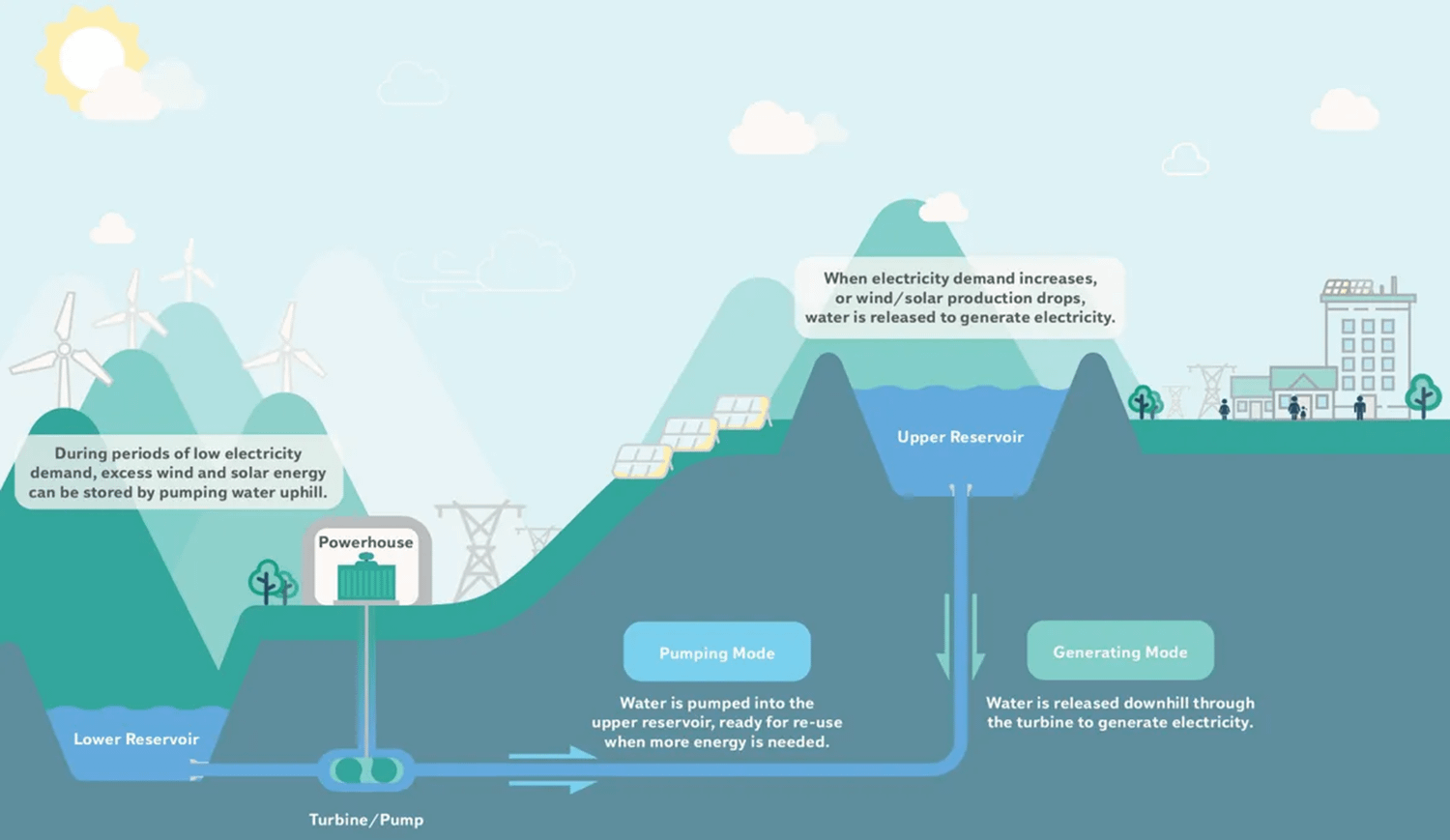
‘Pumped hydro’ is an old-school technology with colossal potential to become one of the most important solutions to intermittency in the dawning new age of renewable energy + storage. Here’s a diagram of how it works:

Hydropower

Would you be surprised, perhaps elated, to learn that there is roughly 100 times more potential for pumped hydro energy storage than what is needed for a global transition to 100% renewable energy?!

According to researchers at Australian National University’s College of Engineering, there are 616,000 naturally occurring places on earth where a pumped hydro energy storage (PHES) facility could be installed. We can even repurpose old fossil fuel sites to pumped hydro, like this former Kentucky coal mine – creating jobs and a cleaner local environment. In the atlas of potential PHES sites below, notice the density in northern New England:

Phil MAp

If we zoom in a little closer, we can see that Maine, New Hampshire, and western Massachusetts have significant potential to develop PHES facilities:

Phil Map

To illustrate the potential of this technology, it’s useful to know that China just announced the commissioning of the largest PHES system on earth. Located in Hebei province, the 3.6 gigawatt facility consists of 12 reversible pump generating sets with a capacity of 300 megawatts each. It has a power generation capacity from storage of 6.6 billion kilowatt hours. That’s sufficient electricity to power roughly 660,000 homes for a year!

3.6 gigawatt pumped hydro energy storage facility in China

We think the vast potential of PHES is a game-changer when it comes to envisioning a future without polluting fossil fuels. A key takeaway from this PHES data is that yes, we have enough large-scale energy storage potential to enable a global transition from fossil fuels to renewable energy. Another critically important consideration is the social justice implications of developing PHES facilities. At present there are multiple PHES proposals in the West that would encroach on land that is sacred to indigenous people. It is imperative we don’t repeat injustices of the past in our pursuit of the better future we know is possible for ourselves and generations to come.

Take A Deeper Dive:

The Australian National University Study on PHES China’s New Facility The Conversation About PHES

Filed Under: Under the Sun Blog Tagged With: by Jill McLaughlin, Rational Cause for Optimism

The Third Industrial Revolution is Here

January 22, 2015 by Ale Moreno

I am a firm believer in the people. If given the truth, they can be depended upon to meet any crisis. The great point is to bring them the real facts. – Abraham Lincoln

GrandyOats Net Zero Food Production Facility

Not long after people had begun the quantum leap from horse and buggy to automobiles, and in the face of profound skepticism about whether it was possible, two bicycle mechanics from Ohio overcame seemingly insurmountable obstacles to build and fly the world’s first airplane.

These disruptive societal transformations were enabled by human ingenuity and fossil fuels with incredible energy density. The Industrial Revolution and the ensuing Technological Revolution have been powered by coal, oil and gas and now we are crossing the threshold into what Jeremy Rifkin calls the Third Industrial Revolution , whereby renewable energy and electric transportation will converge to enable the transition from a fossil fuel-powered society to a sustainable clean energy society.

This next transition is every bit as daunting as what the Wright brothers faced at the beginning of the 20th century. With 7 billion humans burning fossil fuels in earth’s closed atmosphere and expected growth to 9 billion over the next two decades, carbon emissions are one of the world’s most urgent existential threats.

Cause for hope can be found in the freshly minted Paris climate agreement, under which industrialized nations and the rest of the world have finally committed to serious reductions in carbon emissions. Obama’s Clean Power Plan coupled with the extension of solar and wind tax credits are evidence that the world’s highest per capita carbon emitter (America) is trying to get its act together.

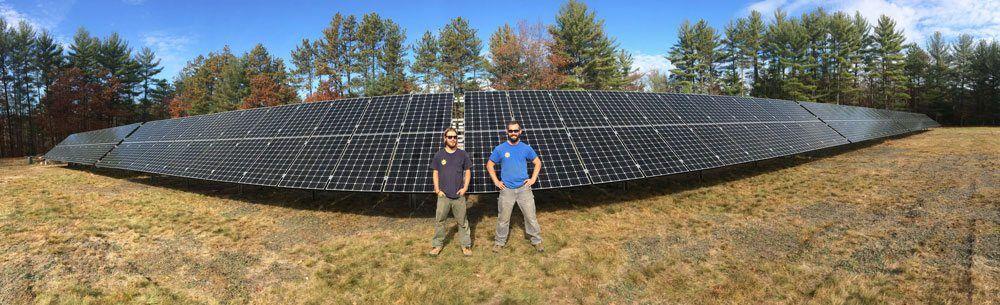
At ReVision Energy we are optimistic because we are witnessing northern New England’s gradual transition to a clean energy economy. In 2015 we built the region’s first net zero school, the first net zero food production facility and the first net positive office building that will produce more solar electricity than it uses every year for the next 40 years:

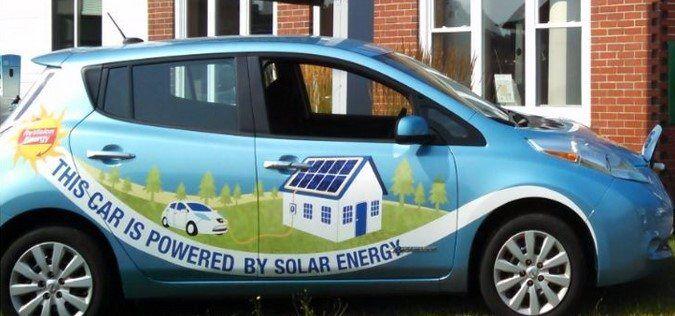
This year I am driving my kids in a solar-powered, zero emission electric car (roughly 50% of U.S. carbon pollution comes from transportation) to their hockey practices at one of the region’s first solar-powered ice rinks.

Solar Powered Nissan LEAF

The clean energy transition is gaining momentum worldwide. Ignoring the Volkswagen emissions scandal for a moment, it’s worth noting that in 2015 both Germany and Denmark had days when production from their wind and solar facilities exceeded total national energy demand under ideal conditions when the wind was blowing hard and the sun was shining brightly. Although both countries still rely on diminishing amounts of fossil fuels to fill the intermittent gaps of renewable resources, they are making steady progress toward their goal of 100% renewable energy by 2050.

In the spirit of the Wright Brothers, this year the first solar-powered plane is circumnavigating the globe:

Solar Powered Airplane

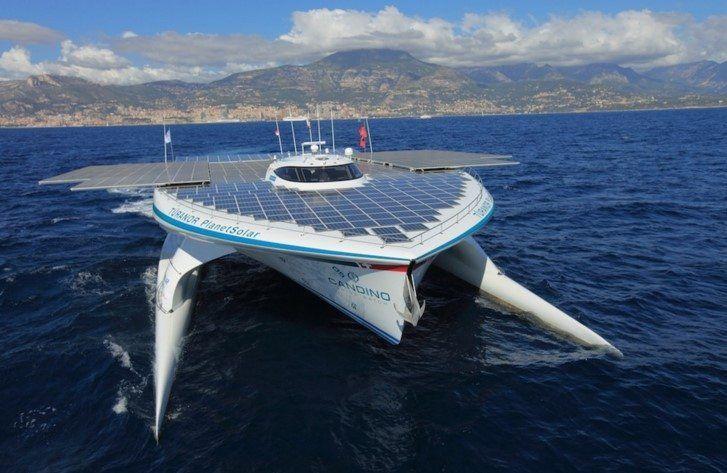
The first solar-powered boat is circumnavigating the oceans:

Solar Powered Boat

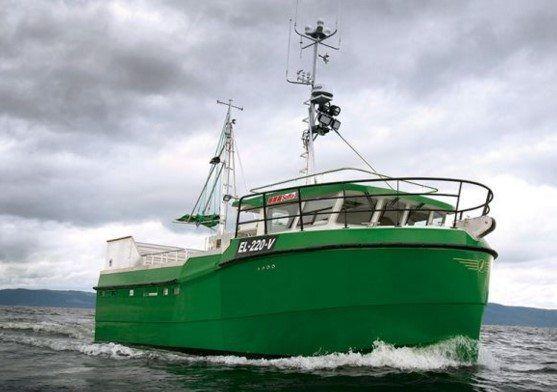
And Norway recently launched the world’s first all-electric commercial fishing boat:

Solar Powered Fishing Boat

The technology we are going to need for the clean energy revolution continues to emerge. Energy storage and microgrids are just beginning to enable the integration of renewable energy, batteries and smart grids so that communities can be wholly self-sustaining when the utility grid is down and grid-supporting when it is up.

This clean energy transition represents the same colossal scale of job opportunities that resulted from the build-out of the industrial revolution and its roads, bridges, dams and communication infrastructure. Although we have immense challenges yet to overcome, we can see proverbial light at the end of a decades-long tunnel to the clean energy future and take inspiration from the reality that getting there represents one of the greatest economic and environmental opportunities in the history of mankind.

Filed Under: Under the Sun Blog Tagged With: by Phil Coupe, Rational Cause for Optimism

  • « Go to Previous Page
  • Page 1
  • Page 2

sidebar

sidebar-alt

Subscribe to newsletter

Which newsletters would you like to receive?

Consent Enjoy the Sun(Required)
Consent(Required)
To provide the requested information, we need to store and process your personal data. By submitting this form, you agree to allow ReVision Energy to store and process your personal data for this purpose. Please see our privacy policy for more information.

  • Merch Store

Sitemap

  • Solutions
    • Homes
    • Commercial
    • Service
  • Our Work
    • Projects
  • About
    • Our People
    • Social Impact
    • Our Locations
    • Careers
  • For Customers
    • Support & Service
    • Be A Solar Champion
  • News & Events
    • Releases
    • Press
    • Under the Sun Blog
    • Events and Webinars
  • Our Partners
  • Resources

Follow Us

General Contact

Contact one of our branches for sales and non-service inquiries, or email us at hello@revisionenergy.com

Service

Need support for your existing system? Contact our Service Team:
Reach us at (207) 747-0076 or open a Support Ticket.

South Portland, ME

(207) 221-6342

Map & Directions 

Montville, ME

(207) 589-4171

Map & Directions 

Brentwood, NH

(603) 679-1777

Map & Directions 

Enfield, NH

(603) 632-1263

Map & Directions 

North Andover, MA

(978) 308-9041

Map & Directions 

Westfield, MA

(413) 884-1000

Map & Directions 

Copyright © 2026 ReVision Energy. All rights reserved.

Privacy Policy | Terms