• Skip to primary navigation
  • Skip to main content
  • Skip to primary sidebar
Revision Logo Revision Logo
Solar Calculator Get Started
Get Started Solar Calculator
  • Solutions
    • Homes
    • Commercial
    • Service
  • Our Work
    • Projects
  • About
    • About
    • Our People
    • Social Impact
    • Our Locations
    • Careers
  • For Customers
    • Support & Service
    • Be A Solar Champion
  • News & Events
    • Releases
    • Press
    • Under the Sun Blog
    • Events and Webinars
  • Our Partners
  • Resources

Give us a call

Maine (207) 221-6342
New Hampshire (603) 632-1263
Massachusetts (413) 884-1000
Contact Us

Rational Cause for Optimism

Grid Superconductors

July 12, 2024 by Ale Moreno

From our bird’s-eye view of the renewable energy industry, we often see positive developments for humanity before they become common knowledge. The purpose of this blog is to highlight the clean energy innovations and sustainability actions that are legitimate cause for optimism despite the very real threats to people and the environment posed by climate damage.

written by ReVision Co-Founder Phil Coupe

Surging electricity demand from massive computer data centers (necessary for cloud computing, artificial intelligence, social media, and storage of photos and videos) and fleets of heat pumps and electric vehicles, is revealing a major obstacle to the clean energy transition – grid capacity. Extreme heat events are also straining our increasingly overburdened grid, enhancing the risk of utility outages as air conditioning units are cranked up to cool buildings and homes.

While it’s still possible to connect residential and small-scale commercial solar arrays to today’s utility grid, developers of larger-scale wind, solar, and battery storage projects across the country are increasingly stuck in so-called “interconnection” logjams because our outdated grid infrastructure badly needs an upgrade. In 2023, the waiting list of pending energy generation projects was unprecedented and continues to get longer:

Interconnection Queue_CanaryMedia.png

It is estimated that New England, and the rest of America, needs a utility grid with 2 to 3 times more transmission capacity than what we have today to enable the transition away from fossil fuels while simultaneously meeting society’s increasing electricity demand. This is an enormous bottleneck to the clean energy transition because permitting and building new high-voltage transmission lines has become as difficult as siting new nuclear power plants—recall that two major grid expansion projects proposed in NH and ME were killed by local opposition in the past few years.

A Superconductive Solution

But a Massachusetts startup might have a game-changing technology solution in the form of superconducting transmission lines that can be installed directly onto existing transmission infrastructure. “Superconductivity” describes the ability of certain materials to conduct direct current (DC) electricity without energy loss when they are cooled below a critical temperature.

Credit_VEIR.jpeg

Tim Heidel, an MIT PhD graduate, has started a new company, VEIR, in Woburn, MA (right near one of our ReVision branches) that is attempting to commercialize a super-cooled liquid nitrogen technology that enables the transmission of vast amounts of power within the same infrastructure that comprises traditional high-voltage transmission lines.

According to Heidel, “we can deploy much higher power levels at much lower voltage, and so we can deploy the same high power but with a footprint and visual impact that is far less intrusive, and therefore can overcome a lot of the public opposition as well as siting and permitting barriers,” Heidel says, in an interview with MIT News. VEIR’s solution comes at a time when more than 10,000 renewable energy projects at various stages of development are seeking permission to connect to U.S. grids. 

According to engineers at the large utility company National Grid, which is exploring a partnership with the startup, VEIR’s technology has the potential to increase transmission by 5 to 10 times what is now carried by traditional transmission lines.

VEIR_About.jpeg

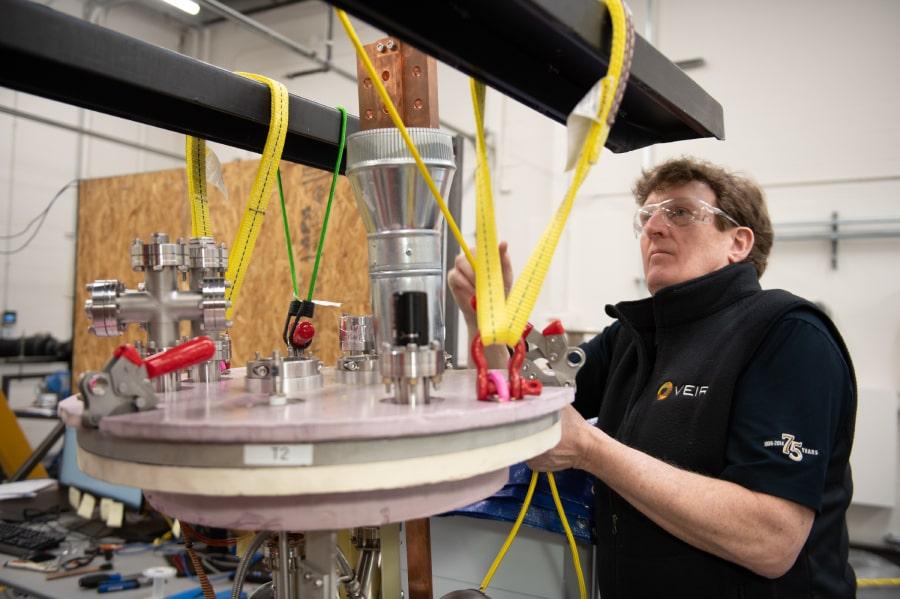
In December 2022, VEIR completed a low voltage, single phase demonstration of a 100-foot overhead DC superconducting power line. VEIR successfully operated the line at 4,000 Amperes — a first for an overhead superconducting powerline. In April 2023, VEIR energized a low-voltage, low-power overhead outdoor demonstration, pictured at right.

VEIR enables the deployment of superconducting power lines that are scalable from short to long-distance overhead, on-ground, and underground applications, including subsea transmission. Previous generations of superconducting power lines use complex, closed loop, active nitrogen cooling systems that limit their use to short-distance underground applications. According to the company’s website, VEIR uses a simple, open loop, passive nitrogen cooling system where distributed evaporation delivers 20x the cooling power per kilogram of liquid nitrogen coolant. VEIR decreases the complexity, reduces conductor weight, and lowers the overall cost of superconducting power lines, and offers more capacity than any other advanced conductor.
VEIR-generation-power-lines.jpeg

According to the Rocky Mountain Institute, electricity is now the largest form of ‘useful energy’ on the planet, illustrated in the graph below. We think it’s rational cause for optimism that solar electricity is now the cheapest form of power ever known to humankind, and that 100% of global energy demand can eventually be met with renewable energy combined with energy storage and efficient electric appliances like heat pumps and electric vehicles. Companies like VEIR indicate that we will eventually be able innovate our way to the just, equitable and low-carbon electric future we know is possible for ourselves and generations to come.

Filed Under: Under the Sun Blog Tagged With: by Phil Coupe, Rational Cause for Optimism

Renewable Energy Proves it Can Power the Grid

June 6, 2024 by Ale Moreno

From our bird’s-eye view of the renewable energy industry, we often see positive developments for humanity before they become common knowledge. The purpose of this blog is to highlight the clean energy innovations and sustainability actions that are legitimate cause for optimism despite the very real threats to people and the environment posed by climate damage.

Outbreaks of renewable energy supplying 100% of society’s electricity needs are becoming more common, illuminating the fact that we can eventually get by without burning finite, polluting, and expensive fossil fuels.

For the first time in history, solar electricity alone powered roughly 11,400 homes and businesses in northern Maine for about four hours per day from May 1-3, according to Versant, the local utility company. Solar arrays connected to the grid provided more electricity than was needed in the Fort Kent region, eliminating demand from gas-fired power plants and allowing the utility to export excess solar electricity to Canada.

The phenomenon of renewable energy supplanting fossil fuels is proliferating. On Sunday, May 12, the combined output of California’s wind, hydro, and solar power facilities exceeded the entire state’s electricity demand, generating 139% of demand. On April 11, solar arrays in California achieved a new record by providing 86.4% of the electricity needed by the world’s 5th largest economy.

Mark Jacobson_graph_california.jpg

Six months ago, another record-breaking renewable energy event occurred in Portugal when the combined output of wind, hydro and solar power facilities generated 100% of the country’s electricity needs for six days straight from October 31 to November 6.

As renewable energy and battery storage technologies become cheaper and more efficient, countries around the world are discovering that it is more sustainable and cost-effective to move away from coal, oil and gas. Today 87 countries have surpassed the so-called 5% ‘tipping point’ of renewable energy adoption, leading them down the path to widespread adoption.

BloombergNEF_renewables_graph.jpg

We think it’s rational cause for optimism that renewable energy and battery storage systems are scaling so quickly that utility companies around the world are having to manage an overabundance of wind, hydro and solar power. The good news is that the utilities are discovering that they can handle these intermittent challenges, and giving them confidence that eventually humankind can derive 100% of its energy from clean, infinite renewable resources paired with storage. 

Filed Under: Under the Sun Blog Tagged With: by Phil Coupe, Rational Cause for Optimism

Who Can You Electrify?

April 18, 2024 by Ale Moreno

From our bird’s-eye view of the renewable energy industry, we often see positive developments for humanity before they become common knowledge. The purpose of this blog is to highlight the clean energy innovations and sustainability actions that are legitimate cause for optimism despite the very real threats to people and the environment posed by climate damage.

written by ReVision Co-Founder Phil Coupe

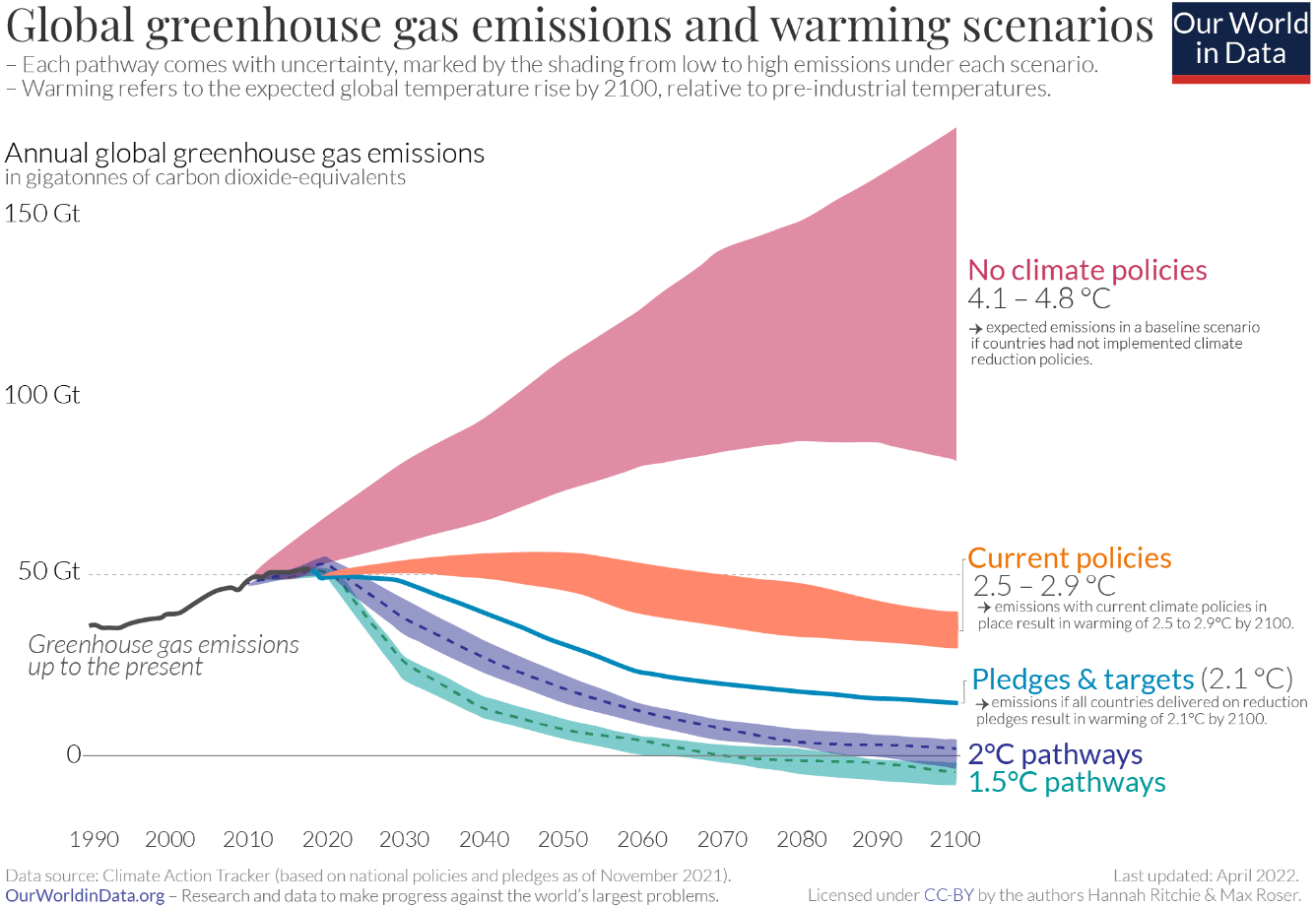
More than twenty years ago, scientists established a goal to limit global warming to 1.5 degrees C to avoid the worst climate impacts, urging humankind to aggressively reduce greenhouse gas emissions. Too many people ignored that warning, and as a result climate scientists’ models in 2014 were predicting apocalyptic global warming of 4 to 5 degrees C by the year 2100.

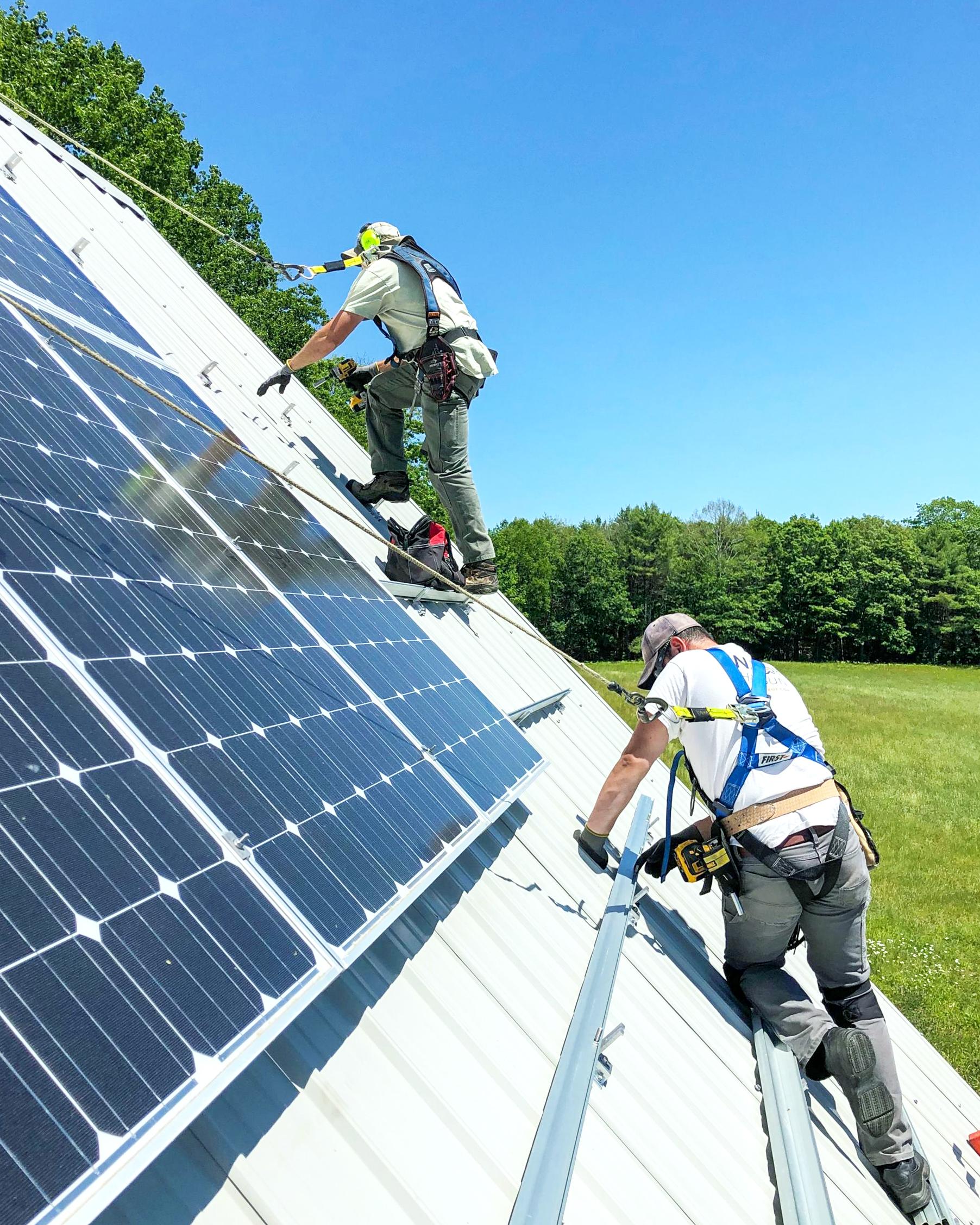
rooftop-solar-installers-summer.jpg

But much has changed since 2014, such as record-breaking adoption of renewable energy technology around the globe, and deep commitments to clean energy targets by 190 countries, which has bent downward the predicted curve of warming. Climate models now indicate we are tracking toward a 2.1 to 2.4 degree C increase by the end of the century (if existing commitments are upheld).

2.4 is drastically better than 5, but still well above the 1.5 degree threshold, which made me wonder whether we truly had achieved anything over the past decade. So, I reached out to my friend Cam Wake, a glaciologist, climatologist, and chairperson of Kittery, Maine’s Climate Action Network, to ask if he thought we had made any real progress.

“Our collective efforts over the past 10 years have bent the temperature curve in an important direction,” said Dr. Wake, who is a Ph.D. scientist with 35 years of experience and serves as Director of the Center for North Atlantic Studies at the University of New England. “This is a victory to be celebrated! But at 2.4 C warming, there is still lots of suffering.”

While it is true that a temperature rise of 2.1 to 2.4 degree C will cause (and is already causing) painful climate impacts around the globe, it is equally true that humanity is demonstrating its capability to reduce future temperature increases by pivoting away from fossil fuels. Can we accelerate the clean energy transition despite the fossil fuel industry’s power and influence?

Credit_HannahRitchie_MaxRoser.png

No More Coal

At the local level, fossil fuel dominoes continue to fall across our region, as evidenced by the announced closure of New England’s two remaining coal-fired power plants in Bow and Portsmouth, NH. Surging deployments of solar, wind, battery storage, heat pumps, and electric vehicles have made a world of difference in our 10-year outlook. 

The International Energy Agency forecasts that we are on track to see all fossil fuels peak globally before 2030, and Chinese oil and gas giant Sinopec says that peak oil has already occurred in China.

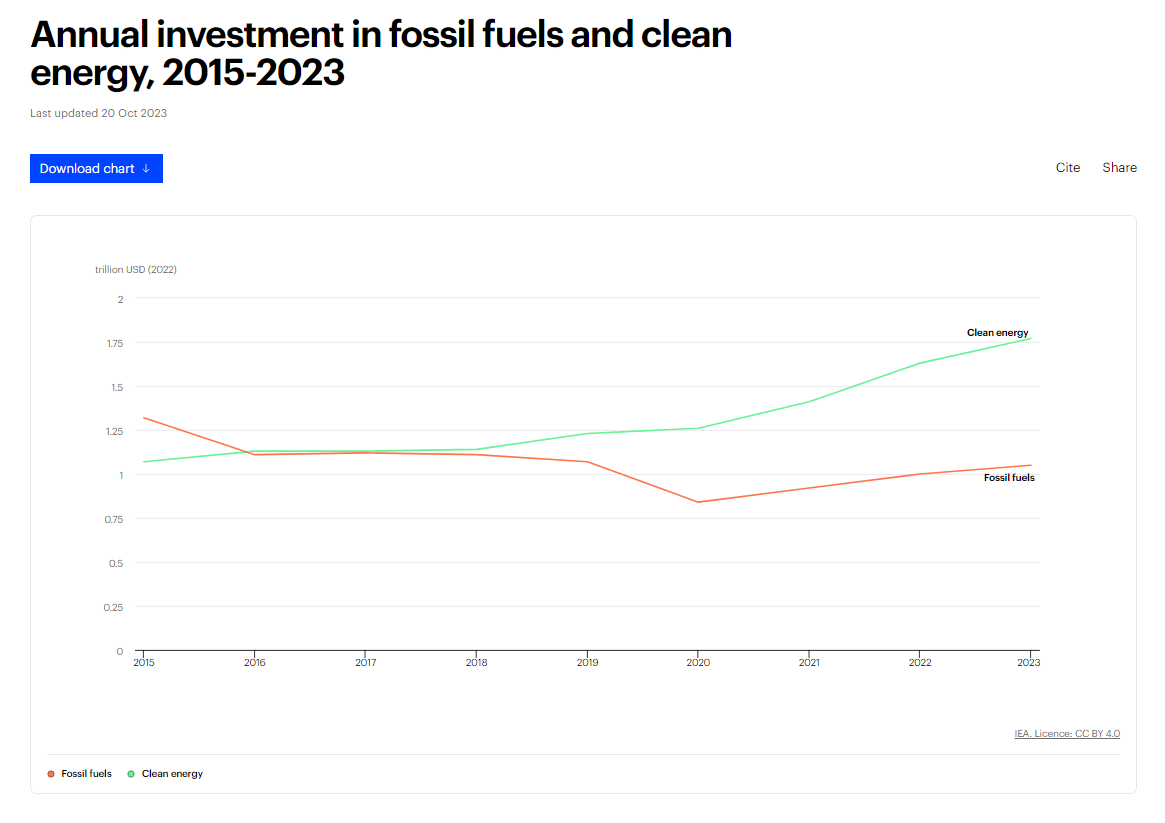
Crucially, global investments in the clean energy sector have been outpacing fossil fuel investments for nearly a decade, and the gap is growing wider by the year as clean energy returns outperform those from coal, oil, and gas.

Credit_IEA2023.png

IEA (2023), Annual investment in fossil fuels and clean energy, 2015-2023, IEA, Paris, Licence: CC BY 4.0.

Considering the sobering reality that world population is forecasted to reach 10 billion by 2050, and global energy demand is expected to grow by 50%, it is premature to start celebrating. We need to be clear-eyed about the enormous challenges associated with limiting warming to 1.5 degrees C, which will require a doubling of the record-breaking clean energy deployments achieved in 2023. 

Together, humankind has potentially reduced expected global temperature rise by 50% over the past decade. Clearly our species has vast potential to bend the temperature curve even further toward the 1.5 degree C end of the spectrum. It will require every one of us to reduce our own emissions while coaxing along others who might not yet be as ready and willing to make fundamental energy changes for the common good. What can we say to encourage folks to join the clean energy transition? 

Spreading the Electrification Message

vawter-indoor-ashp_MC.jpg

Too many people still don’t realize that solar electricity is the cheapest form of power ever known to humankind, and that electric vehicles cost less than half as much to own and operate as a similar internal combustion engine vehicle. And most people are not aware that battery storage technology is now progressing as rapidly as solar panels, with costs declining and the social and environmental problems associated with first world mining practices being solved through responsible domestic raw materials sourcing.  

We also need to further spread the word that air source heat pumps can reduce heating and cooling costs by 50%, which is leading to rapid widespread adoption in New England and beyond. This is the clean energy model of success that we need to replicate with wind, solar, storage, and electric vehicles, and every one of us has some level of power to bend our community in the right direction, should we choose to use it. 

Ask yourself: “Who in my community can I help better understand the economic and environmental potential of beneficial electrification?”

Filed Under: Under the Sun Blog Tagged With: by Phil Coupe, Rational Cause for Optimism

Rational Cause for Optimism

February 7, 2024 by Ale Moreno

From our bird’s-eye view of the renewable energy industry, we often see positive developments for humanity before they become common knowledge. The purpose of this blog is to highlight the clean energy innovations and sustainability actions that are legitimate cause for optimism despite the very real threats to people and the environment posed by climate damage.

by Co-Founder Phil Coupe
 

“Hope is a stance, not an assessment.” These are the words of Amory Lovins, co-founder of the Rocky Mountain Institute, an organization leading the transition away from fossil fuels for the past 40 years. During his 2023 talk at Dartmouth College, Lovins made the point that people should use “applied hope” to grapple with the enormity of the climate crisis because “you can’t depress people into action.”

Hope gives us the courage to act, even when problems are overwhelming and the odds of success seem impossibly long. Construction of America’s largest solar + storage facility is a recent example of people taking action to build a cleaner, more resilient energy future.

Edwards Air Force Base Solar 2.jpg

Located on desolate southern California terrain, and partially on the grounds of Edwards Air Force Base, the “Edwards & Sanborn” project is comprised of 1.9 million solar panels (made in the USA by First Solar) paired with roughly 3.3 GWh of battery storage. The $1.7B project is expected to generate enough electricity for 238,000 homes while offsetting 640,000 pounds of greenhouse gas emissions annually for the next 30-plus years.

Clean Energy Accelerating Across America 

Large-scale renewable energy and decarbonization projects are accelerating across the U.S. (and globe) in places and industries that seemed impossible just a decade ago. While it’s not surprising to see the biggest solar + storage project in California, readers might be shocked to know that Texas produced more renewable power from wind and solar in 2023 than any other state, and 55% more than California, according to Environment America’s recent Renewables on the Rise Report.

If clean energy can scale rapidly in politically challenging states like Texas, it becomes easier to imagine decarbonizing other states, as well as industries that require enormous inputs of fossil fuels, like aviation and cement-making. 

Aviation

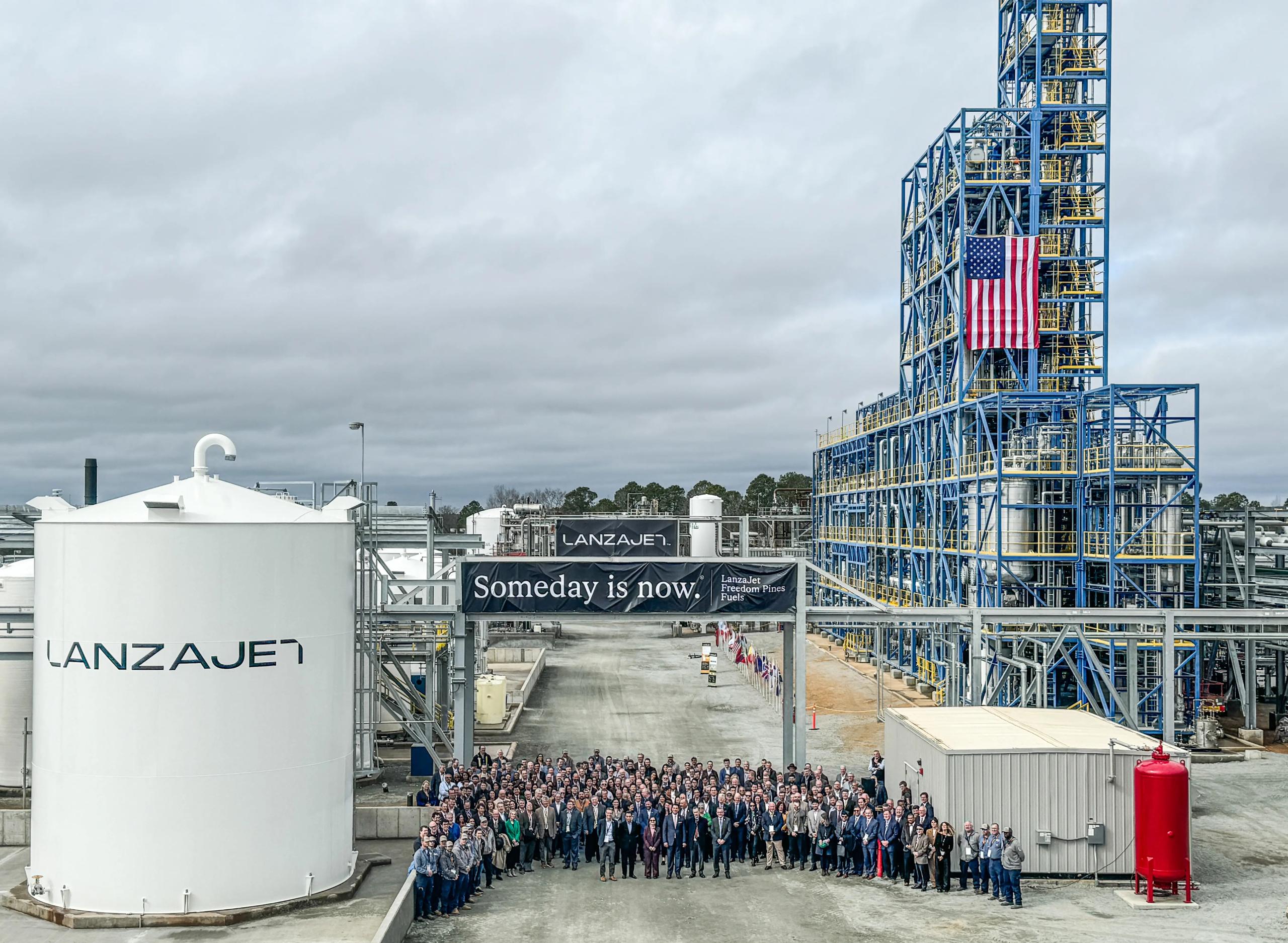
lanza-jet.jpg

A new sustainable aviation fuel (SAF) biorefinery that just opened in the deep South is evidence that the clean energy transition is beginning to penetrate some of industry’s most difficult sectors. LanzaJet’s $200 million Freedom Pines Fuels facility is designed to produce 9 million gallons of plant-based aviation fuel and 1 million gallons of renewable diesel per year, with a 70% reduction in carbon emissions compared to conventional jet fuel and a ~60% reduction in carbon emissions compared to fossil diesel.

Cement & Paper

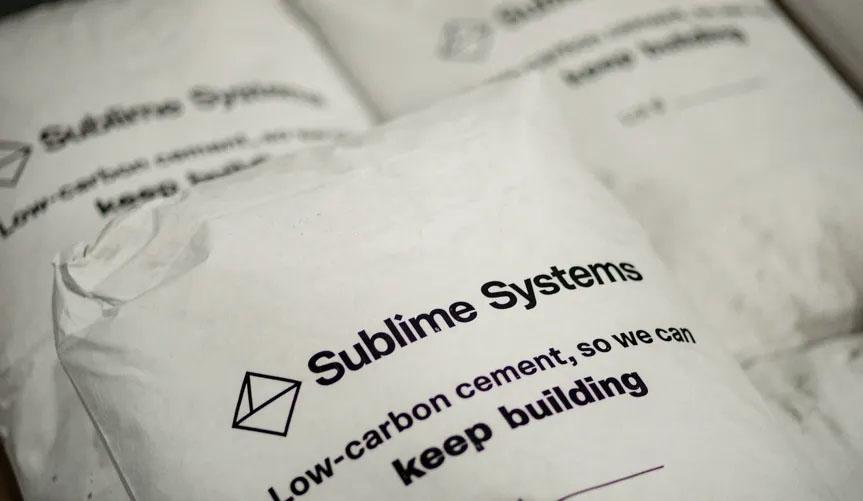
Sublime-Cement-Sacks (1).jpg

Like the aviation industry, cement-making is another extreme decarbonization challenge because its manufacture relies heavily on fossil fuels and the carbon-intensive process of limestone decomposition. Utilizing an electrochemical process that extracts calcium and silicates at ambient temperature for the manufacture of a zero-emission substitute for traditional concrete, Sublime Systems is making strong progress on a product that will help clean up the commercial construction industry.

In Holyoke, MA, where 80% of the paper used in the United States was manufactured in the late 1800s, Sublime Systems has secured 16 acres in the former paper-making district to build its first plant. By 2026, Sublime intends to produce tens of thousands of tons of its low carbon cement in the former “Paper City.”

Hope is Pragmatic

Throughout the global economy, clean technology, renewable energy, and battery storage are rapidly progressing with the same fervor, innovation and profit-making that propelled the vast advancements of the Industrial and Technological Revolutions. Although it is still slower than the pace desired to avoid future negative impacts of the climate crisis, the world’s rate of decarbonization continues to gain momentum everywhere, all at once.

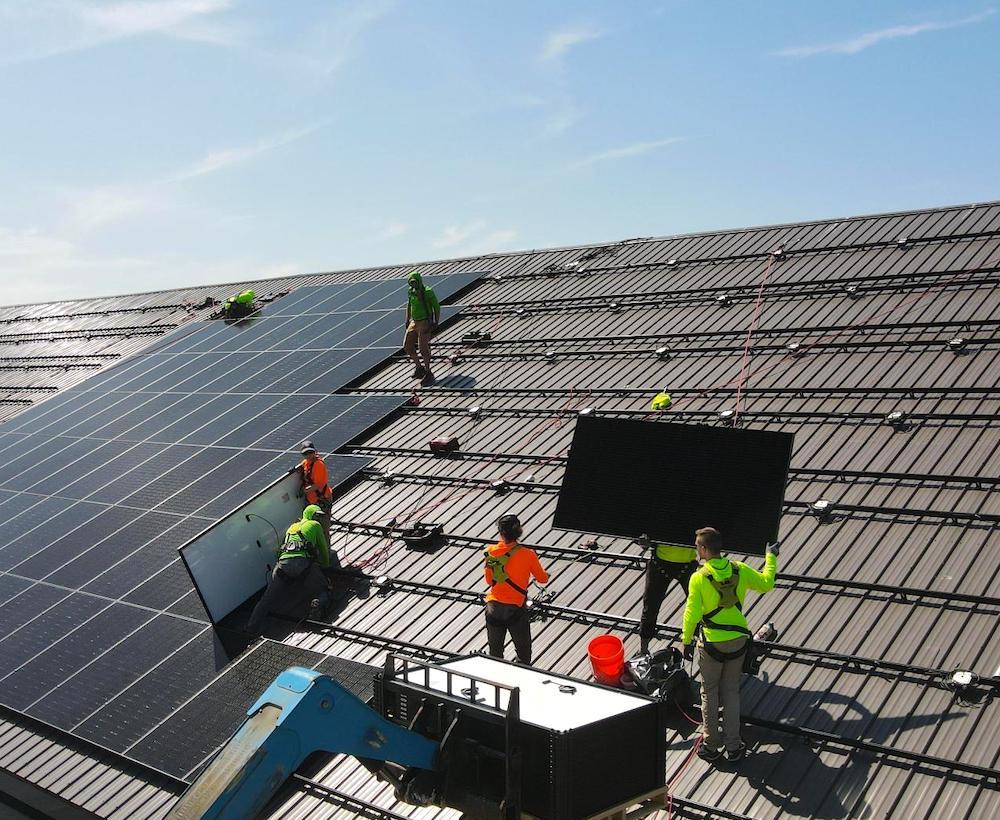
Revision commerical solar installers.jpeg

Rejecting the idea of blind optimism in his Dartmouth remarks, Amory Lovins said “applied hope is a pragmatic and grounded conviction that starting with hope and acting out of hope can cultivate a different kind of world.” In our view, achieving all the clean energy progress to date domestically and abroad, in the face of fierce, unrelenting fossil fuel industry opposition, is rational cause for optimism.

Filed Under: Under the Sun Blog Tagged With: by Phil Coupe, Rational Cause for Optimism

We Can Make Life Better

January 9, 2024 by Ale Moreno

From our bird’s-eye view of the renewable energy industry, we often see positive developments for humanity before they become common knowledge. The purpose of this blog is to highlight the clean energy innovations and sustainability actions that are legitimate cause for optimism despite the very real threats to people and the environment posed by climate damage.

by Co-Founder Phil Coupe

Finding the strength to take better care of ourselves, others, and the natural environment is a quest shared by many this time of year. Despite today’s harsh realities of war, poverty, extremism, and climate damage, there are incredibly powerful humans doing good work, and guiding us in a better direction. Real-life heroes like the folks below provide hope and inspiration in their missions to overcome daunting challenges through community work, activism, and organizing.

Travis Mills

Travis Mills at ReVision companywide meeting.jpg


Travis Mills speaks at ReVision’s 2023 Annual Meeting Despite losing his arms and legs to a wartime bomb, Travis Mills continues to live a joyous and uncommonly productive life, profoundly enhancing the lives of everyone in his orbit. Witnessing Travis’ ability to help others while dealing with his own immense physical challenges is a constant reminder that we all have some capacity to lift others.


Loretta J. Ross

3763350980_876f15fe2f_c.jpg

Credit: Center for American Progress Loretta J. Ross is another modern-day superhero who tackles issues such as racism, reproductive rights, and violence against women. At one point in her life as an African American activist, intellectual, professor, and author, Loretta worked with incarcerated members of the Ku Klux Klan in the deep South and succeeded in getting some of these men to renounce their deeply held racial prejudices. To witness a contemporary civil rights and social justice warrior like Loretta is to know that positive change is possible even against the greatest odds.

Bill McKibben

bill mckibben_350 dot org small.jpg

Credit: Steve Liptay, 350.org.Many of us feel overwhelmed by the environmental crisis caused by 8 billion people burning fossil fuels in earth’s closed atmosphere. That’s why we need climate superheroes like Bill McKibben, who wrote the world’s first book about climate damage and has been valiantly leading the clean energy transition for 40 years. Bill’s work has spawned highly effective collaborative efforts like 350.org, Third Act, and Citizens Climate Lobby, all of which invite anyone to join the effort to help make life better by building our just and equitable electric future.

All Of You

Cait_Cote1_mailchimp.jpg

Every day more people are becoming Solar Champions. In the U.S. and around the world people are investing in renewable energy, battery storage, electric vehicles, and heat pumps at record-breaking speed. The recent 28th edition of the Conference of Parties (COP) in Dubai resulted in worldwide commitments for countries to gradually transition away from coal, oil, and gas. 

Unfortunately, during the past 50 years the fossil fuel industry has metastasized into a multi-trillion-dollar colossus that is arguably the most powerful global entity in history.

Because the clean energy transition represents an existential threat to coal, oil, and gas, the fossil fuel industry continues to invest heavily in misinformation campaigns to sow doubt and confusion in the minds of consumers about whether renewable energy, battery storage, and efficient non-combustion technologies are viable. In 2024 we need to be more vigilant than ever about countering this misinformation because it is predicted that Artificial Intelligence (AI) will make it harder for people to discern fact from fiction.

The Good News

Cait_installer_resize.jpg

Now that solar electricity is the cheapest form of energy ever known to humankind, and the cost of battery technology is rapidly declining, and heat pumps and electric vehicles are technologically superior to the internal combustion engine, it is clear that electrifying everything is far better for people and the environment than finite, polluting, single-use fossil fuels. 

2023 was a record-shattering year for America and the rest of the world in terms of renewable energy, battery storage, electric vehicle and heat pump adoption.  We think it’s rational cause for optimism that the forecast for 2024 is continued clean energy growth. The success of this outcome depends on everyone who wants to help make life better by building our just and equitable electric future.  

Filed Under: Under the Sun Blog Tagged With: by Phil Coupe, Rational Cause for Optimism

Rational Cause for Optimism: Portugal’s Grid Powered by 100% Renewable Energy

December 5, 2023 by Ale Moreno

From our bird’s-eye view of the renewable energy industry, we often see positive developments for humanity before they become common knowledge. The purpose of this blog is to highlight the clean energy innovations and sustainability actions that are legitimate cause for optimism despite the very real threats to people and the environment posed by climate damage.

For the first time in history, a nation of 10 million people has been able to rely exclusively on wind, solar, and hydropower for 100% of its electricity needs for almost a week.

From October 31 to November 6, 2023, Portugal’s renewable energy systems cranked out enough clean electricity to deliver power to all grid customers without gas-fired electricity (although the country’s gas plants were on standby just in case). 

Achievable for New England

Figueiredo_-_Portugal_(51112392063).jpg

Photo Credit: Vitor Oliveira from Torres Vedras, PortugalThis is noteworthy for northern New England, which has a similar population of 10 million people spread across Maine, Massachusetts, and New Hampshire and, like Portugal, not a drop of fossil fuels under its soil.

Portugal’s journey away from fossil fuels began in earnest in 2016 when its government set a goal to reach net-zero greenhouse gas emissions by 2050. As part of that ambitious goal, the last coal-fired power plant in Portugal was shut down in 2022 (northern New England is also on the cusp of eliminating coal power plants with just one remaining in Bow, NH).

Legacy hydroelectric power plants have played a large role in Portugal’s renewable energy transition, but now the country is focused on deploying solar combined with wind power (and storage) because the wind is often blowing when the sun isn’t shining, and vice versa. The country has a goal of building 10 gigawatts of offshore floating wind turbines, similar to the challenging offshore wind efforts underway in Maine, Massachusetts, and New Hampshire.

A strong indication of significant progress occurred on a blustery, sunny day in April 2023 when Portugal derived 51% of its total national energy needs from wind and solar. The country is now incorporating battery storage into more of its renewable energy projects to help alleviate the intermittency of wind and solar. 

Similar Solar Potential

solar panels_resize.jpg

Photo Credit: Cait Bourgault PhotographyAlthough Portugal’s latitude of 39 degrees is a little further south than northern New England’s 43 degrees, the solar resource of the two regions is comparable: 3.41 – 5.08 kilowatt-hours per meters squared per day (kWh/m2/day) in Portugal compared to 2.97 – 6.24 kWh/m2/day in northern New England.

On average, Portugal receives about 2,800 hours of sunlight per year compared to northern New England’s 2,500 hours. While average annual temperatures in Portugal are significantly warmer than our northeast region, it’s worth noting that photovoltaic panels are more efficient at lower temperatures.

We remain clear-eyed about the enormous political, technological, financial, and resource challenges of transitioning away from fossil fuels, but it’s undeniable that significant progress is being made. Countries like Portugal, Germany, Costa Rica, and many others around the globe, and U.S. states like CA, MA, ME, MI, MN, NY, VA, RI, WA, and WI, are all committed to 100% renewable energy combined with storage by 2050 or sooner. We think it’s rational cause for optimism that relatively modern economies and societies, both domestically and abroad, are proving that we can live sustainably without burning finite, polluting fossil fuels. 

Filed Under: Under the Sun Blog Tagged With: by Phil Coupe, Rational Cause for Optimism

It’s Good News That 80% of Americans Drive 40 Miles Per Day

October 12, 2023 by Ale Moreno

From our bird’s-eye view of the renewable energy industry, we often see positive developments for humanity before they become common knowledge. The purpose of this blog is to highlight the clean energy innovations and sustainability actions that are legitimate cause for optimism despite the very real threats to people and the environment posed by climate damage.

by ReVision Energy co-founder Phil Coupe

With leaf-peeping season upon us, multitudes of New Englanders will be hopping in their cars and onto buses to observe one of Mother Nature’s most glorious local ‘artworks.’ In the context of all those extra vehicle trips, it’s worth remembering that tailpipe exhaust from internal combustion engines comprises more than 50% of total greenhouse gas emissions in New England.

Derry Nh Electric Vehicle Chargers

The good news is that electric vehicles (EVs), and a small but growing fleet of electric buses, are beginning to reduce those harmful tailpipe emissions. But skeptics continue to argue that a transition to EVs is impossible due to a lack of public charging stations, range concerns, and costs.

As domestic and foreign EV manufacturers scale up and continue to deliver a wider range of models, the naysayers’ range anxiety and cost arguments are getting easier and easier to swat away. A quick internet survey of available EVs shows that there are now models below $30,000 (before you factor in the $7,500 federal tax credit!) with roughly 250 to 300 miles of range on one charge.

Hanover Nh Solar Ev Lewin

It’s critical to note that 80% of Americans drive their vehicle ~40 miles per day, or about 15,000 miles per year. Why? Because this shows that the vast majority of us can maintain our existing lifestyle with an EV that goes 250 to 300 miles on one charge. Plus, it costs 50% less per mile to charge an EV with grid electricity than to fill up a gas-powered car, and EVs reduce tailpipe pollution by 50% (both cost and emissions drop to zero when charging the EV with solar electricity).

So, if 80% of the population can wake up each day with a vehicle that was fully charged at home overnight, it means that we don’t have to worry about replicating the ‘gas station on every corner’ internal combustion engine transportation model that has evolved over the last century! Instead, we just need to replace 35 to 40% of gas stations with public EV charging stations.

Tesla Parked Outside Of Portland, Maine's Solar Powered Garage On Fore Street

In addition to the fact that we are already building EV charging stations at a rapid clip in New England and beyond, Tesla has also agreed to open its nationwide network of more than 50,000 superchargers to non-Tesla EVs. Plus, gas station owners like Irving Oil and Shell are shrewdly getting into the EV charging business. In fact, Shell just opened the largest EV charging cluster in the world in Shenzen, China with the ability to charge 3,300 vehicles per day via 258 public fast-charging stations partially powered by solar electricity.

Shell’s goal is to have 200,000 public EV chargers online by 2030. The electric vehicles and public charging infrastructure we need to eliminate more than 50% of New England’s carbon pollution are coming to fruition much faster than anyone predicted just a few years ago – that’s rational cause for optimism to us. Have you picked out your EV to retire one more internal combustion engine? 

Filed Under: Under the Sun Blog Tagged With: by Phil Coupe, Rational Cause for Optimism

Peak Demand for Gasoline & Oil is Good News for Climate

September 13, 2023 by Ale Moreno

From our bird’s-eye view of the renewable energy industry, we often see positive developments for humanity before they become common knowledge. The purpose of this blog is to highlight the clean energy innovations and sustainability actions that are legitimate cause for optimism despite the very real threats to people and the environment posed by climate damage.

by ReVision Energy co-founder Phil Coupe

Did you know that more than 25% of total U.S. electricity generation came from renewable sources in the first half of 2023, according to the Energy Information Administration (EIA)? At the same time, sales of electric vehicles, heat pumps, and battery storage systems continue to break records both domestically and abroad, signaling that the clean energy transition is rapidly moving past the so-called 5% ‘tipping point’ of penetration into widespread adoption.

But what is happening to humankind’s voracious appetite for fossil fuels as a result?

Sinopec, the biggest oil company in China, announced last week that peak gasoline demand has already occurred in China due to the country’s unexpected explosive growth of electric vehicle sales. As Chinese consumers rapidly pivot away from internal combustion engine (ICE) automobiles, the country is trying to figure out what to do with its enormous ICE manufacturing capacity.

chart.png

Similarly, Bloomberg recently reported that demand for gasoline and diesel for transport has already peaked in the United States and Europe and is now on the decline as drivers ditch ICE vehicles in favor of electric and hybrid electric cars.

We think declining demand for fossil fuels is rational cause for optimism about the prospects for a near-term clean energy future that can help mitigate the negative impacts of more than 150 years of global greenhouse gas emissions.

Faith Birol, Executive Director of the International Energy Agency recently said, “we may be witnessing the beginning of the end of the fossil fuel era.”

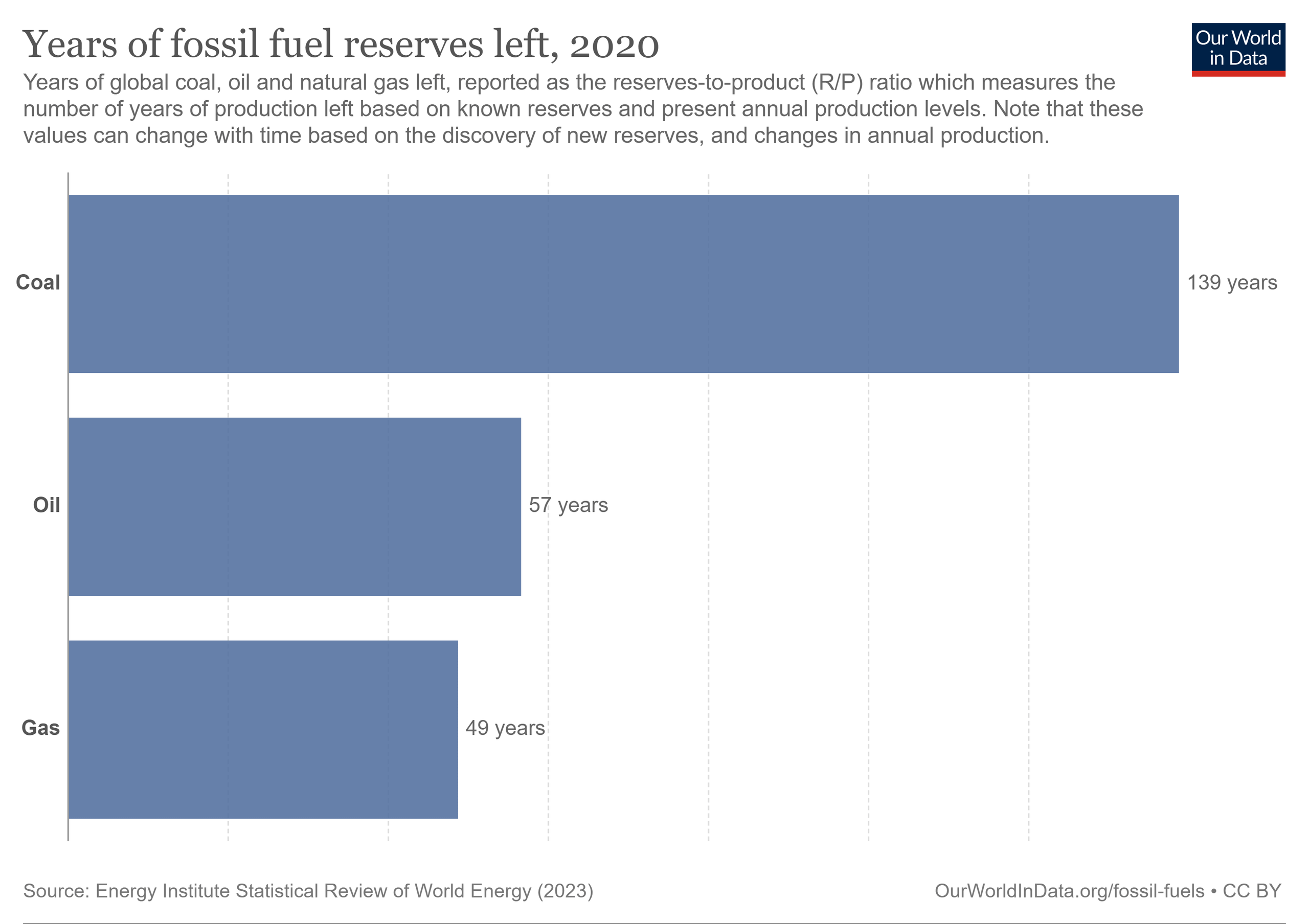
30 years ago, energy forecasters were preoccupied with another “peak” concern about when we would run out of fossil fuels. Worry about “peak oil” (the point at which known global reserves would begin a precipitous decline) turned out to be misplaced because fossil fuel reserves steadily expanded in the ensuing decades as evolving technology enhanced the ability to detect undiscovered reserves deep underground and underwater, as well as the ability to harvest hard-to-get reserves trapped in shale formations. So-called ‘hydro-fracking’ of oil and gas wells has drastically extended the life of wells that were thought to be dry, but at the price of serious environmental damage; fracking requires pumping enormous quantities of water and chemicals into shale formations to crack loose the remaining oil and gas.

But make no mistake, with 8 billion people needing energy to power their lives, the end of global reserves of coal, oil, and gas is within one or two generations:Although coal, oil, and gas have profoundly transformed life on earth over the past 150 years, the plain truth is that we have to kick our fossil fuel habit. Whether you are motivated by anthropogenic climate damage, geopolitical conflict, national security, or just plain old fossil fuel scarcity, it is now time to embrace beneficial electrification for the benefit of present and future generations.

years-of-fossil-fuel-reserves-left.png

Filed Under: Under the Sun Blog Tagged With: by Phil Coupe, Rational Cause for Optimism

Electric Outboards for Clean, Quiet Boating

August 2, 2023 by Ale Moreno

From our bird’s-eye view of the renewable energy industry, we often see positive developments for humanity before they become common knowledge. The purpose of this blog is to highlight the clean energy innovations and sustainability actions that are legitimate cause for optimism despite the very real threats to people and the environment posed by climate damage.

by ReVision Energy co-founder Phil Coupe

Silently we glide out of the marina into Portland Harbor, unable to tell whether the 100 horsepower electric motor is actually running because it’s so quiet and there are no exhaust fumes befouling the air and water.

Phil Coupe-5.jpg

This is the maiden voyage of the “Sea Lightning,” a 19-foot fiberglass boat that has been retrofitted with a powerful, zero-emission outboard manufactured by Flux Marine, and a modular 60 kilowatt-hour (kWh) battery that can power a full day of cruising at low throttle, but can also push the boat over 25 mph.

In a former life, the Sea Lightning had an obnoxiously loud Yamaha 115 horsepower two-stroke engine that guzzled large quantities of gasoline while belching blue smoke into the water and air, and ultimately into the lungs of unhappy passengers. I bought the Maycraft-built boat during the pandemic as a way to safely get outdoors with my family but quickly decided that the noise and pollution needed to go away.

A Clear Improvement

epropulsion linkedin image.jpg

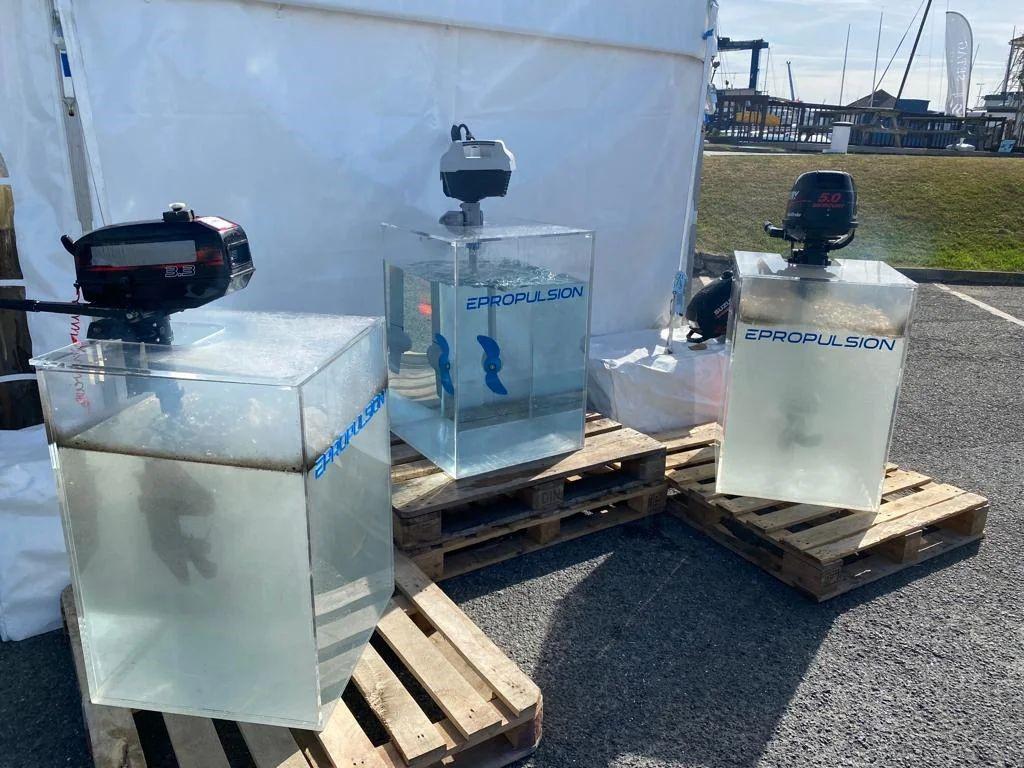
These three outboards have been running for fifteen minutes at low speed. At left is a two-stroke gas engine, the middle is an electric outboard, and at right is a four-stroke gas engine, illustrating how combustion engines pollute both the water and air because their exhaust gets injected into the water and then bubbles to the surface to become air pollution.

A chance encounter with a Maine-based investor in Flux Marine alerted me to the existence of this rapidly growing electric outboard startup based in Rhode Island.

“We’re trying to decarbonize the boating realm,” said Ben Sorkin, Flux Marine Co-founder & President. “With the world on fire from our over-reliance on fossil fuels, and people really not liking the noise and pollution from traditional power boats, we think the timing is right for reliable electric outboard motors that are clean, quiet and really fun to drive.”

Traditional two-stroke outboard motors can emit 30% of their unburned gas into the water, endangering ecosystems and creating large amounts of pollution. Gas-powered motors also produce ground-level ozone, which is harmful to humans and animals alike. 

An Easy Charge

Electric Boat charges.png

The Sea Lightning charging in South Portland. Charging up the battery pack that powers Flux’s electric outboard is as simple as plugging in your phone, computer, or electric car. The charge connector can be plugged into a 120V or 240V power supply, which is readily available dockside at most marinas (not yet available for boats that tie up to moorings).

Charging time ranges from 1 hour to 10 hours depending on how low the battery is and how long you want to go boating. Stepping up to a 240V power supply cuts the charging time in half. Charging the Sea Lightning’s battery with electricity from the grid cuts carbon pollution by roughly 50% compared to burning gasoline to power the boat.

The long-term goal is to use solar electricity to charge the boat’s battery which would cut carbon emissions down to zero. The good news is that solar-powered charging options are already being designed by companies like Portugal-based Faroboat, whose Powerdock can charge the Faro5 electric boat in about two hours in full sunshine. For boat owners who don’t have shore power, the Powerdock can be a convenient option.

Phil Coupe-1.jpg

Phil Coupe plugs in to charge at the Aspasia Marina, where every slip has its own 120V power supply.Quietly gliding across Casco Bay without the noise and pollution from an internal combustion engine is rational cause for optimism that we can simultaneously decarbonize the marine environment while vastly increasing one’s boating enjoyment level. Email me at phil@revisionenergy.com if you’d like to take a spin aboard the Sea Lightning to see for yourself!

Filed Under: Under the Sun Blog Tagged With: by Phil Coupe, Rational Cause for Optimism

Ukraine Brings Unique Solar Perspective to Maine

June 5, 2023 by Ale Moreno

Standing next to Phil Coupe’s Ford F-150 Lightning electric truck are Iryna Zolotoverkha, head of Ukraine’s National Energy & Utilities Regulatory Commission (NEURC), Oleksandr Mykhailovsky, head of NEURC’s Division of Alternative & Renewable Electricity, translator Olga Shostachuk and Vlad Maksakov, State Expert of Renewable Energy at Ukraine’s Energy Ministry. Behind everyone is UNE’s solar-powered Marine Science Center. Iryna and Olga then test drove Phil’s Ford Lightning!

Ukrainian Energy Delegation’s Visit to Maine

From our bird’s-eye view of the renewable energy industry, we often see positive developments for humanity before they become common knowledge. The purpose of our Rational Cause for Optimism column is to highlight the clean energy innovations and sustainability actions that are legitimate cause for optimism despite the very real threats to people and the environment posed by climate damage.

by ReVision Energy co-founder Phil Coupe

When a Ukrainian energy delegation recently visited Maine, they brought a powerful message about the multiple benefits of solar, heat pumps, and battery storage: decentralized clean energy systems are much more resilient than fossil fuel power plants.

“As Russia continues to attack our utility grid nationwide, we have learned that solar arrays are incredibly difficult for them to knock out because they are dispersed everywhere rather than in one centralized location,” said Vladyslav “Vlad” Maksakov, State Expert of Renewable Energy at Ukraine’s Energy Ministry.

UNE Biddeford Awning Mount.jpeg

Awning mount at the UNE Biddeford campus. During a May tour of the University of New England’s Biddeford campus with the Rotary Club of Biddeford and local business and community leaders (including myself), Maksakov applauded the school’s ongoing clean energy investments, noting that his Energy Ministry has set an ambitious goal for Ukraine to derive at least 50% of its total electricity from renewable energy sources by 2030. Today Ukraine derives roughly 25% of its energy from renewable resources.

As he and his Energy Ministry colleagues explored multiple buildings on the UNE campus with rooftop solar arrays, Maksakov said the solar energy systems installed thus far in Ukraine have played a crucial role helping to keep the lights on during Russia’s relentless bomb, missile and drone attacks on Ukrainian targets.

Since Russia began its unprovoked military invasion in February 2022, Ukraine’s Energy Ministry has kicked its renewable energy initiatives into overdrive in an effort to make critical infrastructure as resilient as possible. For example, at a small hospital in the Kyiv suburb of Horenka, workers installed a rooftop solar array along with battery storage and an air source heat pump. The solar panels provide about 50% of the facility’s power when the utility grid is operational, and when the grid gets knocked out, the combination of solar, storage and heat pump can keep the facility operational.

As Ukraine valiantly fights for its independence, western Europe is working frantically to accelerate the transition to renewable energy in the face of deep cuts in Russian oil and gas supplies to NATO bloc countries like Germany and Denmark. German heat pump installations leaped by 53% in 2022 as the country seeks to surpass 500,000 units installed by 2024.

According to the International Energy Agency (IEA), Russia’s invasion of Ukraine has sparked a global acceleration away from fossil fuels, unleashing $1.4 trillion in clean energy investments in 2022. This is the first time in history that global clean energy investments have matched investment in fossil fuel projects.

image1 (1).JPG

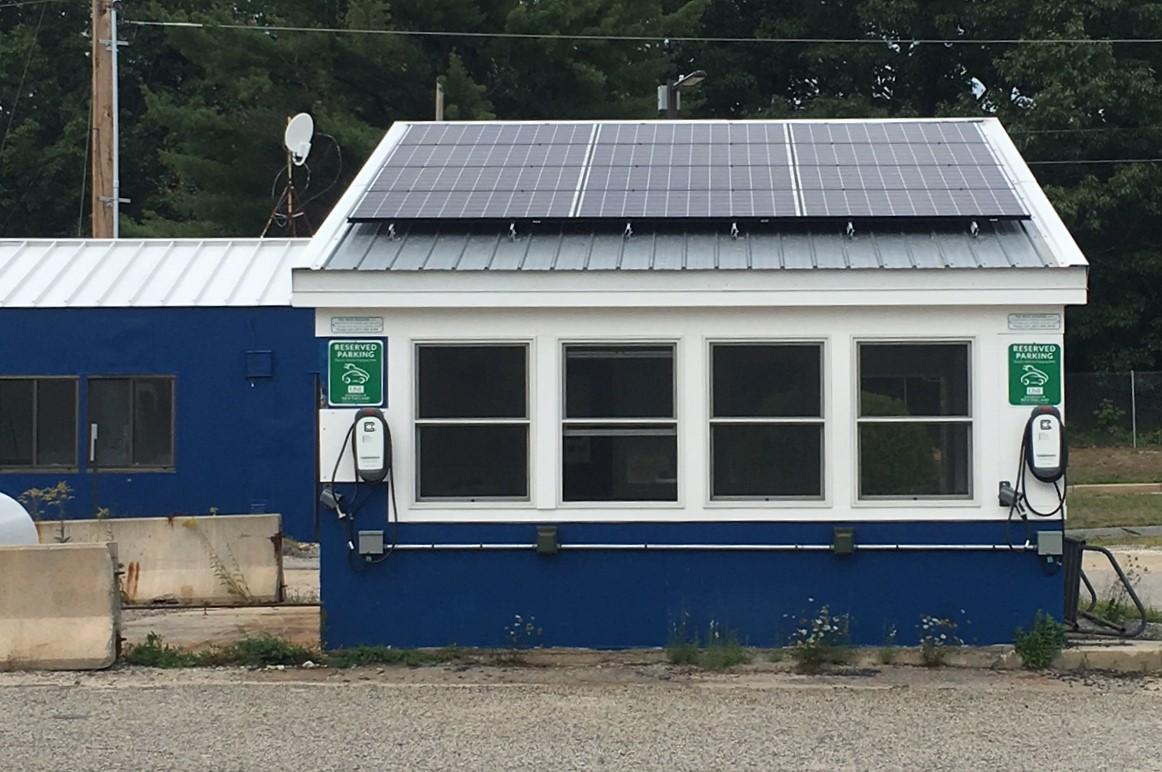
Solar and EV Chargers at UNE’s Portland campus. Despite the extraordinary challenges they are facing at home, the Ukrainian energy delegation seemed full of hope and cautious optimism about the future as they visited multiple clean energy projects in southern Maine last month.

“We know we can win this war,” said Maksakov, pointing out the proven strength and resilience of the Ukrainian people during the past 15 months of attacks on their country. “We are going to continue to fortify our energy system with the type of renewable energy we see all around us here in Maine and in the long run we will be stronger than the Russians and all their oil and gas.”

Want to help? When I asked Vlad about the best way for people to support Ukraine, he said donations should be made to: https://leleka.care/donate

Filed Under: Under the Sun Blog Tagged With: by Phil Coupe, Rational Cause for Optimism

Clean Energy Innovation in the Face of Geopolitical Conflict

April 4, 2023 by Ale Moreno

From our bird’s-eye view of the renewable energy industry, we often see positive developments for humanity before they become common knowledge. The purpose of this blog is to highlight the clean energy innovations and sustainability actions that are legitimate cause for optimism despite the very real threats to people and the environment posed by climate damage.

by ReVision Energy co-founder Phil Coupe

An unexpected decision made recently by the Organization of Petroleum Exporting Countries (OPEC) to cut oil production should be viewed as a Hellfire missile shot across America’s bow. With their goal of raising the global commodity price of oil, authoritarian OPEC member countries like Saudi Arabia and Iran are trying to help their ally Russia get more money for Russian oil exports to customers like China. This, in turn, helps Russia continue to finance its criminal war of aggression against Ukraine with planet-killing oil profits.

6836352349_7d9ef02c15_c.jpg

Oil rig in the south of Russia. Photo credit: World Bank Photos.How should democratic nations and citizens react to this circling of autocratic, oil-laden wagons? Reducing use of oil and gasoline is the most impactful action we can take to constrict the flow of dirty financial ‘oxygen’ to Russia while simultaneously conserving our domestic oil reserves for only the most critical needs (like national security). The less we use in America, the more difficult it is for OPEC to nudge the global oil price higher.

Inflation Reduction Act Accelerates Clean Energy Transition

The good news is that clean technology innovation, combined with the Inflation Reduction Act’s (IRA) unprecedented incentive programs, is accelerating America’s transition away from fossil fuels much faster than was imaginable ten years ago.

In its first six months, the IRA has sparked more than 100,000 clean energy jobs and unleashed more than $90 billion of investments in manufacturing plants that will produce solar panels, electric vehicles, long-duration batteries, and other climate-friendly technologies. Solar is now a $35 billion player in the U.S. economy, employing 255,000 Americans and averaging 24% growth per year over the past decade.  

Solar and wind are expected to account for a combined 16 percent of total U.S. electric power generation in 2023, up from 14 percent in 2022, according to the U.S. Energy Information Administration. In 2022, the 683,130 gigawatt hours generated across the country from wind and solar were enough to power 64 million average American households, defined as a residential customer who uses about 886 kilowatt hours per month. While this progress is inspiring, broader scale solutions are just over the horizon.

Innovative Solutions

FE_Plant_56MW_R0_April-22.jpg

Photo Credit: Form Energy.In response to the raw material sourcing challenges and relatively short duration of lithium-ion batteries, companies like Boston-based Form Energy are developing massive iron-air batteries capable of storing electricity for 100 hours. These are cost-competitive with the natural gas power plants currently used to fill the intermittency gaps of wind and solar. Form’s batteries can be made cheaply because they largely consist of iron, one of the most abundant minerals on earth. Form is under contract to place two of its batteries at coal-fired power plants that are scheduled for retirement. Each of these two pilot storage projects will provide 10 megawatts of instantaneous power for up to 100 hours, meaning that each iron-air battery will store 1,000 megawatt-hours.

Similarly, Noon Energy is rapidly advancing their revolutionary approach to renewable energy storage that relies on carbon dioxide and oxygen to create grid-scale batteries. These can help power towns and cities for multiple days when wind and solar are unavailable.

ALIA-CX300.jpg

Photo Credit: BETA Technologies. Further out on the cutting edge of solving some of our most difficult decarbonization problems are companies like Vermont-based BETA Technologies, which has built and started testing small electric airplanes that can fly more than 200 miles on one charge. Companies like UPS and United Therapeutics have already placed orders for electric planes they expect to receive from BETA in 2025.

Climate Action, Now.

double installer_friendship ME.jpg

With 8 billion people burning fossil fuels within earth’s closed atmosphere, mitigating anthropogenic climate damage remains one of the most compelling reasons for humanity to hasten the transition to renewable energy, battery storage and beneficial electrification.

But long-term national security and present-day geopolitical conflict are equally urgent motivations for us to continue building as quickly as possible our just, equitable and fossil-free electric future. Despite today’s saber-rattling by oil-rich authoritarian regimes and Russia’s unconscionable war crimes against Ukraine, we think it’s rational cause for optimism that clean energy innovation and the IRA’s history-shattering scale are discernably accelerating the inevitable decline of oil, gas, and coal.

Filed Under: Under the Sun Blog Tagged With: by Phil Coupe, Rational Cause for Optimism

Rational Cause for Optimism: Goliath Joining David?

March 7, 2023 by Ale Moreno

From our bird’s-eye view of the renewable energy industry, we often see positive developments for humanity before they become common knowledge. The purpose of this blog is to highlight the clean energy innovations and sustainability actions that are legitimate cause for optimism despite the very real threats to people and the environment posed by climate damage.

by ReVision Energy co-founder Phil Coupe

sprague oil tank.jpg

Can you think of an industry that has had to survive decades of unrelenting attacks from the most powerful competitor on earth? If you guessed that ‘David’ is the renewable energy industry and ‘Goliath’ is the multi-trillion-dollar fossil fuel industry, you would be correct.

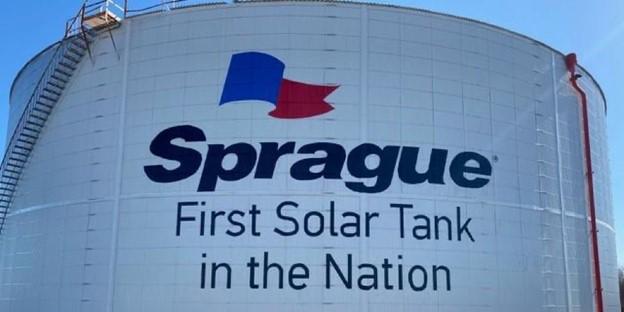
Despite the profound greenwashing embedded in the message of the oil tank to the right, evidence of a tectonic shift in the energy landscape can be seen as some fossil fuel companies change their public stance on renewables.

irving solar.jpg

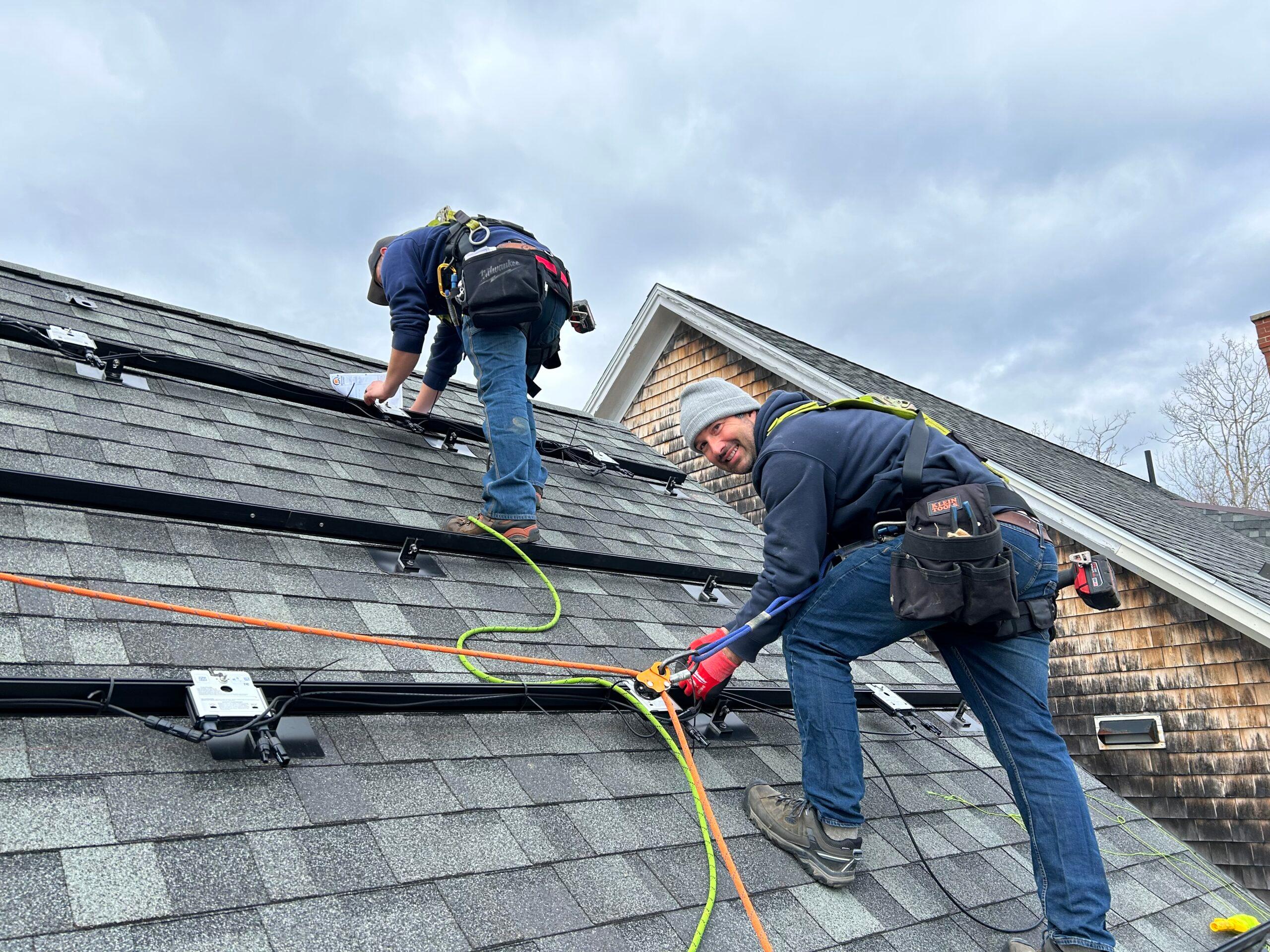
ReVision installing solar on an Irving gas station.During our first 20 years in business, ReVision Energy has withstood the searing and nearly lethal heat of well-funded political attacks, disinformation campaigns, and outright dirty tricks inflicted by a fossil fuel industry trying to stop the clean energy transition. But what doesn’t kill you makes you stronger, and we have become living proof that truth and fighting for what’s right can eventually overcome seemingly omnipotent adversaries.

Today, much to our shock and awe, we have some folks from the Goliath camp joining us to address the urgent and colossal problem of drilling, fracking, and scraping apart the earth for enough oil, gas, and coal to meet the energy needs of 8 billion people. Some fossil fuel companies now realize that burning that volume of fossil fuels in a closed atmosphere has become a long-term existential threat to life as we know it.

irving website.jpg

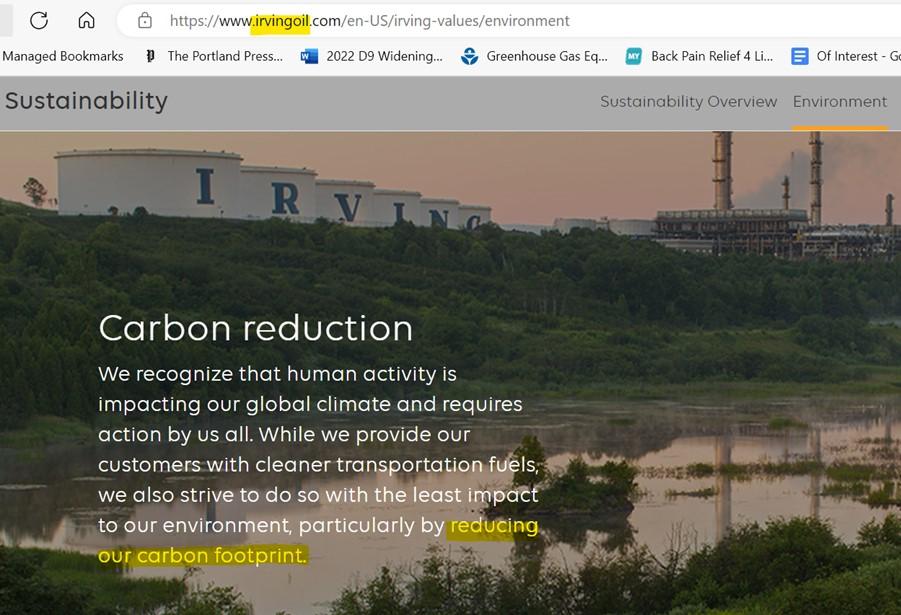
Irving Oil, one of the largest energy companies in New England with ~900 gas stations across six states, is a case in point. On its website, Irving publicly acknowledges that climate damage is caused by human activity, and the company states it is taking steps to reduce its carbon emissions.

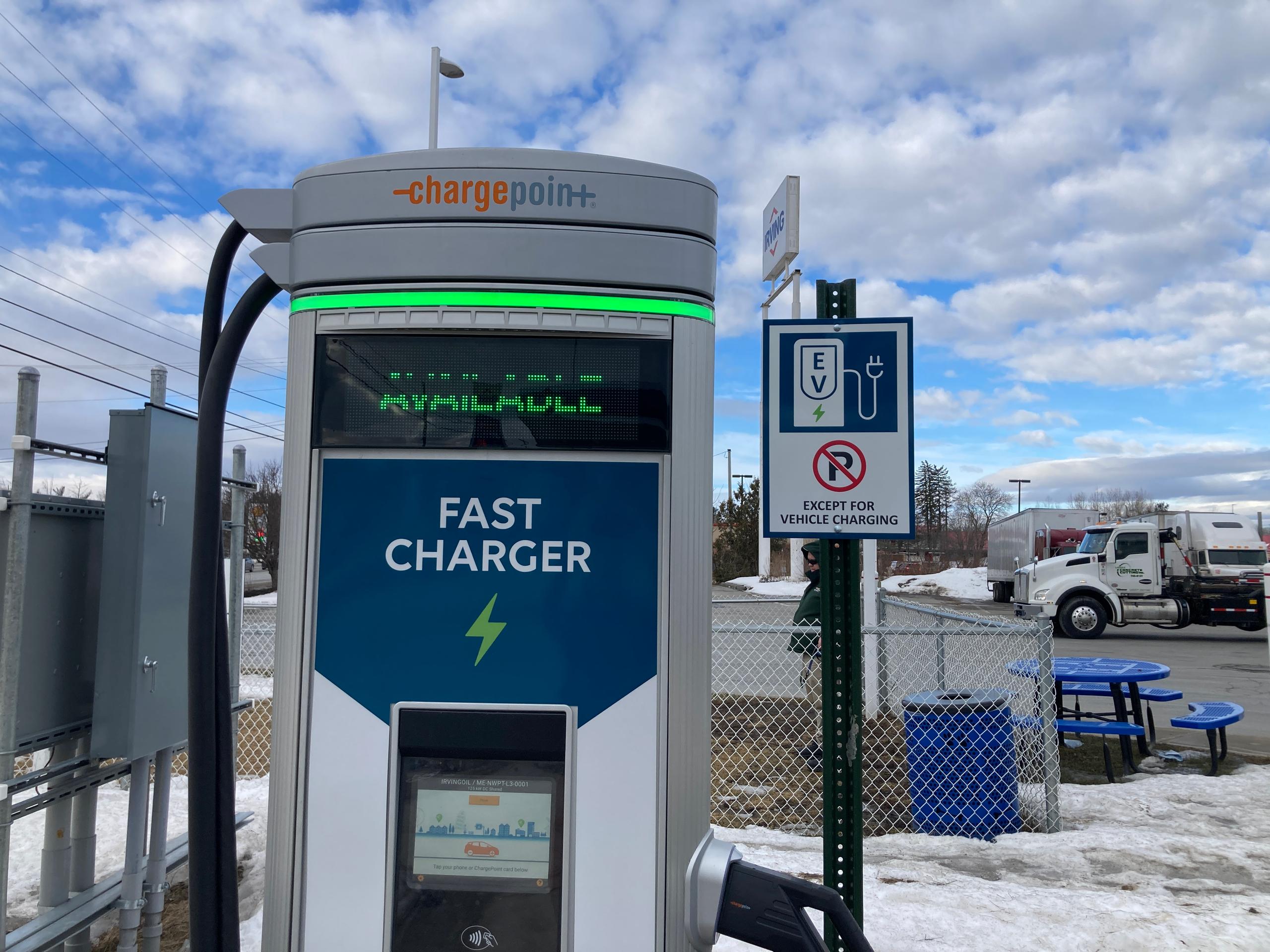
Considering that more than 50% of all the carbon pollution in New England comes from tailpipe exhaust, Irving’s environmental ambitions stand to benefit everyone. Irving has begun directly targeting tailpipe emissions by installing electric vehicle charging stations at some of its gas stations. Another positive sign from Irving is the installation of solar arrays at some of its gas stations.

IMG_7026.JPG

A ReVision-installed DC Fast Charger at Irving’s Newport, ME gas station.For those who might be justifiably skeptical about Irving’s long-term plans, it is worth noting the recent creation of The Arthur L. Irving Institute for Energy & Society on the campus of Dartmouth College. Much of the Irving Institute’s programming is centered on renewable energy, battery storage, and other aspects of the clean energy transition. The Institute also houses Dartmouth’s Sustainability Office, the Revers Center for Sustainability and Innovation, and the Dartmouth Climate Modeling and Impacts Group. The Irving Institute is aligned with Dartmouth’s goal to achieve 100% renewable energy by 2050.

We think it’s rational cause for optimism that companies like Irving Oil have begun decarbonizing their operations and offering charging options to electric vehicle drivers. Yes, these are the early days of fossil fuel companies beginning to participate in the clean energy transition, but hopefully it won’t be long before we see bigger shifts like this future vision in northern New England:

citgo sign pic.jpg

Filed Under: Under the Sun Blog Tagged With: by Phil Coupe, Rational Cause for Optimism

  • Page 1
  • Page 2
  • Go to Next Page »

sidebar

sidebar-alt

Subscribe to newsletter

Which newsletters would you like to receive?

Consent Enjoy the Sun(Required)
Consent(Required)
To provide the requested information, we need to store and process your personal data. By submitting this form, you agree to allow ReVision Energy to store and process your personal data for this purpose. Please see our privacy policy for more information.

  • Merch Store

Sitemap

  • Solutions
    • Homes
    • Commercial
    • Service
  • Our Work
    • Projects
  • About
    • Our People
    • Social Impact
    • Our Locations
    • Careers
  • For Customers
    • Support & Service
    • Be A Solar Champion
  • News & Events
    • Releases
    • Press
    • Under the Sun Blog
    • Events and Webinars
  • Our Partners
  • Resources

Follow Us

General Contact

Contact one of our branches for sales and non-service inquiries, or email us at hello@revisionenergy.com

Service

Need support for your existing system? Contact our Service Team:
Reach us at (207) 747-0076 or open a Support Ticket.

South Portland, ME

(207) 221-6342

Map & Directions 

Montville, ME

(207) 589-4171

Map & Directions 

Brentwood, NH

(603) 679-1777

Map & Directions 

Enfield, NH

(603) 632-1263

Map & Directions 

North Andover, MA

(978) 308-9041

Map & Directions 

Westfield, MA

(413) 884-1000

Map & Directions 

Copyright © 2026 ReVision Energy. All rights reserved.

Privacy Policy | Terms